
Andere Kunden interessierten sich auch für
 Lifestyle Migration and Colonial Traces in Malaysia and Panama42,99 €
 Lifestyle Migration and Colonial Traces in Malaysia and Panama68,99 €
 The Psychosis of Whiteness8,99 €
 The Psychosis of Whiteness35,99 €
 Postcolonial Portuguese Migration to Angola38,99 €
 Postcolonial Portuguese Migration to Angola38,99 €
 Against White Feminism13,99 €

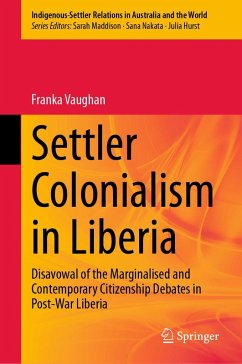
This book is a retelling of the history of Liberia s formation through the lens of settler colonial theory to understand the antagonisms that continue to shape contemporary citizenship debates. It discusses Liberia as representing an interesting puzzle on the distinction between settler colonialism and postcolonialism. While Liberia is often heralded as one of two African countries that were never colonised, this book presents the country as a unique settler state established by free and formerly enslaved Black Americans, who, the author argues, were settler-colonists despite their positioning as Black people in the slaveholding regime. The book, therefore, complicates conventional perspectives by unravelling Liberia s settler colonial present , highlighting the persistent impact of historical structures on the contemporary socio-political landscape. It shows that when the Black Americans dispossessed and marginalised the Africans they met upon arrival in Liberia, they established the antagonisms and enduring unequal structures that continue to shape citizenship and identity debates in the post-war era. By exploring Liberia's contemporary and contentious discourse on dual citizenship, the book delves into the nuanced terrain of claims and counterclaims surrounding proposed changes to the country's citizenship laws.