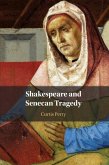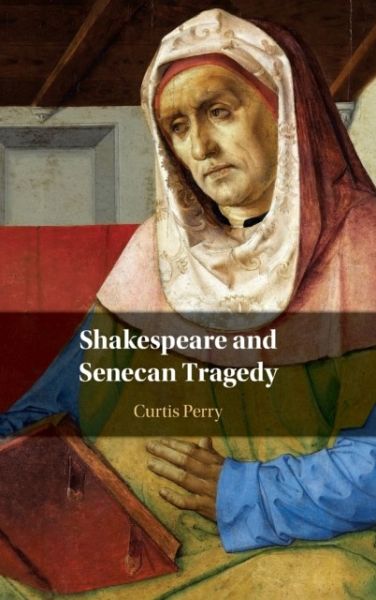
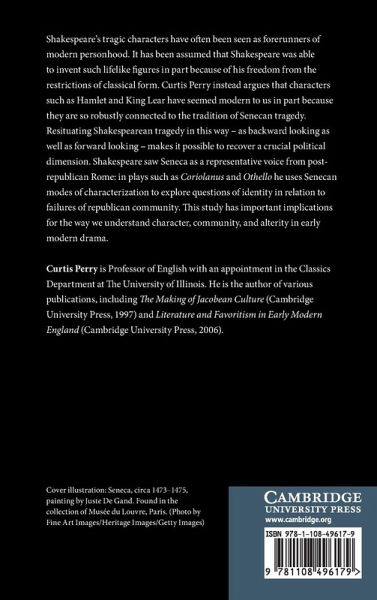
A new approach to understanding the relationship between Shakespearean tragedy and Senecan tragedy, this book has implications for our understanding Shakespeare's major tragedies, for our understanding of tragedy as a genre, and for our understanding of early modern classical reception.
Curtis Perry is Professor of English with an appointment in the Classics Department at The University of Illinois at Urbana-Champaign. He is the author of various publications, including The Making of Jacobean Culture (Cambridge, 1997) and Literature and Favoritism in Early Modern England (Cambridge, 2006).
Inhaltsangabe
1. Shakespeare and the resources of Senecan tragedy 2. Richard III as Senecan history 3. Seneca and the modernity of Hamlet 4. Seneca and the antisocial in King Lear 5. Republican Coriolanus and Imperial Seneca 6. Seneca, Titus, and Imperial globalization 7. Senecan Othello and the Republic of Venice.
Es gelten unsere Allgemeinen Geschäftsbedingungen: www.buecher.de/agb
Impressum
www.buecher.de ist ein Internetauftritt der buecher.de internetstores GmbH
Geschäftsführung: Monica Sawhney | Roland Kölbl | Günter Hilger
Sitz der Gesellschaft: Batheyer Straße 115 - 117, 58099 Hagen
Postanschrift: Bürgermeister-Wegele-Str. 12, 86167 Augsburg
Amtsgericht Hagen HRB 13257
Steuernummer: 321/5800/1497
USt-IdNr: DE450055826