
Andere Kunden interessierten sich auch für
 A Natural History of Pragmatism117,99 €
 Natural Law in English Renaissance Literature109,99 €
 The Arden Encyclopedia of Shakespeare's Language169,99 €
 The Arden Encyclopedia of Shakespeare's Language295,99 €
 Shakespeare's Classical Mythology: A Dictionary169,99 €
 Natural Spaces Mapped by Human Minds58,00 €
 Literature and Natural Theology in Early Modern England98,99 €


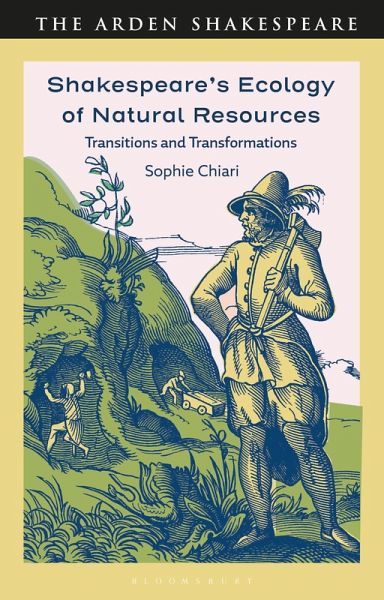
Sophie Chiari analyses how Shakespeare'splays and poems present the transformation of the early modern natural world through environmental shifts and ecological transformation. Using a range of examples from the Sonnets, Love's Labour's Lost, The Tempest, Hamlet and Henry V, Chiari's ecopoetic study of dramatic language explores Shakespeare's response to the rise of extractive exploitation in Elizabethan and Jacobean England. Chiari expands our understanding of the environment in Shakespeare beyond the so-called 'green' comedies by charting the transition from a pre-capitalist world towards a commodity-based society ruined by the enclosure of the commons. Using examples of water systems, sandscapes, soil and frost alongside the production of glass and salt in Shakespeare, these materials which are currently underrepresented in Shakespearean ecocriticism signal a commitment to expanding the 'material turn' in Shakespeare studies. Far from being limited to the present era, this book argues that cultural hegemony and the exploitation of soil, water and ice were increasingly linked in the early modern era, an age of conquest and massive human depredation. By interweaving ecohistoricism, ecopoetics and material studies Shakespeare's Ecology of Natural Resources shows how an eco-minded approach, focused on the interweaving of trade, territory and extractivism reveals new layers of meaning in Shakespearean poetics and drama.