
Andere Kunden interessierten sich auch für
 Sharing Tokyo32,99 €
 Public Space in Metropolitan Barcelona22,99 €
") Pure Space (Spanish Edition)29,99 €
Pure Space (Spanish Edition)29,99 € New York Global32,99 €
 Vacant Spaces NY43,99 €
 Superground / Underground29,99 €
 Revitalizing Japan32,99 €


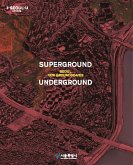

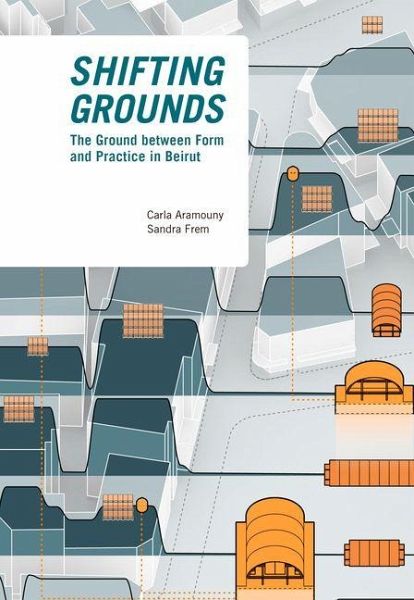
The book investigates spatial practices at the ground level of Beirut - Appropriation, Commoning, Production, and Activism - that fill the gap between the city's capital-driven development and the aspirations and needs of its inhabitants, in search for cohabitation and planning lessons that withstand chaos and uncertainty. Through such practices, the book reflects on the ground's project for collectivity reclaiming it as the backbone for co-producing the city. >This book examines specifically four spatial practices - Appropriation, Commoning, Production, and Activism - in how they inform and transform the diverse urban morphologies of the city from built matter to cultural organization. Through expansive visual and written narrations, the book constructs a graphical analysis of each practice, its materialization on the ground, its shaping of experience, and its impact on Beirut's urban transformation through the shifts that the city continues to endure. Central to the research is an extensive exploration of urban and architectural taxonomies that characterize the ground level of the city at multiple scales and through different time frames. Organized in four topical chapters, the work reflects on and analyzes each practice through specific methods, such as comparative urban sampling, typological cataloging, time-based mapping, and analytical drawings. >The work thus presents the tension between ground form In Beirut and its appropriation through the different spatial practices. It offers lessons of adaptation and planning for an uncertain future and helps rethink the ground of the city as the common denominator for collectivity and co-producing the city.