
Nicht lieferbar
From reviews of the hardback edition:
'... a rewarding book ... The approach is refreshingly humane.' -Times Literary Supplement
'Given the authors' clear and precise language and their stated aim to write an accessible book (which they achieve), this volume is a perfect Christmas present for anyone even remotely interested in the brain ... Sight Unseen is not just a book for readers of popular science, demonstrating how much can be learned about brain function from patient studies; even specialists in neuroscience and neuropsychology could learn something ... The book illustrates the enormous amount of knowledge to be gained from analysing deficits of specific stroke patients. It closes by stating: "Studying the way the brain reorganizes itself in response to severe damage presents one of the most important challenges to neuroscience in the twenty-first century." How true.' -Nature, Vol 429
'Goodale and Milner's book is a detailed but non-tech survey of the state of the art. There's more going on than you think, and they do an excellent job of explaining it.' -Focus (Science and Technology)
''Sight Unseen' is an intriguing and important book, stemming as it does from beautifully observed clinical detail combined with a range of ingenious experiments. Melvyn Goodale and David Milner present a persuasive and original argument for the essential doubleness of our visual system, in writing that is vivid and often delightful. It is a valuable and fundamental contribution to our understanding of visual processing.' -Oliver Sacks, M D
'A rare combination of humanity and important, seminal neuroscience - masterfully accessible.' -Lawrence Weiskrantz FRS, University of Oxford
'This follow-up to the authors' influential 'Visual Brain in Action' will make their important work on the 'two visual systems' more widely accessible, as it clearly deserves to be. It presents the empirical case for their seminal theory in a delightfully readable manner, treating the evolutionary basis for the dual-stream organization of the visual system, and discussing its far-reaching implications for understanding conscious and unconscious visual perception. Even those who do not agree with their entire comprehensive story will be impressed by the breadth of the case that they make for the claim that vision for action is a different, and perhaps a more primitive system of the brain than the one that gives us our conscious experience of seeing.' -Zenon Pylyshyn, Rutgers Center for Cognitive Science
''Sight Unseen' is one of the most fascinating and engaging accounts of visual experience that I have ever read. Goodale and Milner's scientific work over the last decade has caused a revolution in perceptual neuroscience. This book explains many of the details of this revolution in a way that is accessible to interested laypeople and will be of interest to specialists as well. It also shows the warm humanity that lies at the base of every successful doctor-patient relationship. Whether you are a neuroscientist, a philosopher, a poet, a journalist, or just someone who thinks about experiences instead of merely having them, this is a book that you must read.' -Sean Kelly, Department of Philosophy, Princeton University
''Sight Unseen' is ... a rewarding book... The approach is refreshingly humane. ... There is much ... information of interest in 'Sight Unseen'.' -Times Literary Supplement
A fascinating exploration of the 'unconscious' mind
Written by the scientists who made these groundbreaking discoveries
Accessible to students and popular science readers
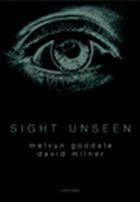
Vision, more than any other sense, dominates our mental life. Our visual experience is so rich and so detailed, that we can hardly distinguish that experience from the world itself. Even when we just think about the world and don't look at it directly, we can't help but imagine what it looks like. We think of 'seeing' as being an exclusively conscious activity - we direct our eyes, we choose what we look at, we register what we are seeing. The research described in this book has radically altered this attitude towards vision.
The odyssey begins and ends with the story of a young woman (here called 'Dee') apparently blind to the shapes of things in her visual world due to a devastating brain accident. As their investigations unfolded, Milner and Goodale found that Dee wasn't in fact 'form-blind' at all - she could register the shapes of objects unconsciously, though she didn't at first realise it. Taking us on a journey into the unconscious brain, the two scientists who made this discovery tell the amazing story of their work, and the surprising conclusions about the normal brain's hidden capacities they were forced to reach. Written to be accessible to students and popular science readers, this book is a fascinating illustration of how the study of a damaged brain can reveal much about the human condition.
Contents
Prologue
1 A tragic accident
2 Doing without seeing
3 When vision for action fails
4 The origins of vision: from modules to models
5 Streams within streams
6 Why do we need two systems?
7 Getting it all together
8 Postscript: Dee's life 15 years on
Epilogue
'... a rewarding book ... The approach is refreshingly humane.' -Times Literary Supplement
'Given the authors' clear and precise language and their stated aim to write an accessible book (which they achieve), this volume is a perfect Christmas present for anyone even remotely interested in the brain ... Sight Unseen is not just a book for readers of popular science, demonstrating how much can be learned about brain function from patient studies; even specialists in neuroscience and neuropsychology could learn something ... The book illustrates the enormous amount of knowledge to be gained from analysing deficits of specific stroke patients. It closes by stating: "Studying the way the brain reorganizes itself in response to severe damage presents one of the most important challenges to neuroscience in the twenty-first century." How true.' -Nature, Vol 429
'Goodale and Milner's book is a detailed but non-tech survey of the state of the art. There's more going on than you think, and they do an excellent job of explaining it.' -Focus (Science and Technology)
''Sight Unseen' is an intriguing and important book, stemming as it does from beautifully observed clinical detail combined with a range of ingenious experiments. Melvyn Goodale and David Milner present a persuasive and original argument for the essential doubleness of our visual system, in writing that is vivid and often delightful. It is a valuable and fundamental contribution to our understanding of visual processing.' -Oliver Sacks, M D
'A rare combination of humanity and important, seminal neuroscience - masterfully accessible.' -Lawrence Weiskrantz FRS, University of Oxford
'This follow-up to the authors' influential 'Visual Brain in Action' will make their important work on the 'two visual systems' more widely accessible, as it clearly deserves to be. It presents the empirical case for their seminal theory in a delightfully readable manner, treating the evolutionary basis for the dual-stream organization of the visual system, and discussing its far-reaching implications for understanding conscious and unconscious visual perception. Even those who do not agree with their entire comprehensive story will be impressed by the breadth of the case that they make for the claim that vision for action is a different, and perhaps a more primitive system of the brain than the one that gives us our conscious experience of seeing.' -Zenon Pylyshyn, Rutgers Center for Cognitive Science
''Sight Unseen' is one of the most fascinating and engaging accounts of visual experience that I have ever read. Goodale and Milner's scientific work over the last decade has caused a revolution in perceptual neuroscience. This book explains many of the details of this revolution in a way that is accessible to interested laypeople and will be of interest to specialists as well. It also shows the warm humanity that lies at the base of every successful doctor-patient relationship. Whether you are a neuroscientist, a philosopher, a poet, a journalist, or just someone who thinks about experiences instead of merely having them, this is a book that you must read.' -Sean Kelly, Department of Philosophy, Princeton University
''Sight Unseen' is ... a rewarding book... The approach is refreshingly humane. ... There is much ... information of interest in 'Sight Unseen'.' -Times Literary Supplement
A fascinating exploration of the 'unconscious' mind
Written by the scientists who made these groundbreaking discoveries
Accessible to students and popular science readers
Vision, more than any other sense, dominates our mental life. Our visual experience is so rich and so detailed, that we can hardly distinguish that experience from the world itself. Even when we just think about the world and don't look at it directly, we can't help but imagine what it looks like. We think of 'seeing' as being an exclusively conscious activity - we direct our eyes, we choose what we look at, we register what we are seeing. The research described in this book has radically altered this attitude towards vision.
The odyssey begins and ends with the story of a young woman (here called 'Dee') apparently blind to the shapes of things in her visual world due to a devastating brain accident. As their investigations unfolded, Milner and Goodale found that Dee wasn't in fact 'form-blind' at all - she could register the shapes of objects unconsciously, though she didn't at first realise it. Taking us on a journey into the unconscious brain, the two scientists who made this discovery tell the amazing story of their work, and the surprising conclusions about the normal brain's hidden capacities they were forced to reach. Written to be accessible to students and popular science readers, this book is a fascinating illustration of how the study of a damaged brain can reveal much about the human condition.
Contents
Prologue
1 A tragic accident
2 Doing without seeing
3 When vision for action fails
4 The origins of vision: from modules to models
5 Streams within streams
6 Why do we need two systems?
7 Getting it all together
8 Postscript: Dee's life 15 years on
Epilogue