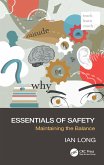
This book investigates over 30 major catastrophes and reveals the critical necessity of transitioning from identifying lessons to implementing actionable changes in workplace safety. Recognising the gap between incident analysis and meaningful workplace transformation, the book advocates for a shift in mindset, emphasising practical application over theoretical comprehension. This book delivers a comprehensive framework that connects incident findings and tangible and practical workplace improvements. Building upon the works of renowned safety science thinkers, including Sidney Dekker and…mehr
This book investigates over 30 major catastrophes and reveals the critical necessity of transitioning from identifying lessons to implementing actionable changes in workplace safety.
Recognising the gap between incident analysis and meaningful workplace transformation, the book advocates for a shift in mindset, emphasising practical application over theoretical comprehension. This book delivers a comprehensive framework that connects incident findings and tangible and practical workplace improvements. Building upon the works of renowned safety science thinkers, including Sidney Dekker and James Reason, the book offers insights garnered from years of industry experience, delivering a pragmatic approach that is usable in any workplace. New to this edition are two new chapters, updated content on lessons learned from investigations, and increased coverage of the process required to better understand workplace fatalities. Through investigating common drivers of disasters, from the Herald of Free Enterprise ferry tragedy to the Fukushima Daiichi meltdown, the reader will gain an understanding of what can be learned from past incidents and how that can be applied to ensure a safer future.
This second edition of Simplicity in Safety Investigations: Moving Towards Learning from Incidents is an indispensable resource tailored for those in occupational health and safety practice, including supervisors, managers, and business leaders across diverse industries.
Ian Long is Director of RAEDA Consulting in Perth, Australia. Building on a wide variety of roles across many industries, he has worked predominantly in the minerals extraction and processing industry for the last 30 years, with some exposure in oil and gas and the chemical industries. He has had roles ranging from Safety Advisor in an iron ore mine to Vice President of Health, Safety, and Environment for the Nickel Group within BHP Billiton. Over that period, he has facilitated 22 fatality investigations - many hundreds of lower-level but still significant investigations - and has taught thousands how to do a practical investigation within simple and complex (Incident Cause Analysis Method [ICAM]) methods. Over the last eleven years, he has run his own company, providing coaching and training in leadership and specifically in incident investigations around the world.
Inhaltsangabe
Acknowledgements ix Early thoughts xi Introduction xiii What does this edition cover? xv Chapter 1 Learning, mindset, and approach 1 What is learning? 1 Mindset 2 Approach 6 Chapter essentials 7 Chapter 2 Before you start 8 Key decisions: study level, scope, team formation, and roles 8 Learning Study level 8 Scope and team formation 9 A simple study 10 A detailed study 11 Roles 13 The art of facilitation and using a coaching style in facilitation 14 Your conversations and questions (before and after an event) 19 Chapter essentials 19 Chapter 3 Getting to 'lessons to be learnt' - the process 20 Step 0: Immediate response (Pre-Learning Study work) 20 Step 1: A decision to undertake a Learning Study is made 21 Step 2: Preliminary information gathering is completed 22 A side note on post-incident conversations/ interviewing (as compared to taking statements) 23 Generous listening 25 The interview conversation 27 Step 3: A Learning Study team is formed 29 Step 4: The team goes through the draft Work-As-Done timeline 29 Step 5: More comprehensive information gathering is undertaken by the team, including a PEEPO 30 How to run an effective and efficient PEEPO 31 Step 6: The timeline is completed, and 'Elements of Interest' are identified (determining Work-As-Done, Work- As-Normal, and Work-As-Written) 33 A side note on the differences between WAD, WAN, and WAW 33 Step 7: The contributors are listed for each Element of Interest 42 Hazards and risks 45 Understanding hazards, risk, and controlling of risk 46 Systems of work and their interrelationships 47 Shared space as it relates to safe workspaces 47 The limitations and use of situational awareness 48 Attitude and mindset 48 Understanding their 'why' 48 The importance of attitude, internal decisions, and sense-making 49 The adoption of a growth mindset, including a learning mindset 49 Competency 50 Core 'competency training' and 'awareness induction' 50 Experience 50 Process, tools, and equipment 51 Understanding of process and equipment 51 Equipment, tools, and plant design 51 Planning and task assignment 51 Task planning, assignment, acceptance, and monitoring, including communication 52 Understanding their own and others' expectations 52 Answering a different question - that is, when the action doesn't match the request 53 What-You-See-Is-All-There-Is and plan continuation 53 Efficiency-Thoroughness Trade-Off 54 Drift 54 Leadership 54 Leadership 54 Accountability and authority mismatch 55 The level of understanding and curiosity about how work is actually done 55 Step 8: For each sentence, word, or statement created within the contributors, the team explores what we can learn 56 Step 9: Actions from Learning Study 62 Actions with SMARTS 62 Step 10: Write the report 65 Learning from Normal Work 66 Chapter essentials 69 Chapter 4 Converting lessons to be learnt into lessons learnt 70 Sharing versus learning 70 The process 71 How can we maximise the likelihood of learning remaining embedded in behaviour? 76 Chapter essentials 79 Chapter 5 Lessons we need to learn 80 Bhopal 81 Chernobyl 82 Space Shuttle Challenger 82 Herald of Free Enterprise 83 Piper Alpha oil rig 84 Space Shuttle Columbia 84 Deep Water Horizon 85 Fukushima Daiichi 86 Three Mile Island 87 Toulouse AZF Fertilizer Plant 88 West Fertilizer Company 88 Texas City Explosion 89 Flixborough 90 Longford Esso Plant 90 Gretley Mine 91 Costa Concordia 92 Flight AF 447 92 Sewol Ferry 92 Lac-Megantic Train Explosion 93 Phillips Explosion 93 DuPont Toxic Chemical Release 94 Grovepark Mills Explosion 95 Pike River underground mine explosion 95 LPG Fire at Valero - McKee Refinery 96 Catastrophic rupture of heat exchanger at the Tessoro petroleum refinery in Anacortes, Washington 96 AL Solutions metal dust explosion and fire, New Cumberland, USA 97 Nitrous oxide explosion 97 Ethylene release and fire 97 Imperial Sugar 98 Fatal Liquid Nitrogen Release. Foundation Food Group 98 The top 12 categories and their barriers 99 Learning from previous incidents (and audits) 99 Understanding of process, equipment, experience, and competence 107 Procedures and risk assessments 110 Critical processes 114 Emergency planning and processes 116 Management of Change 118 Leadership 119 Cost and production pressures 121 Shift handover and communications 122 Drift 124 Key performance indices 125 Maintenance and poor equipment 126 Overview 127 All 22 lessons to be learnt 127 Barriers 129 Chapter essentials 133 Chapter 6 Conclusion 134 Afterword, not after-thought 135 The quality checklist 135 Bibliography/essential reading list 137 Appendices 143 A Post-incident conversations - interviews 145 B Case study/mock-up scenario for Learning Study training purposes 159 C Safety Oscillation model 177 Index 181
Acknowledgements ix Early thoughts xi Introduction xiii What does this edition cover? xv Chapter 1 Learning, mindset, and approach 1 What is learning? 1 Mindset 2 Approach 6 Chapter essentials 7 Chapter 2 Before you start 8 Key decisions: study level, scope, team formation, and roles 8 Learning Study level 8 Scope and team formation 9 A simple study 10 A detailed study 11 Roles 13 The art of facilitation and using a coaching style in facilitation 14 Your conversations and questions (before and after an event) 19 Chapter essentials 19 Chapter 3 Getting to 'lessons to be learnt' - the process 20 Step 0: Immediate response (Pre-Learning Study work) 20 Step 1: A decision to undertake a Learning Study is made 21 Step 2: Preliminary information gathering is completed 22 A side note on post-incident conversations/ interviewing (as compared to taking statements) 23 Generous listening 25 The interview conversation 27 Step 3: A Learning Study team is formed 29 Step 4: The team goes through the draft Work-As-Done timeline 29 Step 5: More comprehensive information gathering is undertaken by the team, including a PEEPO 30 How to run an effective and efficient PEEPO 31 Step 6: The timeline is completed, and 'Elements of Interest' are identified (determining Work-As-Done, Work- As-Normal, and Work-As-Written) 33 A side note on the differences between WAD, WAN, and WAW 33 Step 7: The contributors are listed for each Element of Interest 42 Hazards and risks 45 Understanding hazards, risk, and controlling of risk 46 Systems of work and their interrelationships 47 Shared space as it relates to safe workspaces 47 The limitations and use of situational awareness 48 Attitude and mindset 48 Understanding their 'why' 48 The importance of attitude, internal decisions, and sense-making 49 The adoption of a growth mindset, including a learning mindset 49 Competency 50 Core 'competency training' and 'awareness induction' 50 Experience 50 Process, tools, and equipment 51 Understanding of process and equipment 51 Equipment, tools, and plant design 51 Planning and task assignment 51 Task planning, assignment, acceptance, and monitoring, including communication 52 Understanding their own and others' expectations 52 Answering a different question - that is, when the action doesn't match the request 53 What-You-See-Is-All-There-Is and plan continuation 53 Efficiency-Thoroughness Trade-Off 54 Drift 54 Leadership 54 Leadership 54 Accountability and authority mismatch 55 The level of understanding and curiosity about how work is actually done 55 Step 8: For each sentence, word, or statement created within the contributors, the team explores what we can learn 56 Step 9: Actions from Learning Study 62 Actions with SMARTS 62 Step 10: Write the report 65 Learning from Normal Work 66 Chapter essentials 69 Chapter 4 Converting lessons to be learnt into lessons learnt 70 Sharing versus learning 70 The process 71 How can we maximise the likelihood of learning remaining embedded in behaviour? 76 Chapter essentials 79 Chapter 5 Lessons we need to learn 80 Bhopal 81 Chernobyl 82 Space Shuttle Challenger 82 Herald of Free Enterprise 83 Piper Alpha oil rig 84 Space Shuttle Columbia 84 Deep Water Horizon 85 Fukushima Daiichi 86 Three Mile Island 87 Toulouse AZF Fertilizer Plant 88 West Fertilizer Company 88 Texas City Explosion 89 Flixborough 90 Longford Esso Plant 90 Gretley Mine 91 Costa Concordia 92 Flight AF 447 92 Sewol Ferry 92 Lac-Megantic Train Explosion 93 Phillips Explosion 93 DuPont Toxic Chemical Release 94 Grovepark Mills Explosion 95 Pike River underground mine explosion 95 LPG Fire at Valero - McKee Refinery 96 Catastrophic rupture of heat exchanger at the Tessoro petroleum refinery in Anacortes, Washington 96 AL Solutions metal dust explosion and fire, New Cumberland, USA 97 Nitrous oxide explosion 97 Ethylene release and fire 97 Imperial Sugar 98 Fatal Liquid Nitrogen Release. Foundation Food Group 98 The top 12 categories and their barriers 99 Learning from previous incidents (and audits) 99 Understanding of process, equipment, experience, and competence 107 Procedures and risk assessments 110 Critical processes 114 Emergency planning and processes 116 Management of Change 118 Leadership 119 Cost and production pressures 121 Shift handover and communications 122 Drift 124 Key performance indices 125 Maintenance and poor equipment 126 Overview 127 All 22 lessons to be learnt 127 Barriers 129 Chapter essentials 133 Chapter 6 Conclusion 134 Afterword, not after-thought 135 The quality checklist 135 Bibliography/essential reading list 137 Appendices 143 A Post-incident conversations - interviews 145 B Case study/mock-up scenario for Learning Study training purposes 159 C Safety Oscillation model 177 Index 181
Es gelten unsere Allgemeinen Geschäftsbedingungen: www.buecher.de/agb
Impressum
www.buecher.de ist ein Internetauftritt der buecher.de internetstores GmbH
Geschäftsführung: Monica Sawhney | Roland Kölbl | Günter Hilger
Sitz der Gesellschaft: Batheyer Straße 115 - 117, 58099 Hagen
Postanschrift: Bürgermeister-Wegele-Str. 12, 86167 Augsburg
Amtsgericht Hagen HRB 13257
Steuernummer: 321/5800/1497
USt-IdNr: DE450055826