
Andere Kunden interessierten sich auch für
 MAXILLARY EXPANSION IN ADULTS40,99 €
 Effects of Maxillary Expansion on Phonetics29,99 €
 Skeletal changes post orthodontic treatment in Class II Division 129,99 €
 Skeletal Maturity Indicators56,99 €
 Skeletal Expansion36,99 €
![]() "SARPE-A Skeletal Approach"40,99 €
"SARPE-A Skeletal Approach"40,99 € SKELETAL MATURITY INDICATORS29,99 €

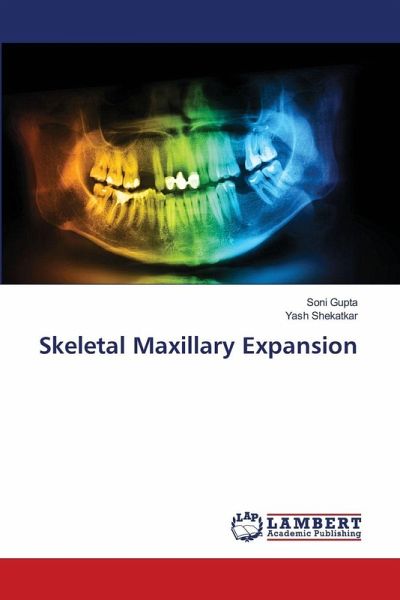
Skeletal maxillary expansion is a cornerstone technique in orthodontics for correcting maxillary transverse deficiency a condition frequently associated with posterior crossbite, dental crowding, compromised airway function, and disharmony in facial growth. As described in your dissertation, this field has evolved remarkably, shifting from purely tooth-borne mechanics to sophisticated skeletal anchorage systems that aim for predictable, stable, and biologically harmonious expansion. The work begins by highlighting how maxillary constriction rarely self-corrects and is best addressed early. Traditional rapid maxillary expansion (RME) appliances, such as the Hyrax and Haas expanders, apply heavy intermittent forces to open the mid-palatal suture. Historically, these appliances helped widen arches and alleviate crowding but were often accompanied by dentoalveolar side effects, including buccal tipping, root resorption, periodontal strain, and limited skeletal change. These limitations paved the way for a more biologically sound approach.