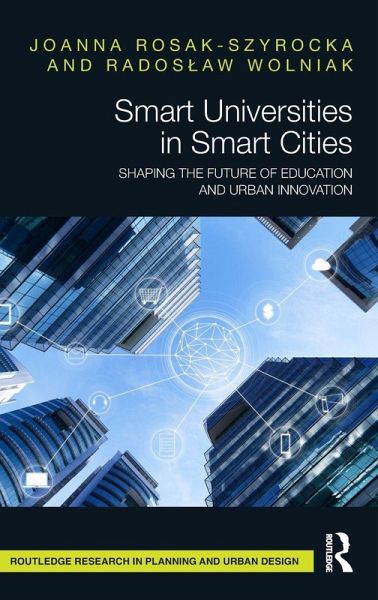
Smart Universities in Smart Cities: Shaping the Future of Education and Urban Innovation focuses on how higher education institutions are adapting to the challenges of the digital age in a world increasingly influenced by technology and sustainability. Universities are becoming an indispensable element of smart cities, driving forward innovation, sustainability, and urban living. The book explores how emerging technologies such as AI, IoT, and blockchain are transforming campuses into dynamic, data-driven ecosystems. Both of these dimensions are studied through data analytics, case studies,…mehr
Smart Universities in Smart Cities: Shaping the Future of Education and Urban Innovation focuses on how higher education institutions are adapting to the challenges of the digital age in a world increasingly influenced by technology and sustainability. Universities are becoming an indispensable element of smart cities, driving forward innovation, sustainability, and urban living.
The book explores how emerging technologies such as AI, IoT, and blockchain are transforming campuses into dynamic, data-driven ecosystems. Both of these dimensions are studied through data analytics, case studies, and futuristic thinking perspectives to identify opportunities and challenges of the establishment of smart universities within the broader ecosystem of smarter cities. The book offers a holistic approach to planning educational institutions, covering issues such as sustainable campus development, digital learning environments, and smart mobility solutions.
As universities undergo digital transformation, they advance not only learning but also the larger role of academia in society. The book envisions the future, where intelligent campuses act as centres of knowledge, collaboration, and sustainable development, propelling the world into a smarter and more inclusive reality for future generations. It will be of interest to researchers and students of urban planning and sustainability studies, as well as to urban planners and policymakers.
Joanna Rosak-Szyrocka is Assistant Professor, Erasmus+ coordinator at the Faculty of Management, Czestochowa University of Technology, Poland. She has been a participant in multiple Erasmus+ teacher mobility programs: Italy, UK, Slovenia, Hungary, Czech Republic, Slovakia, and France. Rados¿aw Wolniak is a full professor at the Department of Economics and Informatics at the Silesian University of Technology, Poland. For over 20 years, he has been dealing with the issues of management, including the Industry 4.0, Smart City, digitalization, and artificial intelligence. His achievements include over 600 publications issued at national and international publishers, as well as many undertakings and projects implemented in cooperation with the business environment.
Inhaltsangabe
List of Figures List of Tables Introduction Chapter 1 Overview of Smart Universities and Smart Cities 1.1. Evolution of Smart Concepts: From Cities to Campuses 1.2 The Role of Education in Smart Urban Development 1.3 Global Trends in Smart Universities and Smart Cities Chapter 2 The Role of Technology in Smart Universities 2.1. Internet of Things (IoT) on Campus 2.2 Artificial intelligence (AI) in Education and Administration 2.3 Cloud Computing and Digital Infrastructure Chapter 3 Sustainable Campus Development within Smart Cities 3.1. Green Building Practices and Smart Architecture 3.2 Renewable Energy and Resource Management 3.3 Waste Management and Water Conservation Technologies Chapter 4 Smart Learning Environments 4.1. Digital Classrooms and Learning Management Systems 4.2. Features of Smart Classroom 4.3. Virtual and Augmented Reality in Education 4.4. Personalized and Adaptive Learning Systems Chapter 5 Integrating Smart Mobility and Transportation on Campus 5.1. Autonomous Transportation and Campus Shuttles 5.2. Sustainable Mobility Options and Public Transit Integration 5.3. Smart Traffic Management and Parking Solutions Chapter 6 Data-Driven Decision-Making in Smart Universities 6.1. Big Data and Analytics for University Operations 6.2. Enhancing Student Experience through Data Insights 6.3. Data Privacy and Security in Smart Campuses Chapter 7 Enhancing Campus Life through Smart Services 7.1. Smart Healthcare Services on Campus 7.2. Digital Engagement Platforms and Student Well-being 7.3. Smart Security and Safety Solutions Chapter 8 Collaboration between Universities and City Governments 8.1. University-City Partnerships for Urban Innovation 8.2. Shared Infrastructure and Resource Management 8.3. Social Impact and Community Engagement Chapter 9 Challenges and Opportunities in Creating Smart Campuses 9.1. Financial and Technological Hurdles 9.2. Cultural and Social Resistance 9.3. Identifying and Leveraging Opportunities Chapter 10 Policy, Governance, and Regulation in Smart University Integration 10.1. National and International Policies Supporting Smart Universities 10.2. University Governance Models for the Digital Age 10.3. Regulatory Challenges and Compliance Strategies Chapter 11 The Future of Smart Universities in Smart Cities 11.1. Emerging Technologies Shaping Smart Universities 11.2. Long-Term Impacts on Urban Development 11.3. Strategic Planning for the Future of Smart Campuses Index
List of Figures List of Tables Introduction Chapter 1 Overview of Smart Universities and Smart Cities 1.1. Evolution of Smart Concepts: From Cities to Campuses 1.2 The Role of Education in Smart Urban Development 1.3 Global Trends in Smart Universities and Smart Cities Chapter 2 The Role of Technology in Smart Universities 2.1. Internet of Things (IoT) on Campus 2.2 Artificial intelligence (AI) in Education and Administration 2.3 Cloud Computing and Digital Infrastructure Chapter 3 Sustainable Campus Development within Smart Cities 3.1. Green Building Practices and Smart Architecture 3.2 Renewable Energy and Resource Management 3.3 Waste Management and Water Conservation Technologies Chapter 4 Smart Learning Environments 4.1. Digital Classrooms and Learning Management Systems 4.2. Features of Smart Classroom 4.3. Virtual and Augmented Reality in Education 4.4. Personalized and Adaptive Learning Systems Chapter 5 Integrating Smart Mobility and Transportation on Campus 5.1. Autonomous Transportation and Campus Shuttles 5.2. Sustainable Mobility Options and Public Transit Integration 5.3. Smart Traffic Management and Parking Solutions Chapter 6 Data-Driven Decision-Making in Smart Universities 6.1. Big Data and Analytics for University Operations 6.2. Enhancing Student Experience through Data Insights 6.3. Data Privacy and Security in Smart Campuses Chapter 7 Enhancing Campus Life through Smart Services 7.1. Smart Healthcare Services on Campus 7.2. Digital Engagement Platforms and Student Well-being 7.3. Smart Security and Safety Solutions Chapter 8 Collaboration between Universities and City Governments 8.1. University-City Partnerships for Urban Innovation 8.2. Shared Infrastructure and Resource Management 8.3. Social Impact and Community Engagement Chapter 9 Challenges and Opportunities in Creating Smart Campuses 9.1. Financial and Technological Hurdles 9.2. Cultural and Social Resistance 9.3. Identifying and Leveraging Opportunities Chapter 10 Policy, Governance, and Regulation in Smart University Integration 10.1. National and International Policies Supporting Smart Universities 10.2. University Governance Models for the Digital Age 10.3. Regulatory Challenges and Compliance Strategies Chapter 11 The Future of Smart Universities in Smart Cities 11.1. Emerging Technologies Shaping Smart Universities 11.2. Long-Term Impacts on Urban Development 11.3. Strategic Planning for the Future of Smart Campuses Index
Es gelten unsere Allgemeinen Geschäftsbedingungen: www.buecher.de/agb
Impressum
www.buecher.de ist ein Internetauftritt der buecher.de internetstores GmbH
Geschäftsführung: Monica Sawhney | Roland Kölbl | Günter Hilger
Sitz der Gesellschaft: Batheyer Straße 115 - 117, 58099 Hagen
Postanschrift: Bürgermeister-Wegele-Str. 12, 86167 Augsburg
Amtsgericht Hagen HRB 13257
Steuernummer: 321/5800/1497
USt-IdNr: DE450055826