

Andere Kunden interessierten sich auch für
 Econometrics60,99 €
 The Sociology of Leisure34,99 €
 Scarcity11,99 €
 Scarcity40,99 €
 Combating Inequality28,99 €
 Economic Methodology, History and Pluralism43,99 €
 The Political Economy of Immigration in The Netherlands144,99 €


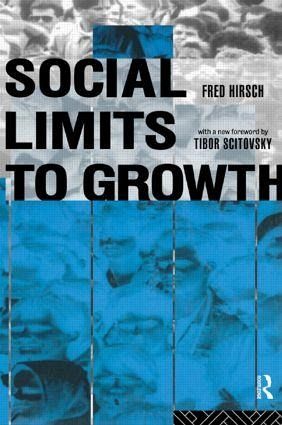
The promise of economic growth which has dominated society for so long has reached an impasse. In his classic analysis, Fred Hirsch argued that the causes of this were essentially social rather than physical. Affluence brings its own problems. As societies become richer, an increasing proportion of the extra goods and services created are not available to everybody. Material affluence does not make for a better society.
Fred Hirsch's classic exposition of the social limits to growth manages to connect many of the apparently disparate factors that blight modern life: alienation at work and deteriorating cities as well as inflation and unemployment.
Fred Hirsch's classic exposition of the social limits to growth manages to connect many of the apparently disparate factors that blight modern life: alienation at work and deteriorating cities as well as inflation and unemployment.
'Important books are rare. They are all the more welcome when they appear; and one need have no hesitation in naming as a classic Fred Hirsch's new analysis of the inherent defects of the market economy as an instrument of human amelioration.' - Peter Jay, The Times
'An exceptionally interesting, original, and well-written book on one of the most important themes: what are the fruits of economic growth and why do they seem increasingly disappointing?' - The Economic Journal
'This highly original book makes a compelling argument that affluence, by creating a kind of congestion (much more than simple crowding), limits the welfare attainable by society as a whole.' - Foreign Affairs
'An exceptionally interesting, original, and well-written book on one of the most important themes: what are the fruits of economic growth and why do they seem increasingly disappointing?' - The Economic Journal
'This highly original book makes a compelling argument that affluence, by creating a kind of congestion (much more than simple crowding), limits the welfare attainable by society as a whole.' - Foreign Affairs