
Andere Kunden interessierten sich auch für
 Hellthyjunkfood Presents25,99 €
 Broken Roots14,99 €
 Evaluation Roots80,99 €
 Roots and Flowers44,99 €
 Notable Americans with Slovak Roots25,99 €
 Autobiography of a Successful Autarchist INVENTOR / ADVENTURER with Milwaukee Roots46,99 €
 American Jews with Czechoslovak Roots32,99 €






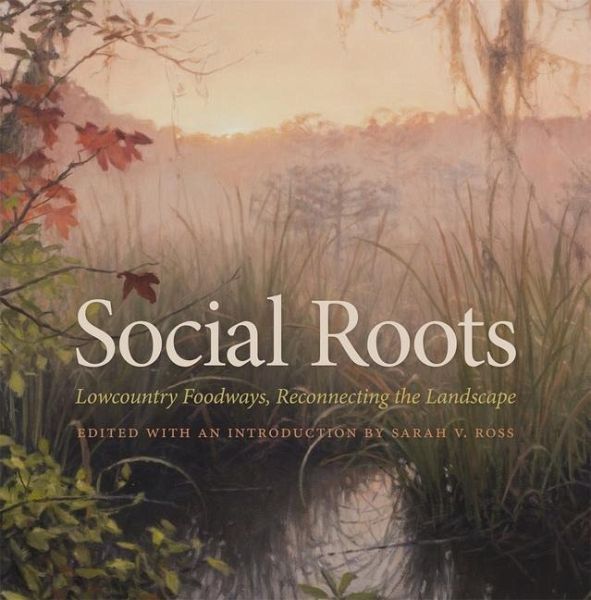
"Social Roots is a militantly interdisciplinary volume that draws on contributions from inside and outside the academy to explore the relationships between nature and culture as expressed in the foodways of the Georgia and South Carolina coasts. In seventeen chapters, a handful of bespoke artworks, and recipes, Ross and her contributors illuminate the invisible threads that run in wild tangles clear through the lowcountry connecting massive live oaks, palmetto and freshwater sloughs with tidal waters flooding and draining the most extensive salt marshes on the Eastern Seaboard. Threads that connect the landscape from the St. Mary's River on the Georgia-Florida border to the confluence of Ashley and Cooper Rivers at Charleston, South Carolina. Flowing threads of tidal creeks, half ocean, half fresh river water, connect us through time to cultures who feasted on an abundance of shellfish thousands of years ago. An enduring bounty of oysters, shrimps, crabs, clams and mussels still lure us into their world. Looking across time and geography, this book interweaves fundamental ecological principles as it honors three early cultures: Native American, European and African. All were enmeshed with the coastal environment. All shared similar threads connecting food production: hunting, foraging, planting, cultivating, harvesting, preserving, and cooking. Across the ages, this ongoing connection-land, harvester or farmer, cook-forms the infrastructure of cookery practices. In large part, Lowcountry foodways is built simultaneously on scarcity and fickle opportunity"--