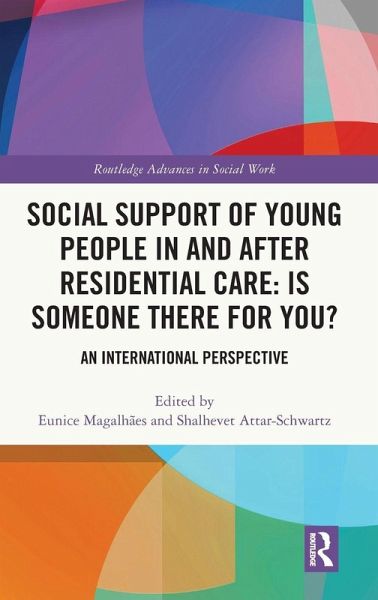
Decades of research proposes that wide, sound, rich, positive, warm, and secure relationships are particularly protective for children and young people at risk in the community and in out of home care.
Decades of research proposes that wide, sound, rich, positive, warm, and secure relationships are particularly protective for children and young people at risk in the community and in out of home care.
Eunice Magalhães (Ph.D.) is a researcher at CIS-ISCTE and has been teaching topics related to related to child maltreatment, child protection, foster care, and residential care at ISCTE for the past years. Her research also focuses on the mental health and resilience of vulnerable groups. Shalhevet Attar-Schwartz (Ph.D.) is a full professor at the School of Social Work and Social Welfare at the Hebrew University of Jerusalem. Her research focuses on child well-being and child welfare, with a particular emphasis on children and youth in out-of-home care, including residential care settings, family foster care, and adoption.
Inhaltsangabe
0.Introduction. Part One - Conceptual and Theoretical Framework. 1.Social Support and Social Networks of Young People in Residential Care and Post-Care: Conceptual Frameworks and Theoretical Insights. 2.Transformative Change for Children in Residential Care: Exploring the Potential of Support for Work, Recreation and Educational Opportunities from a Life Course Perspective. Part Two - Social Support While in Residential Care. 3.Social Support and Psychological Functioning: A Review of Empirical Evidence in the Portuguese Context. 4.Social Support from Nuclear and Extended Family, Peers and Staff of Youth in Residential Care: Evidence from Israel. 5."Somewhere You Can Grow" - Young People and Workers' Views on Residential Care Settings and the Value of Relationships and Social Support. 6.Perceived Social Support in Residential Care: Its contribution to Adolescents' Mental Health and Quality of Life. 7.Social support and well-being among Canadian young people in family foster care, kinship care, or group care. Part Three - Care Leavers and Transition from Residential Care. 8.Trends in Social Support During the Transition to Adulthood for Youths who Spent Time in Congregate Care in California. 9.Formal and Informal Social Networks of Israeli Care Leavers during the Transition to Adulthood. 10.Social Support for Residential Care Leavers in Ghana: The Perspectives and Experiences of Social Workers and Residential Care Youth Workers. 11.Is Someone There for Them: Care Leavers' Experiences, Challenges, and Support During and After Residential Care. Part Four - Young People In and After Residential Care Through an Intersectional Lens. 12.LGBTQIA+ young people leaving care: Exploring social challenges and social support in three countries. 13.Is Anyone There? Supports Available for Unaccompanied Migrant and Non-Migrant Residential Care Leavers in Spain. Part Five - Interventions and Services for Fostering Social Support. 14.Social support of young people during and after residential youth care in the Netherlands: The role of the family, care workers, and residential group. 15.Caring for the Caregivers: Evaluating Brazil's "Cuida" Program Aiming at Promoting Skills for Building Caring Relationships with Children and Youth. x.Conclusion.
0.Introduction. Part One - Conceptual and Theoretical Framework. 1.Social Support and Social Networks of Young People in Residential Care and Post-Care: Conceptual Frameworks and Theoretical Insights. 2.Transformative Change for Children in Residential Care: Exploring the Potential of Support for Work, Recreation and Educational Opportunities from a Life Course Perspective. Part Two - Social Support While in Residential Care. 3.Social Support and Psychological Functioning: A Review of Empirical Evidence in the Portuguese Context. 4.Social Support from Nuclear and Extended Family, Peers and Staff of Youth in Residential Care: Evidence from Israel. 5."Somewhere You Can Grow" - Young People and Workers' Views on Residential Care Settings and the Value of Relationships and Social Support. 6.Perceived Social Support in Residential Care: Its contribution to Adolescents' Mental Health and Quality of Life. 7.Social support and well-being among Canadian young people in family foster care, kinship care, or group care. Part Three - Care Leavers and Transition from Residential Care. 8.Trends in Social Support During the Transition to Adulthood for Youths who Spent Time in Congregate Care in California. 9.Formal and Informal Social Networks of Israeli Care Leavers during the Transition to Adulthood. 10.Social Support for Residential Care Leavers in Ghana: The Perspectives and Experiences of Social Workers and Residential Care Youth Workers. 11.Is Someone There for Them: Care Leavers' Experiences, Challenges, and Support During and After Residential Care. Part Four - Young People In and After Residential Care Through an Intersectional Lens. 12.LGBTQIA+ young people leaving care: Exploring social challenges and social support in three countries. 13.Is Anyone There? Supports Available for Unaccompanied Migrant and Non-Migrant Residential Care Leavers in Spain. Part Five - Interventions and Services for Fostering Social Support. 14.Social support of young people during and after residential youth care in the Netherlands: The role of the family, care workers, and residential group. 15.Caring for the Caregivers: Evaluating Brazil's "Cuida" Program Aiming at Promoting Skills for Building Caring Relationships with Children and Youth. x.Conclusion.
Es gelten unsere Allgemeinen Geschäftsbedingungen: www.buecher.de/agb
Impressum
www.buecher.de ist ein Internetauftritt der buecher.de internetstores GmbH
Geschäftsführung: Monica Sawhney | Roland Kölbl | Günter Hilger
Sitz der Gesellschaft: Batheyer Straße 115 - 117, 58099 Hagen
Postanschrift: Bürgermeister-Wegele-Str. 12, 86167 Augsburg
Amtsgericht Hagen HRB 13257
Steuernummer: 321/5800/1497
USt-IdNr: DE450055826