
Andere Kunden interessierten sich auch für
 La sociedad del cansancio14,99 €
 La Acción Comunicativa en la Sociedad Hipermoderna46,99 €
 En guerra por la vida15,99 €
 Expulsion de Lo Distinto, La -V2*10,99 €
 En Busca de la Bondad Colectiva15,99 €
 Actitud colectiva corresponsable14,99 €
 Etica de la Consideracion24,99 €





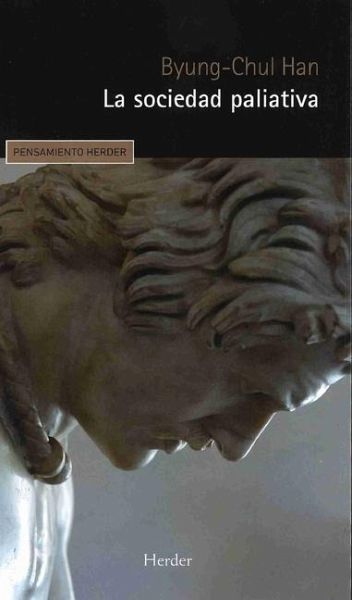
In this essay, Byung-Chul Han criticizes how the excess positivity of happiness forces us to negate any glimpse of pain and subjects us to a state of permanent anesthesia. Today we live in a society that has developed a phobia of pain, in which there is no longer room for suffering. This widespread fear is reflected both personally and socially, and even in politics. The neoliberal imperative be happy, which hides a demand for performance, tries to avoid any painful state and pushes us into a state of permanent anesthesia. As he reflects in The Society of Tiredness, Byung-Chul Han is part of the assumption that there has been a radical paradigm shift in the West. Premodern societies had a very intimate relationship with pain and death, which they faced with dignity and resignation. Today, however, the positivity of happiness surpasses the negativity of pain, and extends to the social sphere. By expelling from public life conflicts and controversies, which could lead to painful confrontations, a post-democracy is established, which is at heart a palliative democracy.