
Andere Kunden interessierten sich auch für
 A Code For Sustainable Housing in Developing Countries24,99 €
 A Building Information Modelling Maturity Model for Developing Countries185,99 €
 Sustainable Urbanism in Developing Countries216,99 €
 Construction Health and Safety in Developing Countries59,99 €
 Socio-Architecture30,99 €
 A Code For Sustainable Housing in Developing Countries. 2nd Edition29,99 €
 Rivers of Change58,00 €

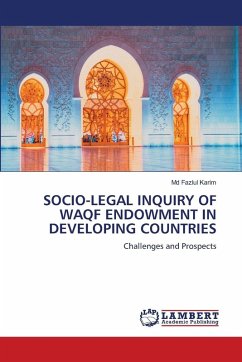
This study examines the prospects and challenges of waqf in Bangladesh, a sector with significant potential for welfare-based development yet largely untapped in recent decades. It investigates the shortcomings of the Waqf Ordinance 1962 and highlights legal, administrative, and managerial inefficiencies that hinder effective use of waqf assets. Data from primary and secondary sources reveal key issues, including lack of competent personnel, illegal occupation of properties, undervalued leases, and misappropriation of funds, leading many assets to remain idle or mismanaged. The research argues that the existing legal framework is inadequate and calls for reforms to unlock the full potential of waqf in poverty alleviation and social welfare. Policy recommendations include enacting a new Waqf Act, introducing cash waqf, establishing a national advisory board, enhancing mutawalli training, creating waqf tribunals, conducting a national survey, and investing in real estate and commercial projects. Other strategies involve collaboration with other Muslim countries, developing urban waqf, issuing waqf bonds, and modernising administration through democratisation and decentralisation.