Sociology of Religion, Fourth Edition introduces students to the nature and function of religious institutions and practices while asking sociological questions about the changing role of religion in today's "post-traditional" world. Broken into three parts, the book opens with the basics of religious history and a review of key theories for its study. Part II, "Religion and Social Differentiation," examines the intersections of ethnicity, class, gender, and sexuality with spirituality today, and Part III, "Religion, Culture, and Change," explores religious inspirations for, or impediments to,…mehr
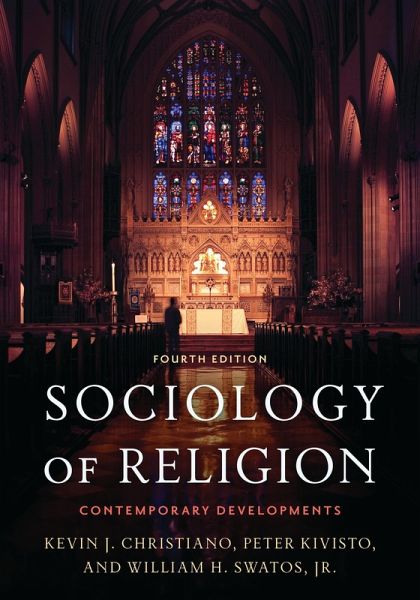
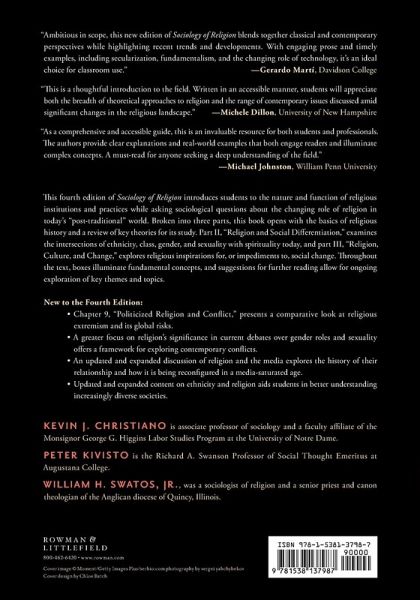
Sociology of Religion, Fourth Edition introduces students to the nature and function of religious institutions and practices while asking sociological questions about the changing role of religion in today's "post-traditional" world. Broken into three parts, the book opens with the basics of religious history and a review of key theories for its study. Part II, "Religion and Social Differentiation," examines the intersections of ethnicity, class, gender, and sexuality with spirituality today, and Part III, "Religion, Culture, and Change," explores religious inspirations for, or impediments to, social change. Throughout the text, boxes illuminate key concepts and suggestions for further reading allow for ongoing exploration of key themes and topics. New to the Fourth Edition: · Chapter 9, "Politicized Religion and Conflict," presents a comparative look at religious extremism and its global risks · Updated and expanded content on ethnicity and religion aids students in better understanding increasingly diverse societies · Greater focus on religion's significance in current debates over gender roles and sexuality offers a framework for exploring contemporary conflicts. · Updated and expanded discussion of religion and the media explores the history of their relationship and how it is being reconfigured in a media-saturated age.
Kevin J. Christiano is an associate professor of sociology and a faculty affiliate of the Monsignor George G. Higgins Labor Studies Program at the University of Notre Dame. Peter Kivisto is the Richard A. Swanson Professor of Social Thought Emeritus at Augustana College. William H. Swatos, Jr., was a sociologist of religion and senior priest and Canon Theologian of the Anglican diocese of Quincy, Illinois.
Inhaltsangabe
About Us About the Book Part One: The Basics By Way of IntroductionBackground The Definitional Problem Exploring the Dimensions of Religion Social Relationships Ethical Considerations A Definitional Revision The Plan of the Book Suggestions for Further Reading Studying ReligionWhy Study Religion? How Do We Study Religion? Survey Research Participant Observation Historical Research Theory in the Study of Religion Functionalist Theories Conflict Theories A Paradigm Shift Rational Choice Theories Sociologie Religieuse Implicit Religion Suggestions for Further Reading The "Religion" of Secularization and the History of ReligionsThe "World" of Religion The Arguments The Critique The "Religions" of Secularization Civil Religion Invisible Religion The Myth of the Age of Faith Pluralism Suggestions for Further Reading Religion in the United States: Denominationalism and BeyondChurches and Sects Weber's Sociology and Troeltsch's Ethics Elaboration, Reaction, and Revision Neo-Weberian Analyses Denominationalism Typology Denominations Today Congregationalism American Religious Renewal Mainlines and Sidelines in Religion in the United States Evangelicals and Fundamentalists: Alike and Different Suggestions for Further Reading Part Two: Religion and Social Differentiation Social Class, Religion and Power: A Classic Field of InquirySociological Classics Marx: The Permanent Exile and Prophet Weber: Theodicy, Religious Ethics, and Social Class Religion and the U.S. Class Structure U.S. Classes and Religion in the Industrial Age: 1870-1970 The Class/Religion Nexus in the Neo-Liberal Era: 1970- Suggestions for Further Reading Religion and Ethnicity: A Complex RelationshipClarifying Terms: Ethnic, Nationality, and Racial Groups Defining Ethnic Groups Nationality Groups and Territoriality The Specter of Race Relational Patterns between Religion and Ethnicity Ethnicity in the "Righteous Empire" The Ethnic Factor in the Formative Period of U.S. Catholicism The Jewish Diaspora Herberg's Thesis and the "Triple Melting Pot" The African-American Religious Experience From Different Shores: The New Immigrants The New Ethnics as Protestants, Catholics, and Jews Beyond Protestant, Catholic, Jew Suggestions for Further Reading Gender, Sexuality, and Religion: Spirituality in Different Voices?The Ordination Debate Women in Clerical and Lay Roles Culture Wars: Gender, Religion, and Family Values Abortion and the Politics of the Body Family Matters Gays, Lesbians, and Religion Images of God and Gendered Spirituality Suggestions for Further Reading Part Three: Religion, Culture, and Change Religious Change: The Case of Catholicism in the United StatesChurch with a Capital C Change: From Breeze to Tornado Commitment: Loyalty, but Not Obedience Devotion: A Collapse of Authority Governance: Guiding the People of God Leadership: Failures at the Top Membership: Problems in the Pews African-American Catholics Hispanic / Latino Catholics Women in the Church Personnel: People without Priests Finances: Expanding Mission, Declining Resources Suggestions for Further Reading Politicized Religion and Conflict: National and Global DimensionsFundamentalism The Religious Right in the United States Islamization Ultraorthodox Judaism Hindutva: Hindu Nationalism Militant Buddhism in Sri Lanka Conclusion Suggestions for Further Reading Mediating Meaning: Religion in-and as-Contemporary CultureMass Faith: The Media of Religion Religion in Material Culture: Faith in the Flesh Religious Publishing: Words and The Word "That Old-Time Religion": Broadcast Faith in the United States "In the Beginning . . ." The Message: "His Master's Voice"? The Messengers: The Return of Elmer Gantry? The Audience: Preaching to the Converted? Cyber-Faith: Religion on the Internet Suggestions for Further Reading Boundary Issues: Church, State, and New ReligionsReligious Novelty Cult and Anticult: Social Science and Social Movements Asceticism and Mysticism The Attraction of the Margin Illustrations of NRM Dynamics Unificationism (with Eileen Barker) "Satanism" and Anti-Satanism Neopaganism: Of Gods and Goddesses Suggestions for Further Reading References Index
About Us About the Book Part One: The Basics By Way of IntroductionBackground The Definitional Problem Exploring the Dimensions of Religion Social Relationships Ethical Considerations A Definitional Revision The Plan of the Book Suggestions for Further Reading Studying ReligionWhy Study Religion? How Do We Study Religion? Survey Research Participant Observation Historical Research Theory in the Study of Religion Functionalist Theories Conflict Theories A Paradigm Shift Rational Choice Theories Sociologie Religieuse Implicit Religion Suggestions for Further Reading The "Religion" of Secularization and the History of ReligionsThe "World" of Religion The Arguments The Critique The "Religions" of Secularization Civil Religion Invisible Religion The Myth of the Age of Faith Pluralism Suggestions for Further Reading Religion in the United States: Denominationalism and BeyondChurches and Sects Weber's Sociology and Troeltsch's Ethics Elaboration, Reaction, and Revision Neo-Weberian Analyses Denominationalism Typology Denominations Today Congregationalism American Religious Renewal Mainlines and Sidelines in Religion in the United States Evangelicals and Fundamentalists: Alike and Different Suggestions for Further Reading Part Two: Religion and Social Differentiation Social Class, Religion and Power: A Classic Field of InquirySociological Classics Marx: The Permanent Exile and Prophet Weber: Theodicy, Religious Ethics, and Social Class Religion and the U.S. Class Structure U.S. Classes and Religion in the Industrial Age: 1870-1970 The Class/Religion Nexus in the Neo-Liberal Era: 1970- Suggestions for Further Reading Religion and Ethnicity: A Complex RelationshipClarifying Terms: Ethnic, Nationality, and Racial Groups Defining Ethnic Groups Nationality Groups and Territoriality The Specter of Race Relational Patterns between Religion and Ethnicity Ethnicity in the "Righteous Empire" The Ethnic Factor in the Formative Period of U.S. Catholicism The Jewish Diaspora Herberg's Thesis and the "Triple Melting Pot" The African-American Religious Experience From Different Shores: The New Immigrants The New Ethnics as Protestants, Catholics, and Jews Beyond Protestant, Catholic, Jew Suggestions for Further Reading Gender, Sexuality, and Religion: Spirituality in Different Voices?The Ordination Debate Women in Clerical and Lay Roles Culture Wars: Gender, Religion, and Family Values Abortion and the Politics of the Body Family Matters Gays, Lesbians, and Religion Images of God and Gendered Spirituality Suggestions for Further Reading Part Three: Religion, Culture, and Change Religious Change: The Case of Catholicism in the United StatesChurch with a Capital C Change: From Breeze to Tornado Commitment: Loyalty, but Not Obedience Devotion: A Collapse of Authority Governance: Guiding the People of God Leadership: Failures at the Top Membership: Problems in the Pews African-American Catholics Hispanic / Latino Catholics Women in the Church Personnel: People without Priests Finances: Expanding Mission, Declining Resources Suggestions for Further Reading Politicized Religion and Conflict: National and Global DimensionsFundamentalism The Religious Right in the United States Islamization Ultraorthodox Judaism Hindutva: Hindu Nationalism Militant Buddhism in Sri Lanka Conclusion Suggestions for Further Reading Mediating Meaning: Religion in-and as-Contemporary CultureMass Faith: The Media of Religion Religion in Material Culture: Faith in the Flesh Religious Publishing: Words and The Word "That Old-Time Religion": Broadcast Faith in the United States "In the Beginning . . ." The Message: "His Master's Voice"? The Messengers: The Return of Elmer Gantry? The Audience: Preaching to the Converted? Cyber-Faith: Religion on the Internet Suggestions for Further Reading Boundary Issues: Church, State, and New ReligionsReligious Novelty Cult and Anticult: Social Science and Social Movements Asceticism and Mysticism The Attraction of the Margin Illustrations of NRM Dynamics Unificationism (with Eileen Barker) "Satanism" and Anti-Satanism Neopaganism: Of Gods and Goddesses Suggestions for Further Reading References Index
Es gelten unsere Allgemeinen Geschäftsbedingungen: www.buecher.de/agb
Impressum
www.buecher.de ist ein Internetauftritt der buecher.de internetstores GmbH
Geschäftsführung: Monica Sawhney | Roland Kölbl | Günter Hilger
Sitz der Gesellschaft: Batheyer Straße 115 - 117, 58099 Hagen
Postanschrift: Bürgermeister-Wegele-Str. 12, 86167 Augsburg
Amtsgericht Hagen HRB 13257
Steuernummer: 321/5800/1497
USt-IdNr: DE450055826