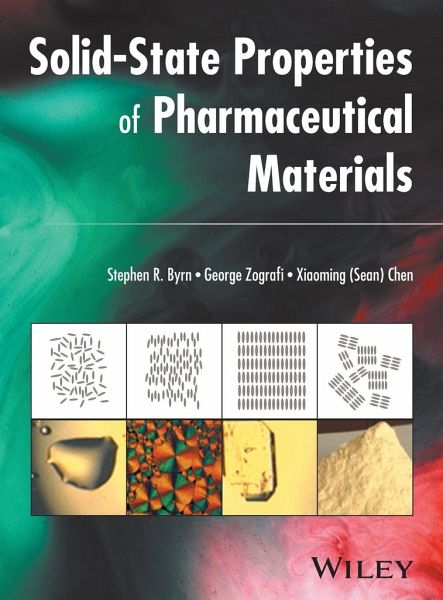
Stephen R. Byrn, George Zografi, Xiaoming Chen (Sean)
Solid-State Properties of Pharmaceutical Materials
Stephen R. Byrn, George Zografi, Xiaoming Chen (Sean)
Solid-State Properties of Pharmaceutical Materials
- Gebundenes Buch
- Merkliste
- Auf die Merkliste
- Bewerten Bewerten
- Teilen
- Produkt teilen
- Produkterinnerung
- Produkterinnerung
Presents a detailed discussion of important solid-state properties, methods, and applications of solid-state analysis _ Illustrates the various phases or forms that solids can assume and discussesvarious issues related to the relative stability of solid forms and tendencies to undergo transformation _ Covers key methods of solid state analysis including X-ray powder diffraction, thermal analysis, microscopy, spectroscopy, and solid state NMR _ Reviews critical physical attributes of pharmaceutical materials, mainly related to drug substances, including particle size/surface area,…mehr
Andere Kunden interessierten sich auch für
Pharmaceutical Blending and Mixing192,99 €
WS SchlindweinPharmaceutical Quality by Design104,99 €
Kangping XiaoAnalytical Scientists in Pharmaceutical Product Development107,99 €
Pharmaceutical Analysis for Small Molecules120,99 €
Ali ElkamelChemical Product Formulation Design and Optimization76,99 €
DJ am EndeChemical Engineering in the Pharmaceutical Industry329,99 €
A TeasdaleIch Quality Guidelines335,99 €-
-
-
Presents a detailed discussion of important solid-state properties, methods, and applications of solid-state analysis
_ Illustrates the various phases or forms that solids can assume and discussesvarious issues related to the relative stability of solid forms and tendencies to undergo transformation
_ Covers key methods of solid state analysis including X-ray powder diffraction, thermal analysis, microscopy, spectroscopy, and solid state NMR
_ Reviews critical physical attributes of pharmaceutical materials, mainly related to drug substances, including particle size/surface area, hygroscopicity, mechanical properties, solubility, and physical and chemical stability
_ Showcases the application of solid state material science in rational selection of drug solid forms, analysis of various solid forms within drug substance and the drug product, and pharmaceutical product development
_ Introduces appropriate manufacturing and control procedures using Quality by Design, and other strategies that lead to safe and effective products with a minimum of resources and time
_ Illustrates the various phases or forms that solids can assume and discussesvarious issues related to the relative stability of solid forms and tendencies to undergo transformation
_ Covers key methods of solid state analysis including X-ray powder diffraction, thermal analysis, microscopy, spectroscopy, and solid state NMR
_ Reviews critical physical attributes of pharmaceutical materials, mainly related to drug substances, including particle size/surface area, hygroscopicity, mechanical properties, solubility, and physical and chemical stability
_ Showcases the application of solid state material science in rational selection of drug solid forms, analysis of various solid forms within drug substance and the drug product, and pharmaceutical product development
_ Introduces appropriate manufacturing and control procedures using Quality by Design, and other strategies that lead to safe and effective products with a minimum of resources and time
Produktdetails
- Produktdetails
- Verlag: Wiley / Wiley & Sons
- Artikelnr. des Verlages: 1W118145300
- 1. Auflage
- Seitenzahl: 432
- Erscheinungstermin: 28. August 2017
- Englisch
- Abmessung: 286mm x 221mm x 27mm
- Gewicht: 1262g
- ISBN-13: 9781118145302
- ISBN-10: 1118145305
- Artikelnr.: 42196134
- Herstellerkennzeichnung
- Libri GmbH
- Europaallee 1
- 36244 Bad Hersfeld
- gpsr@libri.de
- Verlag: Wiley / Wiley & Sons
- Artikelnr. des Verlages: 1W118145300
- 1. Auflage
- Seitenzahl: 432
- Erscheinungstermin: 28. August 2017
- Englisch
- Abmessung: 286mm x 221mm x 27mm
- Gewicht: 1262g
- ISBN-13: 9781118145302
- ISBN-10: 1118145305
- Artikelnr.: 42196134
- Herstellerkennzeichnung
- Libri GmbH
- Europaallee 1
- 36244 Bad Hersfeld
- gpsr@libri.de
Stephen R. Byrn, PhD is Charles B. Jordan Professor of Medicinal Chemistry in the School of Pharmacy, Purdue University. Dr. Byrn has founded and directed several programs at Purdue University including CAMP, the Center for AIDS Research, the Molecules to Market program, and Purdue's graduate programs in regulatory and quality compliance. Dr. Byrn has served as chair of the Pharmaceutical Sciences Advisory Committee to the FDA and Chair of the Drug Substances Technical Committee, Product Quality Research Initiative. Dr. Byrn is co-founder of SSCI, Inc. a cGMP research and information Company. George Zografi, PhD is the Edward Kremers Professor Emeritus of Pharmaceutical Sciences, School of Pharmacy, University of Wisconsin-Madison. He was the recipient of the APhA Ebert Prize in 1984 and 2001, the AAPS Dale E. Wurster Award for Pharmaceutics in 1990 and its Distinguished Scientist Award in 1995, as well as the Volwiler Research Achievement Award of the American Association of Colleges of Pharmacy. Xiaoming (Sean) Chen, PhD is currently the Director of Formulation Development in Antares Pharma Inc. Prior to that, he held various positions in pharmaceutical product development at Schering-Plough, OSI Pharmaceuticals, Astellas Pharma, and Shionogi Inc. He has published over a dozen of papers in peer-reviewed journals and is a co-inventor of four US patents.
Preface
Acknowledgments
Chapter 1: Solid State Properties and Pharmaceutical Development
1.1 Introduction
1.2 Solid State Forms
1.3 ICH Q6A Decision Trees
1.4 "Big Questions" for Drug Development
1.5 Accelerating Drug Development
1.6 Solid State Chemistry in Preformulation and Formulation
1.7 Learning before Doing and Quality by Design
1.8 Performance and Stability in Pharmaceutical Development

1.9 Moisture Uptake
1.10 Solid State Reactions
1.11 Noninteracting Formulations - Physical Characterizations
References
Chapter 2: Polymorphs
2.1 Introduction
2.2 How Are Polymorphs Formed?
2.3 Structural Aspect of Polymorphs
2.4 Physical, Chemical, and Mechanical Properties
2.5 Thermodynamic Stability of Polymorphs
2.6 Polymorph Cconversion
2.7 Control of Polymorphs
2.8 Polymorph Screening
2.9 Polymorph Prediction
References
Chapter 3: Solvates and Hhydrates
3.1 Introduction
3.2 Pharmaceutical Importance of Hydrates
3.3 Classification of Pharmaceutical Hydrates
3.4 Water Aactivity
3.5 Stoichiometric Hhydrates
3.6 Nonstoichiometric Hhydrates
3.7 Hydration/Dehydration
3.8 Preparation and Characterization of Hydrates and Solvates
References
Chapter 4: Pharmaceutical Salts
4.1 Introduction
4.2 Importance of Pharmaceutical Salts
4.3 Weak Acid, Weak Base, and Salt
4.4 pH-Solubility Profiles of Ionizable Compounds
4.5 Solubility, Dissolution and Bioavailability of Pharmaceutical Salts
4.6 Physical Stability of Pharmaceutical Salts
4.7 Strategies for S salt Sselection
References
Chapter 5: Pharmaceutical Co-crystals
5.1 Introduction
5.2 Co-crystals and Crystal Engineering
5.3 Co-crystals and Crystal Engineering
5.4 Co-crystals and Crystal Engineering
5.5 Solubility Phase Diagrams for Co-crystals
5.6 Preparation of Co-crystals
5.7 Dissolution and Bioavailability of Co-crystals
5.8 Comparison of Ppharmaceutical Ssalts and Cco-crystals
References
Chapter 6: Amorphous Solids
6.1 Introduction
6.2 The Formation of Amorphous Solids
6.3 Methods of Preparing Amorphous Solids
6.4 The Glass Transition Temperature
6.5 Structural Features of Amorphous Solids
6.6 Molecular Mobility
6.7 Mixtures of Amorphous Solids
6.8 References
Chapter 7: Crystal Mesophases and Nanocrystals
7.1 Introduction
7.2 Overview of Crystal Mesophases
7.3 Liquid Crystals
7.4 Conformationally Disordered (Condis) Crystals
7.5 Plastic Crystals
7.6 Nanocrystals
References
Chapter 8: X-ray Crystallography and Crystal Packing Analysis
8.1 Introduction
8.2 Crystals
8.3 Miller Indices and Crystal Faces
8.4 Determination of the Miller Indices of the Faces of a Crystal
8.5 Determination of Crystal Structure
References
Chapter 9: X-ray Crystallography and Crystal Packing Analysis X-ray Powder Diffraction
9.1 Introduction
9.2 X-ray Powder Diffraction of Crystalline Materials
9.3 Qualitative Analysis of Crystalline Materials
9.4 Phase Transformations
9.5 Quantitative Phase Analysis Using XRPD
9.6 Solving Crystal
Acknowledgments
Chapter 1: Solid State Properties and Pharmaceutical Development
1.1 Introduction
1.2 Solid State Forms
1.3 ICH Q6A Decision Trees
1.4 "Big Questions" for Drug Development
1.5 Accelerating Drug Development
1.6 Solid State Chemistry in Preformulation and Formulation
1.7 Learning before Doing and Quality by Design
1.8 Performance and Stability in Pharmaceutical Development
1.9 Moisture Uptake
1.10 Solid State Reactions
1.11 Noninteracting Formulations - Physical Characterizations
References
Chapter 2: Polymorphs
2.1 Introduction
2.2 How Are Polymorphs Formed?
2.3 Structural Aspect of Polymorphs
2.4 Physical, Chemical, and Mechanical Properties
2.5 Thermodynamic Stability of Polymorphs
2.6 Polymorph Cconversion
2.7 Control of Polymorphs
2.8 Polymorph Screening
2.9 Polymorph Prediction
References
Chapter 3: Solvates and Hhydrates
3.1 Introduction
3.2 Pharmaceutical Importance of Hydrates
3.3 Classification of Pharmaceutical Hydrates
3.4 Water Aactivity
3.5 Stoichiometric Hhydrates
3.6 Nonstoichiometric Hhydrates
3.7 Hydration/Dehydration
3.8 Preparation and Characterization of Hydrates and Solvates
References
Chapter 4: Pharmaceutical Salts
4.1 Introduction
4.2 Importance of Pharmaceutical Salts
4.3 Weak Acid, Weak Base, and Salt
4.4 pH-Solubility Profiles of Ionizable Compounds
4.5 Solubility, Dissolution and Bioavailability of Pharmaceutical Salts
4.6 Physical Stability of Pharmaceutical Salts
4.7 Strategies for S salt Sselection
References
Chapter 5: Pharmaceutical Co-crystals
5.1 Introduction
5.2 Co-crystals and Crystal Engineering
5.3 Co-crystals and Crystal Engineering
5.4 Co-crystals and Crystal Engineering
5.5 Solubility Phase Diagrams for Co-crystals
5.6 Preparation of Co-crystals
5.7 Dissolution and Bioavailability of Co-crystals
5.8 Comparison of Ppharmaceutical Ssalts and Cco-crystals
References
Chapter 6: Amorphous Solids
6.1 Introduction
6.2 The Formation of Amorphous Solids
6.3 Methods of Preparing Amorphous Solids
6.4 The Glass Transition Temperature
6.5 Structural Features of Amorphous Solids
6.6 Molecular Mobility
6.7 Mixtures of Amorphous Solids
6.8 References
Chapter 7: Crystal Mesophases and Nanocrystals
7.1 Introduction
7.2 Overview of Crystal Mesophases
7.3 Liquid Crystals
7.4 Conformationally Disordered (Condis) Crystals
7.5 Plastic Crystals
7.6 Nanocrystals
References
Chapter 8: X-ray Crystallography and Crystal Packing Analysis
8.1 Introduction
8.2 Crystals
8.3 Miller Indices and Crystal Faces
8.4 Determination of the Miller Indices of the Faces of a Crystal
8.5 Determination of Crystal Structure
References
Chapter 9: X-ray Crystallography and Crystal Packing Analysis X-ray Powder Diffraction
9.1 Introduction
9.2 X-ray Powder Diffraction of Crystalline Materials
9.3 Qualitative Analysis of Crystalline Materials
9.4 Phase Transformations
9.5 Quantitative Phase Analysis Using XRPD
9.6 Solving Crystal
Preface
Acknowledgments
Chapter 1: Solid State Properties and Pharmaceutical Development
1.1 Introduction
1.2 Solid State Forms
1.3 ICH Q6A Decision Trees
1.4 "Big Questions" for Drug Development
1.5 Accelerating Drug Development
1.6 Solid State Chemistry in Preformulation and Formulation
1.7 Learning before Doing and Quality by Design
1.8 Performance and Stability in Pharmaceutical Development
1.9 Moisture Uptake
1.10 Solid State Reactions
1.11 Noninteracting Formulations - Physical Characterizations
References
Chapter 2: Polymorphs
2.1 Introduction
2.2 How Are Polymorphs Formed?
2.3 Structural Aspect of Polymorphs
2.4 Physical, Chemical, and Mechanical Properties
2.5 Thermodynamic Stability of Polymorphs
2.6 Polymorph Cconversion
2.7 Control of Polymorphs
2.8 Polymorph Screening
2.9 Polymorph Prediction
References
Chapter 3: Solvates and Hhydrates
3.1 Introduction
3.2 Pharmaceutical Importance of Hydrates
3.3 Classification of Pharmaceutical Hydrates
3.4 Water Aactivity
3.5 Stoichiometric Hhydrates
3.6 Nonstoichiometric Hhydrates
3.7 Hydration/Dehydration
3.8 Preparation and Characterization of Hydrates and Solvates
References
Chapter 4: Pharmaceutical Salts
4.1 Introduction
4.2 Importance of Pharmaceutical Salts
4.3 Weak Acid, Weak Base, and Salt
4.4 pH-Solubility Profiles of Ionizable Compounds
4.5 Solubility, Dissolution and Bioavailability of Pharmaceutical Salts
4.6 Physical Stability of Pharmaceutical Salts
4.7 Strategies for S salt Sselection
References
Chapter 5: Pharmaceutical Co-crystals
5.1 Introduction
5.2 Co-crystals and Crystal Engineering
5.3 Co-crystals and Crystal Engineering
5.4 Co-crystals and Crystal Engineering
5.5 Solubility Phase Diagrams for Co-crystals
5.6 Preparation of Co-crystals
5.7 Dissolution and Bioavailability of Co-crystals
5.8 Comparison of Ppharmaceutical Ssalts and Cco-crystals
References
Chapter 6: Amorphous Solids
6.1 Introduction
6.2 The Formation of Amorphous Solids
6.3 Methods of Preparing Amorphous Solids
6.4 The Glass Transition Temperature
6.5 Structural Features of Amorphous Solids
6.6 Molecular Mobility
6.7 Mixtures of Amorphous Solids
6.8 References
Chapter 7: Crystal Mesophases and Nanocrystals
7.1 Introduction
7.2 Overview of Crystal Mesophases
7.3 Liquid Crystals
7.4 Conformationally Disordered (Condis) Crystals
7.5 Plastic Crystals
7.6 Nanocrystals
References
Chapter 8: X-ray Crystallography and Crystal Packing Analysis
8.1 Introduction
8.2 Crystals
8.3 Miller Indices and Crystal Faces
8.4 Determination of the Miller Indices of the Faces of a Crystal
8.5 Determination of Crystal Structure
References
Chapter 9: X-ray Crystallography and Crystal Packing Analysis X-ray Powder Diffraction
9.1 Introduction
9.2 X-ray Powder Diffraction of Crystalline Materials
9.3 Qualitative Analysis of Crystalline Materials
9.4 Phase Transformations
9.5 Quantitative Phase Analysis Using XRPD
9.6 Solving Crystal
Acknowledgments
Chapter 1: Solid State Properties and Pharmaceutical Development
1.1 Introduction
1.2 Solid State Forms
1.3 ICH Q6A Decision Trees
1.4 "Big Questions" for Drug Development
1.5 Accelerating Drug Development
1.6 Solid State Chemistry in Preformulation and Formulation
1.7 Learning before Doing and Quality by Design
1.8 Performance and Stability in Pharmaceutical Development
1.9 Moisture Uptake
1.10 Solid State Reactions
1.11 Noninteracting Formulations - Physical Characterizations
References
Chapter 2: Polymorphs
2.1 Introduction
2.2 How Are Polymorphs Formed?
2.3 Structural Aspect of Polymorphs
2.4 Physical, Chemical, and Mechanical Properties
2.5 Thermodynamic Stability of Polymorphs
2.6 Polymorph Cconversion
2.7 Control of Polymorphs
2.8 Polymorph Screening
2.9 Polymorph Prediction
References
Chapter 3: Solvates and Hhydrates
3.1 Introduction
3.2 Pharmaceutical Importance of Hydrates
3.3 Classification of Pharmaceutical Hydrates
3.4 Water Aactivity
3.5 Stoichiometric Hhydrates
3.6 Nonstoichiometric Hhydrates
3.7 Hydration/Dehydration
3.8 Preparation and Characterization of Hydrates and Solvates
References
Chapter 4: Pharmaceutical Salts
4.1 Introduction
4.2 Importance of Pharmaceutical Salts
4.3 Weak Acid, Weak Base, and Salt
4.4 pH-Solubility Profiles of Ionizable Compounds
4.5 Solubility, Dissolution and Bioavailability of Pharmaceutical Salts
4.6 Physical Stability of Pharmaceutical Salts
4.7 Strategies for S salt Sselection
References
Chapter 5: Pharmaceutical Co-crystals
5.1 Introduction
5.2 Co-crystals and Crystal Engineering
5.3 Co-crystals and Crystal Engineering
5.4 Co-crystals and Crystal Engineering
5.5 Solubility Phase Diagrams for Co-crystals
5.6 Preparation of Co-crystals
5.7 Dissolution and Bioavailability of Co-crystals
5.8 Comparison of Ppharmaceutical Ssalts and Cco-crystals
References
Chapter 6: Amorphous Solids
6.1 Introduction
6.2 The Formation of Amorphous Solids
6.3 Methods of Preparing Amorphous Solids
6.4 The Glass Transition Temperature
6.5 Structural Features of Amorphous Solids
6.6 Molecular Mobility
6.7 Mixtures of Amorphous Solids
6.8 References
Chapter 7: Crystal Mesophases and Nanocrystals
7.1 Introduction
7.2 Overview of Crystal Mesophases
7.3 Liquid Crystals
7.4 Conformationally Disordered (Condis) Crystals
7.5 Plastic Crystals
7.6 Nanocrystals
References
Chapter 8: X-ray Crystallography and Crystal Packing Analysis
8.1 Introduction
8.2 Crystals
8.3 Miller Indices and Crystal Faces
8.4 Determination of the Miller Indices of the Faces of a Crystal
8.5 Determination of Crystal Structure
References
Chapter 9: X-ray Crystallography and Crystal Packing Analysis X-ray Powder Diffraction
9.1 Introduction
9.2 X-ray Powder Diffraction of Crystalline Materials
9.3 Qualitative Analysis of Crystalline Materials
9.4 Phase Transformations
9.5 Quantitative Phase Analysis Using XRPD
9.6 Solving Crystal