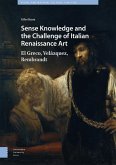
Viewers in the Middle Ages and Renaissance were encouraged to forge connections between their physical and affective states when they experienced works of art. They believed that their bodies served a critical function in coming to know and make sense of the world around them, and intimately engaged themselves with works of art and architecture on a daily basis. This book examines how viewers in Medicean Florence were self-consciously cultivated to enhance their sensory appreciation of works of art and creatively self-fashion through somaesthetics. Mobilized as a technology for the production…mehr
Viewers in the Middle Ages and Renaissance were encouraged to forge connections between their physical and affective states when they experienced works of art. They believed that their bodies served a critical function in coming to know and make sense of the world around them, and intimately engaged themselves with works of art and architecture on a daily basis. This book examines how viewers in Medicean Florence were self-consciously cultivated to enhance their sensory appreciation of works of art and creatively self-fashion through somaesthetics. Mobilized as a technology for the production of knowledge with and through their bodies, viewers contributed to the essential meaning of Renaissance art and, in the process, bound themselves to others. By investigating the framework and practice of somaesthetic experience of works by Benozzo Gozzoli, Donatello, Benedetto Buglioni, Giorgio Vasari, and others in fifteenth- and sixteenth century Florence, the book approaches the viewer as a powerful tool that was used by patrons to shape identity and power in the Renaissance.
Allie Terry-Fritsch is Associate Professor of Italian Renaissance Art History at Bowling Green State University in Ohio. Her research focuses on the performative experience of art and architecture in fifteenth-century Florence, with a particular emphasis on the political significance of embodiment in the viewing process. She has published widely on audiences for Medici-sponsored works by Fra Angelico, Benozzo Gozzoli, Donatello, and others, and is editor of Beholding Violence in Medieval and Early Modern Europe (Ashgate/Routledge, 2012). Her next book project on Fra Angelico, Cosimo de'Medici, and the Library of San Marco recently won the National Endowment for Humanities prize for a Summer Stipend.
Inhaltsangabe
List of Illustrations Acknowledgements 1 Activating the Renaissance Viewer: Art and Somaesthetic Experience Somaesthetics and Political Persuasion Patronage and the Construction of the Viewer in Medicean Florence 2 Mobilizing Visitors: Political Persuasion and the Somaesthetics of Belonging in the Chapel of the Magi Sensory Activation and the Signaling of the Patron Somaesthetic Emplacement in Immersive Artistic Programs Staging Belonging in Bethlehem 3 Staging Gendered Authority: Donatello's Judith Lucrezia Tornabuoni de'Medici's sacra storia and the Somaesthetics of Justice Medici Garden as a Theater in the Round Somaesthetic Cultivation of Audience and Narrator Collective Witnessing at the Scaffolds 4 Performing Virtual Pilgrimage: Somaesthetics and Holy Land Devotion at San Vivaldo Materializing the Holy Land Experience Somaesthetic Fashioning and Affective Devotion Possessing the New Jerusalem 5 Playing the Printed Piazza: Giovanni de'Bardi's Discorso sopra il giouco del calcio fiorentino and Somaesthetic Discipline in Grand-Ducal Florence The Florentine Piazza as Practiced Space of Calcio Antiquity and Historical Realism in Bardi's Discorso Battle Tactics Vedute and Somaesthetic Dominion Ritual Display and Restraint in the Noble Game of Calcio 6 Epilogue: Renaissance Somaesthetics and the Digital Age Index.
Es gelten unsere Allgemeinen Geschäftsbedingungen: www.buecher.de/agb
Impressum
www.buecher.de ist ein Internetauftritt der buecher.de internetstores GmbH
Geschäftsführung: Monica Sawhney | Roland Kölbl | Günter Hilger
Sitz der Gesellschaft: Batheyer Straße 115 - 117, 58099 Hagen
Postanschrift: Bürgermeister-Wegele-Str. 12, 86167 Augsburg
Amtsgericht Hagen HRB 13257
Steuernummer: 321/5800/1497
USt-IdNr: DE450055826