
Andere Kunden interessierten sich auch für
 Environmental Aesthetics31,99 €
 Leibniz on Time, Space, and Relativity125,99 €
 Ecopolitics91,99 €
 Space, Philosophy and Ethics69,99 €
 Time, Space, and Metaphysics124,99 €
 The Sense of Space92,99 €
 Space, Time, and Deity The Gifford Lectures at Glasgow, 1916-1918 Volume 1 of 240,99 €


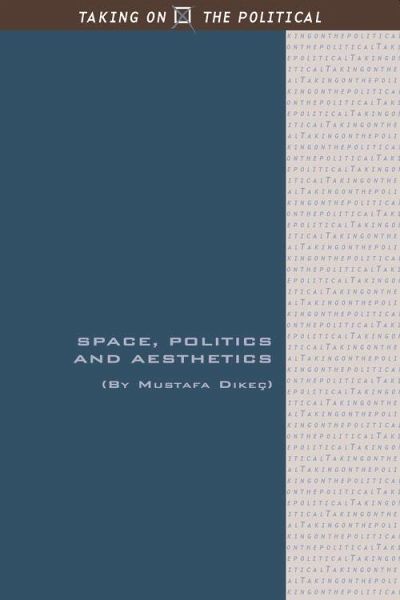
Explores the force of aesthetic experience and the role of space in political thinking Mustafa Dikeç reveals the aesthetic premises that underlie Hannah Arendt, Jean-Luc Nancy and Jacques Rancière's political thinking, and demonstrates how their politics depend on the construction and apprehension of worlds through spatial forms and distributions. Exploring these dimensions of the political, he argues that politics is about how perceive and relate to the world. Space is a form of appearance and a mode of actuality, and the disruption of such forms and modes is the sublime element in politics. Key Features * Investigates politics and the political in the work of Hannah Arendt, Jean-Luc Nancy and Jacques Rancière * Explores the political aesthetic of these thinkers, focusing on their Kantian legacies * Gives us new ways of thinking about the relationship between space and politics