This comprehensive survey of Spain's history looks at the major political, social, and economic changes that took place from the end of the Civil War to the beginning of the twenty-first century. A thorough introduction to post-Civil War Spain, from its development under Franco and subsequent transition to democracy up to the present day Tusell was a celebrated public figure and historian. During his lifetime he negotiated the return to Spain of Picasso's Guernica , was elected UCD councillor for Madrid, and became a respected media commentator before his untimely death in 2005 Includes a…mehr
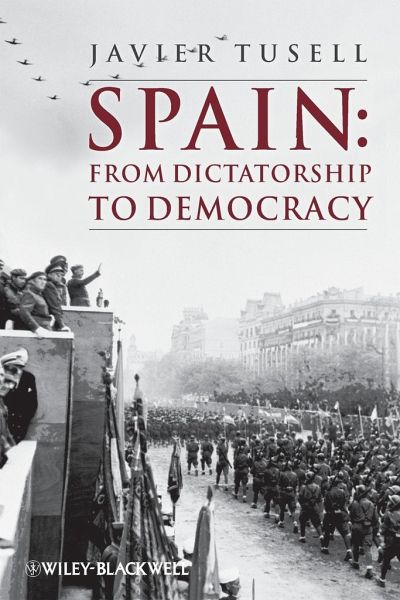
This comprehensive survey of Spain's history looks at the major political, social, and economic changes that took place from the end of the Civil War to the beginning of the twenty-first century.
A thorough introduction to post-Civil War Spain, from its development under Franco and subsequent transition to democracy up to the present day Tusell was a celebrated public figure and historian. During his lifetime he negotiated the return to Spain of Picasso's Guernica , was elected UCD councillor for Madrid, and became a respected media commentator before his untimely death in 2005 Includes a biography and political assessment of Francisco Franco Covers a number of pertinent topics, including fascism, isolationism, political opposition, economic development, decolonization, terrorism, foreign policy, and democracy Provides a context for understanding the continuing tensions between democracy and terrorism, including the effects of the 2004 Madrid Bombings
Javier Tusell was Professor of Contemporary History at the National University of Distance Learning (UNED). Best known as a historian of contemporary Spain, he published more than 50 books on the subject in his lifetime. During an early foray into politics, he negotiated the return to Spain of Picasso's anti-war masterpiece, Guernica, and was elected UCD councillor for Madrid in 1979. Latterly he became a respected media commentator on Spanish history and especially the Franco dictatorship. Translator Rosemary Clark, college lecturer at Downing College, is an affiliated lecturer in Spanish at the University of Cambridge specializing in Modern Peninsular Spanish literature, history, and culture. Particular interests are post-colonialism, Spain and Africa, religious issues, and regionalism.
Inhaltsangabe
Note on the Author viii Introduction 1 Franco: Biography and Political Practice 2 Francoism: A Form of Dictatorship 12 Victors and Vanquished: The Disasters of the Civil War and Repression 20 Exile and the Start of the Postwar Period in Spain 26 Bibliography 31 Notes 33 1 The Temptation of Fascism and the Will to Survive (1939 -51) 34 A Failed Attempt to Make Spain Fascist 35 The Temptation to Intervene and Internal Conflict (1940-2) 40 Stumbling Progress towards Neutrality (1942-5) 48 Cosmetic Change: Regime Politics between 1945 and 1951 58 Opposition from Survivors: The Spanish Left from 1939 to 1951 65 The Monarchist Alternative 72 Franco in Isolation 75 The "Dark Night": Autarchy and Rationing in the 1940s 82 Culture: Penance and Survival 92 Bibliography 102 Notes 106 2 The Years of Consensus: The High Point of the Regime (1951- 65) 107 The End of International Isolation: The Concordat and Pacts with the United States 108 Spain and Europe: Colonization of Morocco Ends 114 The Regime and the Opposition up to 1956 119 A New Political Opposition 128 For or against Falange: Political Life under the Regime between 1956 and 1965 136 The Easing of Autarchy and the Change in Economic Policy 147 From Political Opposition to Social Opposition 159 Culture in the Francoist Middle Period: The End of the Penitential Years 166 Daily Life and Leisure Activities 177 Bibliography 182 Notes 186 3 Economic Development, Apertura, and the Late Franco Years (1966-75) 187 Economic Development in the 1960s and 1970s 189 The Modernization of Spanish Society 197 The Change in Spanish Catholicism 202 Apertura (1965-9) 211 The Succession. Matesa and Internal Splits in the Regime 217 Worker Protest. Terrorism 221 Late Francoism: Carrero Blanco as President 228 Late Francoism: Arias Navarro's Government 233 Opposition Activity: The Road to Unity 237 Spain and the Western World 247 Late Decolonization: Guinea and the Sahara 252 A Politically Committed Culture? 256 Spain at the Time of Franco's Death 262 Bibliography 267 4 The Transition to Democracy (1975 - 82) 270 The Monarchy: King Juan Carlos I 273 The Death-throes of the Past 275 Adolfo Suárez: The Road from Liberalization to Democracy 281 Facing Difficulties: Terrorism and the Military Coup 285 Parties and Elections 289 The Long Road towards a Constitution 293 An Unresolved Issue: Nationalism and Terrorism 299 The Triumph and Fall of Adolfo Suárez 303 The Army and the Transition: February 23 306 Calvo Sotelo's Government and the Crisis in Center Politics 311 Foreign Policy 314 Economic Policy and Social Change 318 October 1982: The End of the Transition 321 Bibliography 326 5 Consolidating Democracy: The Socialist Government (1982 - 96) 329 Felipe González and the Two Souls of Spanish Socialism 330 The Socialists' First Term in Office. Reform of the Armed Services, an Economic Update and Foreign Policy 336 A Means of Consolidating Democracy. The GAL 344 Elections and Public Opinion in the Second Half of the 1980s 349 The Second Term in Office: Social Policies and Union Protests. Spain and the World 354 Policy on the Autonomous Communities: A New Vertebrate Structure for the Spanish State 359 The Loss of an Absolute Majority 366 A Tense Term of Office (1993-6) 373 The 1996 General Election. Drawing up the Balance on the Socialists' Time in Government 380 Culture in the Post-Franco Period 385 From a Time of Rediscovery to a State Culture 390 Fields of Creativity 400 Bibliography 407 6 The Turn of the Right (1996 -2004) 410 The Popular Party in Power: José María Aznar 410 Success in Economic and Social Policies 412 The Dark Side of the Right 414 A Pluralistic Spain: Nationalities and Terrorism 418 Government and Opposition. The Elections in March 2000 423 The Style of Government with an Absolute Majority 429 The Limits of PSOE Renewal 431 Dramatic Basque Elections 433 The Policy of Making Pacts and Breaking with Consensus 436 The PP: Idyllic Peace and Neo-conservatism 439 From More to Less: Government Policy in the Second Four-year Term 443 The Final Straight 448 Bibliography 454 Notes 455 Index 456
Note on the Author viii Introduction 1 Franco: Biography and Political Practice 2 Francoism: A Form of Dictatorship 12 Victors and Vanquished: The Disasters of the Civil War and Repression 20 Exile and the Start of the Postwar Period in Spain 26 Bibliography 31 Notes 33 1 The Temptation of Fascism and the Will to Survive (1939 -51) 34 A Failed Attempt to Make Spain Fascist 35 The Temptation to Intervene and Internal Conflict (1940-2) 40 Stumbling Progress towards Neutrality (1942-5) 48 Cosmetic Change: Regime Politics between 1945 and 1951 58 Opposition from Survivors: The Spanish Left from 1939 to 1951 65 The Monarchist Alternative 72 Franco in Isolation 75 The "Dark Night": Autarchy and Rationing in the 1940s 82 Culture: Penance and Survival 92 Bibliography 102 Notes 106 2 The Years of Consensus: The High Point of the Regime (1951- 65) 107 The End of International Isolation: The Concordat and Pacts with the United States 108 Spain and Europe: Colonization of Morocco Ends 114 The Regime and the Opposition up to 1956 119 A New Political Opposition 128 For or against Falange: Political Life under the Regime between 1956 and 1965 136 The Easing of Autarchy and the Change in Economic Policy 147 From Political Opposition to Social Opposition 159 Culture in the Francoist Middle Period: The End of the Penitential Years 166 Daily Life and Leisure Activities 177 Bibliography 182 Notes 186 3 Economic Development, Apertura, and the Late Franco Years (1966-75) 187 Economic Development in the 1960s and 1970s 189 The Modernization of Spanish Society 197 The Change in Spanish Catholicism 202 Apertura (1965-9) 211 The Succession. Matesa and Internal Splits in the Regime 217 Worker Protest. Terrorism 221 Late Francoism: Carrero Blanco as President 228 Late Francoism: Arias Navarro's Government 233 Opposition Activity: The Road to Unity 237 Spain and the Western World 247 Late Decolonization: Guinea and the Sahara 252 A Politically Committed Culture? 256 Spain at the Time of Franco's Death 262 Bibliography 267 4 The Transition to Democracy (1975 - 82) 270 The Monarchy: King Juan Carlos I 273 The Death-throes of the Past 275 Adolfo Suárez: The Road from Liberalization to Democracy 281 Facing Difficulties: Terrorism and the Military Coup 285 Parties and Elections 289 The Long Road towards a Constitution 293 An Unresolved Issue: Nationalism and Terrorism 299 The Triumph and Fall of Adolfo Suárez 303 The Army and the Transition: February 23 306 Calvo Sotelo's Government and the Crisis in Center Politics 311 Foreign Policy 314 Economic Policy and Social Change 318 October 1982: The End of the Transition 321 Bibliography 326 5 Consolidating Democracy: The Socialist Government (1982 - 96) 329 Felipe González and the Two Souls of Spanish Socialism 330 The Socialists' First Term in Office. Reform of the Armed Services, an Economic Update and Foreign Policy 336 A Means of Consolidating Democracy. The GAL 344 Elections and Public Opinion in the Second Half of the 1980s 349 The Second Term in Office: Social Policies and Union Protests. Spain and the World 354 Policy on the Autonomous Communities: A New Vertebrate Structure for the Spanish State 359 The Loss of an Absolute Majority 366 A Tense Term of Office (1993-6) 373 The 1996 General Election. Drawing up the Balance on the Socialists' Time in Government 380 Culture in the Post-Franco Period 385 From a Time of Rediscovery to a State Culture 390 Fields of Creativity 400 Bibliography 407 6 The Turn of the Right (1996 -2004) 410 The Popular Party in Power: José María Aznar 410 Success in Economic and Social Policies 412 The Dark Side of the Right 414 A Pluralistic Spain: Nationalities and Terrorism 418 Government and Opposition. The Elections in March 2000 423 The Style of Government with an Absolute Majority 429 The Limits of PSOE Renewal 431 Dramatic Basque Elections 433 The Policy of Making Pacts and Breaking with Consensus 436 The PP: Idyllic Peace and Neo-conservatism 439 From More to Less: Government Policy in the Second Four-year Term 443 The Final Straight 448 Bibliography 454 Notes 455 Index 456
Rezensionen
"The breadth of his knowledge - reflected both in the details ofthe narrative, including apt quote and anecdotes, and in hiscomparative references to other national case studies - makes thisbook a rich resource for contemporary historians of Spain." (TheHistorian, 2011)
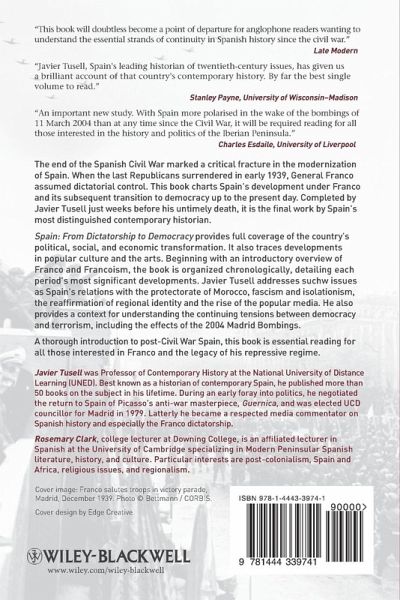
"This book will doubtless become a point of departure foranglophone readers wanting to understand the essential strands ofcontinuity in Spanish history since the civil war." (LateModern, 2010)"Javier Tusell, Spain's leading historian of twentieth-centuryissues, has given us a brilliant account of that country'scontemporary history. By far the best single volume to read." Stanley Payne, University ofWisconsin-Madison
"An important new study. With Spain more polarised in the wakeof the bombings of 11 March 2004 than at any time since the CivilWar, it will be required reading for all those interested in thehistory and politics of the Iberian Peninsula." Charles Esdaile, University of Liverpool
Es gelten unsere Allgemeinen Geschäftsbedingungen: www.buecher.de/agb
Impressum
www.buecher.de ist ein Internetauftritt der buecher.de internetstores GmbH
Geschäftsführung: Monica Sawhney | Roland Kölbl | Günter Hilger
Sitz der Gesellschaft: Batheyer Straße 115 - 117, 58099 Hagen
Postanschrift: Bürgermeister-Wegele-Str. 12, 86167 Augsburg
Amtsgericht Hagen HRB 13257
Steuernummer: 321/5800/1497
USt-IdNr: DE450055826