Rita Cheminais
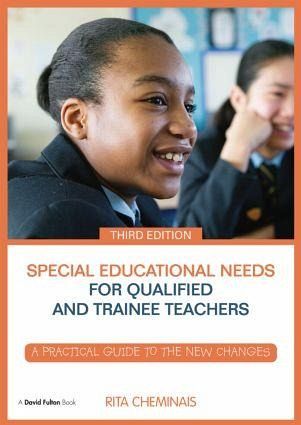
Special Educational Needs for Qualified and Trainee Teachers
A practical guide to the new changes
Rita Cheminais
Special Educational Needs for Qualified and Trainee Teachers
A practical guide to the new changes
- Broschiertes Buch
- Merkliste
- Auf die Merkliste
- Bewerten Bewerten
- Teilen
- Produkt teilen
- Produkterinnerung
- Produkterinnerung
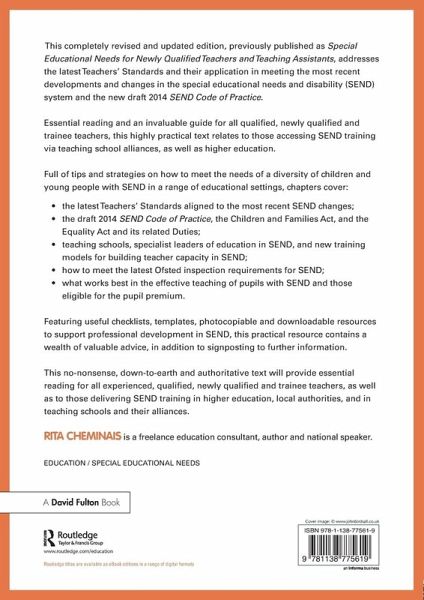
Essential reading and an invaluable guide for all qualified, newly qualified and trainee teachers, this highly practical text relates to those accessing SEN training via teaching school alliances, as well as Higher Education.
Andere Kunden interessierten sich auch für
Janice Wearmouth (UK University of Bedfordshire)Understanding Special Educational Needs and Disability in the Early Years44,99 €
Rita CheminaisEvery Child Matters38,99 €
Wendy SpoonerThe SEN Handbook for Trainee Teachers, NQTs and Teaching Assistants48,99 €
Victoria HewettMaking it as a Teacher29,99 €
Trevor Wright (UK University of Worcester)How to be a Brilliant Trainee Teacher47,99 €
Ange AndersonMusic, Sound and Vibration in Special Education28,99 €
Policy, Provision and Practice for Special Educational Needs and Disability52,99 €-
-
-
Essential reading and an invaluable guide for all qualified, newly qualified and trainee teachers, this highly practical text relates to those accessing SEN training via teaching school alliances, as well as Higher Education.
Produktdetails
- Produktdetails
- Verlag: Taylor & Francis Ltd
- 3 ed
- Seitenzahl: 162
- Erscheinungstermin: 25. November 2014
- Englisch
- Abmessung: 297mm x 210mm x 9mm
- Gewicht: 430g
- ISBN-13: 9781138775619
- ISBN-10: 1138775614
- Artikelnr.: 41467697
- Herstellerkennzeichnung
- Libri GmbH
- Europaallee 1
- 36244 Bad Hersfeld
- gpsr@libri.de
- Verlag: Taylor & Francis Ltd
- 3 ed
- Seitenzahl: 162
- Erscheinungstermin: 25. November 2014
- Englisch
- Abmessung: 297mm x 210mm x 9mm
- Gewicht: 430g
- ISBN-13: 9781138775619
- ISBN-10: 1138775614
- Artikelnr.: 41467697
- Herstellerkennzeichnung
- Libri GmbH
- Europaallee 1
- 36244 Bad Hersfeld
- gpsr@libri.de
Rita Cheminais is a freelance education consultant, author and national speaker.
1. Working within the law and frameworks for SEN and disability
Demystifying the terminology
Legislation and developments in SEN and disability 2010-2014
The Children and Families Act 2014, Part 3
The SEND Code of Practice (0-25) 2014
The Equality Act 2010 and its related duties
OFSTED inspections and SEND
Teachers professional development for SEND
The concept, use and impact of the pupil premium
2. Promoting good progress and outcomes for pupils with SEN
Teacher accountability for SEN pupils' attainment, progress and outcomes
Making best use of the DfE guidance on Progression
SEN Support: a graduated approach to ensuring the progress of pupils with
SEN
The brain, memory and their influence on SEN pupils learning and progress
Meta-cognition improving the learning and progress of pupils with SEN
Supporting pupils with SEN to become independent learners
Setting relevant homework to enhance the progress and learning of pupils
with SEN
3. Adapting teaching to respond to the strengths and needs of pupils with
SEN
Barriers to learning for pupils with SEN and to overcome these
Learning styles
Differentiation to ensure effective teaching for pupils with SEN
The features of high quality teaching
Using questioning
Developing thinking skills
Meeting the needs of pupils with high-incidence SEN
Different stages of development informing the adaptation of teaching
4. Making accurate and productive use of assessment
The underpinning principles and purpose of assessment
Assessment terminology
The government's latest assessment expectations and reforms
The SEND Code of Practice 2014 and assessment
The principles and practice of effective assessment for learning and SEN
pupils
How best to give pupils with SEN assessment feedback
Using and analysing SEN pupil-level attainment data
How to engage pupils with SEN in assessing and reviewing their own learning
5. Effective behaviour management to ensure a good and safe learning
environment
Identification of pupils with social, emotional and mental health
difficulties
Government expectations regarding pupil behaviour
Different levels of classroom behaviour
Recording, analysing and tracking pupil behaviour
The four R's framework for effective behaviour management
Twenty top tips for managing pupil behaviour
Meeting OFSTED expectations for pupil behaviour
Identifying and tackling bullying, including cyber-bullying
Concept, causes and characteristics of pupils with low self-esteem
Positive approaches to raising pupils' self-esteem
Developing a safe emotionally intelligent learning environment
6. Fulfilling wider professional development responsibilities
Developing effective teamwork with other colleagues
Productive partnerships with multi-agency practitioners
Working in partnership with the SEN Co-ordinator
The concept and features of the person centred approach
Coaching and mentoring to build teacher capacity in SEN
Deploying teaching assistants effectively
Effective partnership working with parents and carers of pupils with SEN
Using the structured conversation to strengthen parental communication
Demystifying the terminology
Legislation and developments in SEN and disability 2010-2014
The Children and Families Act 2014, Part 3
The SEND Code of Practice (0-25) 2014
The Equality Act 2010 and its related duties
OFSTED inspections and SEND
Teachers professional development for SEND
The concept, use and impact of the pupil premium
2. Promoting good progress and outcomes for pupils with SEN
Teacher accountability for SEN pupils' attainment, progress and outcomes
Making best use of the DfE guidance on Progression
SEN Support: a graduated approach to ensuring the progress of pupils with
SEN
The brain, memory and their influence on SEN pupils learning and progress
Meta-cognition improving the learning and progress of pupils with SEN
Supporting pupils with SEN to become independent learners
Setting relevant homework to enhance the progress and learning of pupils
with SEN
3. Adapting teaching to respond to the strengths and needs of pupils with
SEN
Barriers to learning for pupils with SEN and to overcome these
Learning styles
Differentiation to ensure effective teaching for pupils with SEN
The features of high quality teaching
Using questioning
Developing thinking skills
Meeting the needs of pupils with high-incidence SEN
Different stages of development informing the adaptation of teaching
4. Making accurate and productive use of assessment
The underpinning principles and purpose of assessment
Assessment terminology
The government's latest assessment expectations and reforms
The SEND Code of Practice 2014 and assessment
The principles and practice of effective assessment for learning and SEN
pupils
How best to give pupils with SEN assessment feedback
Using and analysing SEN pupil-level attainment data
How to engage pupils with SEN in assessing and reviewing their own learning
5. Effective behaviour management to ensure a good and safe learning
environment
Identification of pupils with social, emotional and mental health
difficulties
Government expectations regarding pupil behaviour
Different levels of classroom behaviour
Recording, analysing and tracking pupil behaviour
The four R's framework for effective behaviour management
Twenty top tips for managing pupil behaviour
Meeting OFSTED expectations for pupil behaviour
Identifying and tackling bullying, including cyber-bullying
Concept, causes and characteristics of pupils with low self-esteem
Positive approaches to raising pupils' self-esteem
Developing a safe emotionally intelligent learning environment
6. Fulfilling wider professional development responsibilities
Developing effective teamwork with other colleagues
Productive partnerships with multi-agency practitioners
Working in partnership with the SEN Co-ordinator
The concept and features of the person centred approach
Coaching and mentoring to build teacher capacity in SEN
Deploying teaching assistants effectively
Effective partnership working with parents and carers of pupils with SEN
Using the structured conversation to strengthen parental communication
1. Working within the law and frameworks for SEN and disability
Demystifying the terminology
Legislation and developments in SEN and disability 2010-2014
The Children and Families Act 2014, Part 3
The SEND Code of Practice (0-25) 2014
The Equality Act 2010 and its related duties
OFSTED inspections and SEND
Teachers professional development for SEND
The concept, use and impact of the pupil premium
2. Promoting good progress and outcomes for pupils with SEN
Teacher accountability for SEN pupils' attainment, progress and outcomes
Making best use of the DfE guidance on Progression
SEN Support: a graduated approach to ensuring the progress of pupils with
SEN
The brain, memory and their influence on SEN pupils learning and progress
Meta-cognition improving the learning and progress of pupils with SEN
Supporting pupils with SEN to become independent learners
Setting relevant homework to enhance the progress and learning of pupils
with SEN
3. Adapting teaching to respond to the strengths and needs of pupils with
SEN
Barriers to learning for pupils with SEN and to overcome these
Learning styles
Differentiation to ensure effective teaching for pupils with SEN
The features of high quality teaching
Using questioning
Developing thinking skills
Meeting the needs of pupils with high-incidence SEN
Different stages of development informing the adaptation of teaching
4. Making accurate and productive use of assessment
The underpinning principles and purpose of assessment
Assessment terminology
The government's latest assessment expectations and reforms
The SEND Code of Practice 2014 and assessment
The principles and practice of effective assessment for learning and SEN
pupils
How best to give pupils with SEN assessment feedback
Using and analysing SEN pupil-level attainment data
How to engage pupils with SEN in assessing and reviewing their own learning
5. Effective behaviour management to ensure a good and safe learning
environment
Identification of pupils with social, emotional and mental health
difficulties
Government expectations regarding pupil behaviour
Different levels of classroom behaviour
Recording, analysing and tracking pupil behaviour
The four R's framework for effective behaviour management
Twenty top tips for managing pupil behaviour
Meeting OFSTED expectations for pupil behaviour
Identifying and tackling bullying, including cyber-bullying
Concept, causes and characteristics of pupils with low self-esteem
Positive approaches to raising pupils' self-esteem
Developing a safe emotionally intelligent learning environment
6. Fulfilling wider professional development responsibilities
Developing effective teamwork with other colleagues
Productive partnerships with multi-agency practitioners
Working in partnership with the SEN Co-ordinator
The concept and features of the person centred approach
Coaching and mentoring to build teacher capacity in SEN
Deploying teaching assistants effectively
Effective partnership working with parents and carers of pupils with SEN
Using the structured conversation to strengthen parental communication
Demystifying the terminology
Legislation and developments in SEN and disability 2010-2014
The Children and Families Act 2014, Part 3
The SEND Code of Practice (0-25) 2014
The Equality Act 2010 and its related duties
OFSTED inspections and SEND
Teachers professional development for SEND
The concept, use and impact of the pupil premium
2. Promoting good progress and outcomes for pupils with SEN
Teacher accountability for SEN pupils' attainment, progress and outcomes
Making best use of the DfE guidance on Progression
SEN Support: a graduated approach to ensuring the progress of pupils with
SEN
The brain, memory and their influence on SEN pupils learning and progress
Meta-cognition improving the learning and progress of pupils with SEN
Supporting pupils with SEN to become independent learners
Setting relevant homework to enhance the progress and learning of pupils
with SEN
3. Adapting teaching to respond to the strengths and needs of pupils with
SEN
Barriers to learning for pupils with SEN and to overcome these
Learning styles
Differentiation to ensure effective teaching for pupils with SEN
The features of high quality teaching
Using questioning
Developing thinking skills
Meeting the needs of pupils with high-incidence SEN
Different stages of development informing the adaptation of teaching
4. Making accurate and productive use of assessment
The underpinning principles and purpose of assessment
Assessment terminology
The government's latest assessment expectations and reforms
The SEND Code of Practice 2014 and assessment
The principles and practice of effective assessment for learning and SEN
pupils
How best to give pupils with SEN assessment feedback
Using and analysing SEN pupil-level attainment data
How to engage pupils with SEN in assessing and reviewing their own learning
5. Effective behaviour management to ensure a good and safe learning
environment
Identification of pupils with social, emotional and mental health
difficulties
Government expectations regarding pupil behaviour
Different levels of classroom behaviour
Recording, analysing and tracking pupil behaviour
The four R's framework for effective behaviour management
Twenty top tips for managing pupil behaviour
Meeting OFSTED expectations for pupil behaviour
Identifying and tackling bullying, including cyber-bullying
Concept, causes and characteristics of pupils with low self-esteem
Positive approaches to raising pupils' self-esteem
Developing a safe emotionally intelligent learning environment
6. Fulfilling wider professional development responsibilities
Developing effective teamwork with other colleagues
Productive partnerships with multi-agency practitioners
Working in partnership with the SEN Co-ordinator
The concept and features of the person centred approach
Coaching and mentoring to build teacher capacity in SEN
Deploying teaching assistants effectively
Effective partnership working with parents and carers of pupils with SEN
Using the structured conversation to strengthen parental communication