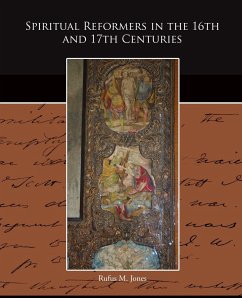
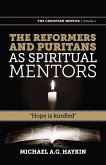
Published in 1914 this work includes What is Spiritual Religion; The Main Current of the Reformation; Hans Denck and the Inward Word; Two Prophets of the Inward Word: Bunderlin and Entfelder; Sebastian Franck: An Apostle of Inward Religion; Caspar Schwenckfeld and the Reformation of the Middle Way; Sebastian Castellio: A Forgotten Prophet; Coornhert and the Collegiants; Valentine Weigel and Nature Mysticism; Jacob Boehme: His Life and Spirit; Boehme's Universe, His Way of Salvation and His Influence in England; Early English Interpreters of Spiritual Religion, John Everard, Giles Randall and…mehr
Published in 1914 this work includes What is Spiritual Religion; The Main Current of the Reformation; Hans Denck and the Inward Word; Two Prophets of the Inward Word: Bunderlin and Entfelder; Sebastian Franck: An Apostle of Inward Religion; Caspar Schwenckfeld and the Reformation of the Middle Way; Sebastian Castellio: A Forgotten Prophet; Coornhert and the Collegiants; Valentine Weigel and Nature Mysticism; Jacob Boehme: His Life and Spirit; Boehme's Universe, His Way of Salvation and His Influence in England; Early English Interpreters of Spiritual Religion, John Everard, Giles Randall and others; John Smith, Patonist; Thomas Traheren and the Spiritual Poets of the Seventeenth Century.
Rufus Matthew Jones was born on January 25, 1863, in South China, Maine, to Edwin Jones and Mary Gifford Hoxie Jones. He became one of the most significant American Quaker figures of the 20th century, known for his influential roles as a theologian, historian, philosopher, editor, and educator. After studying at Haverford College and later Harvard University, he taught philosophy and psychology at Haverford College for many years. A prolific writer, he authored over fifty books, primarily focusing on mysticism, Quaker history, and religious experience. His work often blended scholarly research with spiritual insight, offering a deeper understanding of inner religious life. As the founding editor of the American Friend, he shaped Quaker publications and thought. He was also instrumental in forming the American Friends Service Committee, which received the Nobel Peace Prize in 1947 on behalf of Quakers worldwide. Jones emphasized the importance of direct personal experience of God and advocated for a spirituality grounded in action and moral responsibility. His life was marked by efforts to unite intellectual pursuit with religious conviction. He died on June 16, 1948, in Haverford, Pennsylvania, leaving behind a legacy of spiritual and intellectual leadership.
Es gelten unsere Allgemeinen Geschäftsbedingungen: www.buecher.de/agb
Impressum
www.buecher.de ist ein Internetauftritt der buecher.de internetstores GmbH
Geschäftsführung: Monica Sawhney | Roland Kölbl | Günter Hilger
Sitz der Gesellschaft: Batheyer Straße 115 - 117, 58099 Hagen
Postanschrift: Bürgermeister-Wegele-Str. 12, 86167 Augsburg
Amtsgericht Hagen HRB 13257
Steuernummer: 321/5800/1497
USt-IdNr: DE450055826