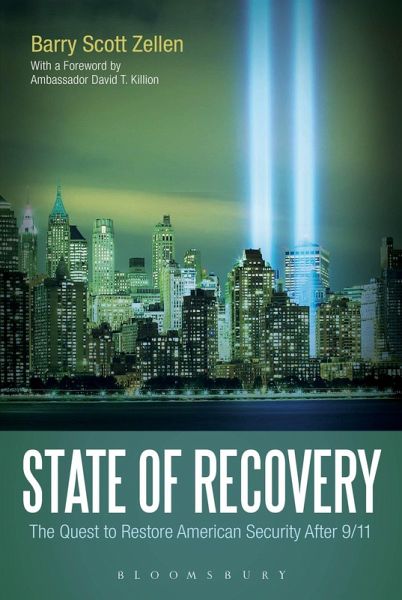
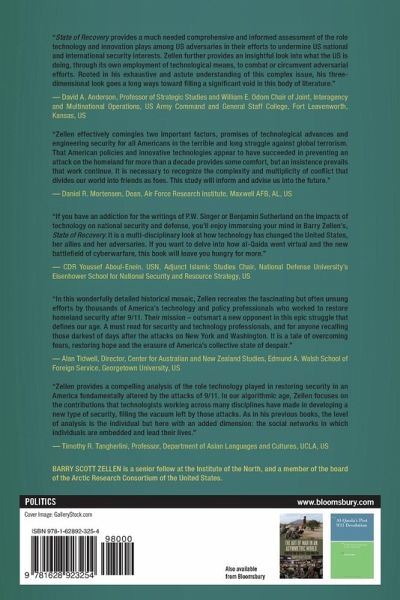
In the decade that followed 9/11, technologies and technology policies became central to homeland security. For example, the U.S. erected new border defenses with remote sensors and biometric scanners, and deployed new autonomous air warfare capabilities, such as the drone program. Looking at efforts to restore security after 9/11, the work examines issues such as the rise in technology spending, the various scenarios of mass terror, and America's effort to ensure that future engagements will take place far from the homeland. Operation Iraqi Freedom, Iran's emergence as nuclear threat, and…mehr
In the decade that followed 9/11, technologies and technology policies became central to homeland security. For example, the U.S. erected new border defenses with remote sensors and biometric scanners, and deployed new autonomous air warfare capabilities, such as the drone program. Looking at efforts to restore security after 9/11, the work examines issues such as the rise in technology spending, the various scenarios of mass terror, and America's effort to ensure that future engagements will take place far from the homeland. Operation Iraqi Freedom, Iran's emergence as nuclear threat, and North Korea's acceleration of its missile program are analyzed along with the "axis of evil" and America's effort to create a ballistic missile shield to thwart this emerging threat to its security. By focusing on the technologies of homeland security rather than on cyber warfare itself, the work offers a unique and needed survey that will appeal to anyone involved with the study and development of homeland and strategic security.
Barry Scott Zellen is a member of the board of the Arctic Research Consortium of the United States and a senior fellow of the Institute of the North, USA. He is the author of numerous books in strategic and security studies, and is founder and chief editor of the Next Innovator group of e-journals on strategy and innovation in the defense, security and information technology sectors.
Inhaltsangabe
Foreword: Innovation Leads the Way: From 'Long War' to Longer Peace by Ambassador David T. Killion Introduction Part I: Technology to the Rescue 1: Moore's Law and the Evolution of Security Technology 2: Information Security in a World of Cyber Insecurity 3: Document Fraud: From Criminal to Terrorist Enterprise 4: Business Continuity in Dangerous Times Part II. Securing our Borders 5: Border Security and the War on Terror 6: Counterterrorism Mentors: Allied Insights and Lessons 7: Enhanced Border Surveillance for the Post 9 11 World 8: Less Lethal Border Security Solutions: Midway Between 'Shout' and 'Shoot' 9: Securing the Maritime Front: Protecting America's Seaports 10: Securing the Southern Front 11: Securing the Northern Front Part III Protecting The Populace 12 Air Rage: Aviation Insecurity After 9 11 13: Truck Bombing Shifts Into High Gear 14: Underground Tremors: Securing the Metro 15: Courtroom Violence and the War Against the U.S. Government 16: Black Sunday Redux 17: Special Delivery: Letter-Bombs Continue to Deliver a Lethal Message 18: Bracing for Bioterror 19: Nuclear Terrorism After 9 11: Rethinking the Unthinkable Part IV: Ensuring our Survival: Thinking About the Unthinkable After 9 11 20: Nuclear Weapons and the War on Terror: Halting the Spread 21: False Alarm: Saddam, WMD, And the GWOT's First Side Show 22: Power Vacuum: Saddam's Fall and the Rise of Iran 23: Nuclear Ambitions: Emergent Ballistic Missile Threats 24: Securing the 'High Frontier': Missile Defense, from Hype to Hope 25: The Axis of Evil Revisited: Reflection and Reassessment Bibliography Index
Es gelten unsere Allgemeinen Geschäftsbedingungen: www.buecher.de/agb
Impressum
www.buecher.de ist ein Internetauftritt der buecher.de internetstores GmbH
Geschäftsführung: Monica Sawhney | Roland Kölbl | Günter Hilger
Sitz der Gesellschaft: Batheyer Straße 115 - 117, 58099 Hagen
Postanschrift: Bürgermeister-Wegele-Str. 12, 86167 Augsburg
Amtsgericht Hagen HRB 13257
Steuernummer: 321/5800/1497
USt-IdNr: DE450055826