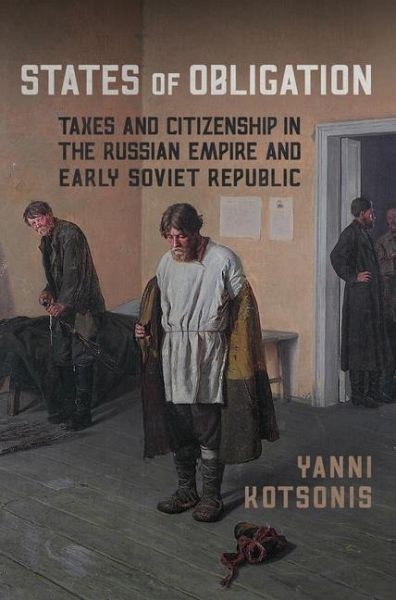
States of Obligation is the first sustained study of the Russian taxation system, the first to study its European and transatlantic context, and the first to expose the essential continuities between the fiscal practices of the Russian Empire and the Soviet Union.
States of Obligation is the first sustained study of the Russian taxation system, the first to study its European and transatlantic context, and the first to expose the essential continuities between the fiscal practices of the Russian Empire and the Soviet Union.
Yanni Kotsonis is an associate professor in the Departments of History and of Russian and Slavic Studies and founding Director of the Jordan Center for the Advanced Study of Russia at New York University.
Inhaltsangabe
Introduction. A Short History of Taxes: Russia and the World from the Eighteenth to the Twenty-First Centuries Part 1. People, Places, Things: The Old Regime, Economic Knowledge, and the Coming of the New Order 1. The Fiscal Instruments of Regime Change from the Eighteenth to the Nineteenth Centuries 2 Three Tax Reforms, Three Visions of the Polity Part 2. The Politics of Visibility, the Technologies of Intimacy: Taxes and the Remaking of Urban and Commercial Russia 3. Wealth in Motion: New Money, New Taxes, and a New Bureaucracy 4. Systematic Intimacy: Business Taxes and the Disciplining of Commercial Russia 5. Mass Taxation in the Age of the Individual: The New Personal Taxation in Russia and the World 6. The Income Tax as Modern Government: Assessment, Self-Assessment, and Mutual Surveillance Part 3. The Politics of Obscurity: Peasant Taxes, Excises, and the Vodka Monopoly to 1917 7. Everyone and No One: Indirect Taxes and the Vodka Monopoly to 1917 8. The Peasant and the Fisc: The State Budget and the Persistence of Collective Tax Apportionment 9. The Local Practices of Peasant Taxation Part 4. The State and Revolution, the State and Evolution: Fiscal Practices and a New Regime, 1917–30 10. Soviet Russia and the Continuing History of the Russian State 11. The Meanings of Utopia: Taxes, Urban Unities, and the Several Assaults on Peasant Separateness, 1917–21 12. The Economy of Licences: Taxes and the New Economic Policy Afterword. Russia, Socialism, and the Modern State
Introduction. A Short History of Taxes: Russia and the World from the Eighteenth to the Twenty-First Centuries Part 1. People, Places, Things: The Old Regime, Economic Knowledge, and the Coming of the New Order 1. The Fiscal Instruments of Regime Change from the Eighteenth to the Nineteenth Centuries 2 Three Tax Reforms, Three Visions of the Polity Part 2. The Politics of Visibility, the Technologies of Intimacy: Taxes and the Remaking of Urban and Commercial Russia 3. Wealth in Motion: New Money, New Taxes, and a New Bureaucracy 4. Systematic Intimacy: Business Taxes and the Disciplining of Commercial Russia 5. Mass Taxation in the Age of the Individual: The New Personal Taxation in Russia and the World 6. The Income Tax as Modern Government: Assessment, Self-Assessment, and Mutual Surveillance Part 3. The Politics of Obscurity: Peasant Taxes, Excises, and the Vodka Monopoly to 1917 7. Everyone and No One: Indirect Taxes and the Vodka Monopoly to 1917 8. The Peasant and the Fisc: The State Budget and the Persistence of Collective Tax Apportionment 9. The Local Practices of Peasant Taxation Part 4. The State and Revolution, the State and Evolution: Fiscal Practices and a New Regime, 1917–30 10. Soviet Russia and the Continuing History of the Russian State 11. The Meanings of Utopia: Taxes, Urban Unities, and the Several Assaults on Peasant Separateness, 1917–21 12. The Economy of Licences: Taxes and the New Economic Policy Afterword. Russia, Socialism, and the Modern State
Es gelten unsere Allgemeinen Geschäftsbedingungen: www.buecher.de/agb
Impressum
www.buecher.de ist ein Internetauftritt der buecher.de internetstores GmbH
Geschäftsführung: Monica Sawhney | Roland Kölbl | Günter Hilger
Sitz der Gesellschaft: Batheyer Straße 115 - 117, 58099 Hagen
Postanschrift: Bürgermeister-Wegele-Str. 12, 86167 Augsburg
Amtsgericht Hagen HRB 13257
Steuernummer: 321/5800/1497
USt-IdNr: DE450055826