
Andere Kunden interessierten sich auch für
 Ethnic Conflicts In Nigeria: A Legacy Of British Colonial Rule37,99 €
 Exploring the Cultural Legacy of Religious Flora in the Himalaya45,99 €
 How Great Empires Shaped History65,99 €
 Political Control of Literature in the USSR, 1946-195960,00 €
") Städtepartnerschaften zwischen Frankreich und der DDR (1959-1990)69,95 €
Städtepartnerschaften zwischen Frankreich und der DDR (1959-1990)69,95 € John Godsoe's Legacy28,90 €
 The Viking Legacy21,00 €






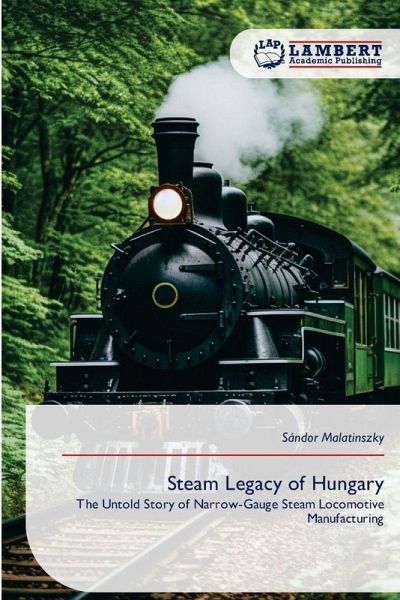
In this scholarly work, Dr. Sándor Malatinszky presents the first comprehensive examination of Hungary's crucial role in narrow-gauge steam locomotive manufacturing. From the industrial awakening of 1872 to the twilight of steam in 1959, this meticulously researched book unveils how narrow-gauge locomotives became both the driving force of Hungarian industrial development and a testament to the nation's engineering prowess. Through detailed technical analysis, rich historical context, and comparative studies with other European manufacturers, readers will discover how Hungary's workshops and factories not only served the unique transportation needs of the Carpathian basin but also contributed significantly to the broader technological advancement of the Austro-Hungarian Empire and its successor states. This definitive volume combines industrial heritage with technological innovation, making it an invaluable resource for railway historians, industrial archaeologists, and anyone interested in Central European industrial development. The author's expertise brings to life an era when Hungary's industrial might was measured in steam and steel, preserving this critical chapter.