
Andere Kunden interessierten sich auch für
 Sticks & Stones / Steel & Glass14,99 €
 The Building and Decorative Stones of Maryland, Containing an Account of Their Properties and Distribution22,99 €
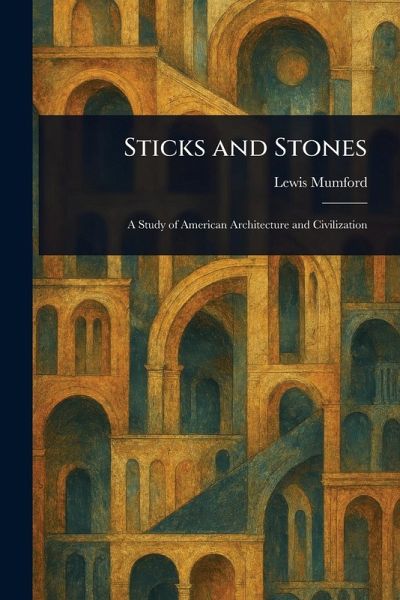
 Sticks and Stones, a Study of American Architecture and Civilization22,99 €
 The Stones of Venice: [With Appendices, Additional Notes, and "Venetian Index."]; 325,99 €
 The Stones of Venice; v. 325,99 €
 The Stones of Venice: The Foundations25,99 €
 The Stones of Venice: [With Appendices, Additional Notes, and "Venetian Index."]; 225,99 €



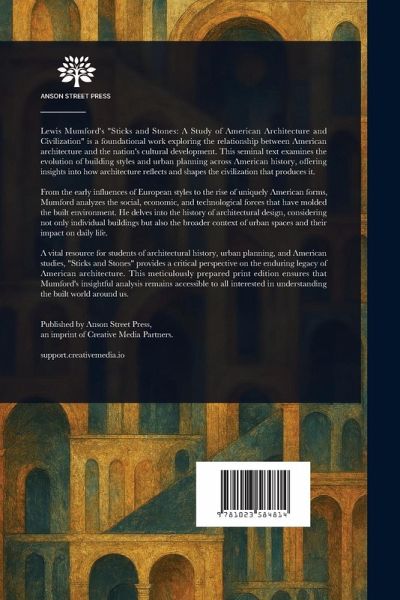
Lewis Mumford's "Sticks and Stones: A Study of American Architecture and Civilization" is a foundational work exploring the relationship between American architecture and the nation's cultural development. This seminal text examines the evolution of building styles and urban planning across American history, offering insights into how architecture reflects and shapes the civilization that produces it. From the early influences of European styles to the rise of uniquely American forms, Mumford analyzes the social, economic, and technological forces that have molded the built environment. He delves into the history of architectural design, considering not only individual buildings but also the broader context of urban spaces and their impact on daily life. A vital resource for students of architectural history, urban planning, and American studies, "Sticks and Stones" provides a critical perspective on the enduring legacy of American architecture. This meticulously prepared print edition ensures that Mumford's insightful analysis remains accessible to all interested in understanding the built world around us. This work has been selected by scholars as being culturally important, and is part of the knowledge base of civilization as we know it. This work is in the public domain in the United States of America, and possibly other nations. Within the United States, you may freely copy and distribute this work, as no entity (individual or corporate) has a copyright on the body of the work. Scholars believe, and we concur, that this work is important enough to be preserved, reproduced, and made generally available to the public. We appreciate your support of the preservation process, and thank you for being an important part of keeping this knowledge alive and relevant.