George W. Stimson
Stimson's Introduction to Airborne Radar
Herausgeber: Griffiths, Hugh D; Adamy, Dave; Baker, Christopher J
George W. Stimson
Stimson's Introduction to Airborne Radar
Herausgeber: Griffiths, Hugh D; Adamy, Dave; Baker, Christopher J
- Gebundenes Buch
- Merkliste
- Auf die Merkliste
- Bewerten Bewerten
- Teilen
- Produkt teilen
- Produkterinnerung
- Produkterinnerung
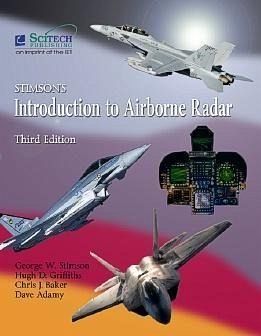
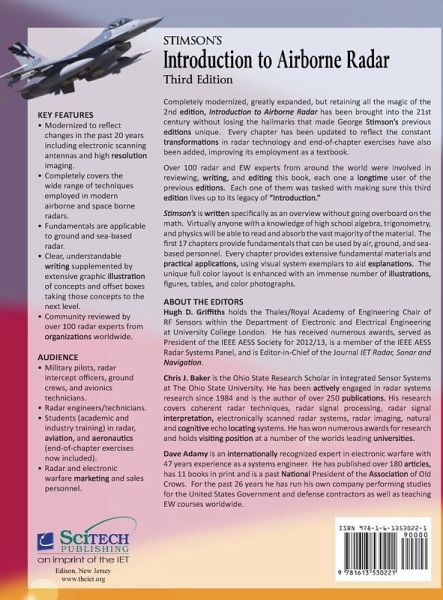
Greatly expanded from the best-selling second edition by George W.Stimson, this book offers a complete overview of the major developments in air and spaceborne radar in line with advances in modern technology.
Andere Kunden interessierten sich auch für
Paul Hannen (Adjunct Professor, Wright State University, DepartmentRadar and Electronic Warfare Principles for the Non-Specialist95,99 €
Advances in Bistatic Radar176,99 €
Radar Countermeasures for Unmanned Aerial Vehicles175,99 €
Deep Neural Network Design for Radar Applications175,99 €
Modern Radar for Automotive Applications138,99 €
Principles of Modern Radar161,99 €
Roger J. Sullivan (Institute for Defense Analysis, Alexandria, VA,Radar Foundations for Imaging and Advanced Concepts129,99 €-
-
-
Greatly expanded from the best-selling second edition by George W.Stimson, this book offers a complete overview of the major developments in air and spaceborne radar in line with advances in modern technology.
Produktdetails
- Produktdetails
- Radar, Sonar and Navigation
- Verlag: SciTech Publishing Inc
- 3 ed
- Seitenzahl: 774
- Erscheinungstermin: 30. Mai 2014
- Englisch
- Abmessung: 289mm x 223mm x 43mm
- Gewicht: 2276g
- ISBN-13: 9781613530221
- ISBN-10: 1613530226
- Artikelnr.: 40143419
- Herstellerkennzeichnung
- Libri GmbH
- Europaallee 1
- 36244 Bad Hersfeld
- gpsr@libri.de
- Radar, Sonar and Navigation
- Verlag: SciTech Publishing Inc
- 3 ed
- Seitenzahl: 774
- Erscheinungstermin: 30. Mai 2014
- Englisch
- Abmessung: 289mm x 223mm x 43mm
- Gewicht: 2276g
- ISBN-13: 9781613530221
- ISBN-10: 1613530226
- Artikelnr.: 40143419
- Herstellerkennzeichnung
- Libri GmbH
- Europaallee 1
- 36244 Bad Hersfeld
- gpsr@libri.de
George W. Stimson was the author of Introduction to Airborne Radar (1st and 2nd editions) and served as an engineer on Southern California Edison's frequency-change project before being hired by Hughes Aircraft Company. Working closely with the company's top designers, Stimson observed first-hand the fascinating evolution of airborne radar and with the help from Hughes engineers updated the first edition with 11 new chapters.
Part I: Overview of Airborne Radar
Chapter 1: Basic Concepts
Chapter 2: Approaches to Implementation
Chapter 3: Representative Applications
Part II: Essential Groundwork
Chapter 4: Radio Waves and Alternating Current Signals
Chapter 5: A Nonmathematical Approach to Radar
Chapter 6: Preparatory Math for Radar
Part III: Fundamentals of Radar
Chapter 7: Choice of Radio Frequency
Chapter 8: Directivity and the Antenna Beam
Chapter 9: Electronically Scanned Array Antennas
Chapter 10: Electronically Scanned Array Design
Chapter 11: Pulsed Operation
Chapter 12: Detection Range
Chapter 13: The Range Equation: What It Does and Doesn't Tell Us
Chapter 14: Radar Receivers and Digitization
Chapter 15: Measuring Range and Resolving in Range
Chapter 16: Pulse Compression and High-Resolution Radar
Chapter 17: Frequency-Modulated Continuous Wave Ranging
Part IV: Pulse Doppler Radar
Chapter 18: The Doppler Effect
Chapter 19: The Spectrum of a Pulsed Signal
Chapter 20: The Pulsed Spectrum Unveiled
Chapter 21: Doppler Sensing and Digital Filtering
Chapter 22: Measuring Range-Rate
Part V: Clutter
Chapter 23: Sources and Spectra of Ground Return
Chapter 24: Effect of Range and Doppler Ambiguities on Ground Clutter
Chapter 25: Representing Clutter
Chapter 26: Separating Ground Moving Targets from Clutter
Part VI: Air-to-Air Operation
Chapter 27: PRF and Ambiguities
Chapter 28: Low PRF Operation
Chapter 29: Medium PRF Operation
Chapter 30: High PRF Operation
Chapter 31: Automatic Tracking
Part VII: Imaging Radar
Chapter 32: Radar and Resolution
Chapter 33: Imaging Methods
Chapter 34: SAR Image Formation and Processing
Chapter 35: SAR System Design
Part VIII Radar and Electronic Warfare
Chapter 36: Electronic Warfare Terms and Concepts
Chapter 37: Electronic Warfare Support
Chapter 38: Electronic Attack
Chapter 39: Electronic Protection
Chapter 40: Decoys
Chapter 41: Low Probability of Intercept (LPI)
Part IX: Special Topics and Advanced Concepts
Chapter 42: Antenna Radar Cross Section Reduction
Chapter 43: Advanced Processor Architectures
Chapter 44: Bistatic Radar
Chapter 45: Distributed Radar and MIMO Radar
Chapter 46: Radar Waveforms: Advanced Concepts
Chapter 47: Target Classification
Chapter 48: Emerging Radar Trends
Part X: Representative Radar Systems
Chapter 49: Airborne Early Warning and Control
Chapter 50: Reconnaissance & Surveillance
Chapter 51: Space Based Radar Systems
Chapter 52: Fighter & Attack
Chapter 1: Basic Concepts
Chapter 2: Approaches to Implementation
Chapter 3: Representative Applications
Part II: Essential Groundwork
Chapter 4: Radio Waves and Alternating Current Signals
Chapter 5: A Nonmathematical Approach to Radar
Chapter 6: Preparatory Math for Radar
Part III: Fundamentals of Radar
Chapter 7: Choice of Radio Frequency
Chapter 8: Directivity and the Antenna Beam
Chapter 9: Electronically Scanned Array Antennas
Chapter 10: Electronically Scanned Array Design
Chapter 11: Pulsed Operation
Chapter 12: Detection Range
Chapter 13: The Range Equation: What It Does and Doesn't Tell Us
Chapter 14: Radar Receivers and Digitization
Chapter 15: Measuring Range and Resolving in Range
Chapter 16: Pulse Compression and High-Resolution Radar
Chapter 17: Frequency-Modulated Continuous Wave Ranging
Part IV: Pulse Doppler Radar
Chapter 18: The Doppler Effect
Chapter 19: The Spectrum of a Pulsed Signal
Chapter 20: The Pulsed Spectrum Unveiled
Chapter 21: Doppler Sensing and Digital Filtering
Chapter 22: Measuring Range-Rate
Part V: Clutter
Chapter 23: Sources and Spectra of Ground Return
Chapter 24: Effect of Range and Doppler Ambiguities on Ground Clutter
Chapter 25: Representing Clutter
Chapter 26: Separating Ground Moving Targets from Clutter
Part VI: Air-to-Air Operation
Chapter 27: PRF and Ambiguities
Chapter 28: Low PRF Operation
Chapter 29: Medium PRF Operation
Chapter 30: High PRF Operation
Chapter 31: Automatic Tracking
Part VII: Imaging Radar
Chapter 32: Radar and Resolution
Chapter 33: Imaging Methods
Chapter 34: SAR Image Formation and Processing
Chapter 35: SAR System Design
Part VIII Radar and Electronic Warfare
Chapter 36: Electronic Warfare Terms and Concepts
Chapter 37: Electronic Warfare Support
Chapter 38: Electronic Attack
Chapter 39: Electronic Protection
Chapter 40: Decoys
Chapter 41: Low Probability of Intercept (LPI)
Part IX: Special Topics and Advanced Concepts
Chapter 42: Antenna Radar Cross Section Reduction
Chapter 43: Advanced Processor Architectures
Chapter 44: Bistatic Radar
Chapter 45: Distributed Radar and MIMO Radar
Chapter 46: Radar Waveforms: Advanced Concepts
Chapter 47: Target Classification
Chapter 48: Emerging Radar Trends
Part X: Representative Radar Systems
Chapter 49: Airborne Early Warning and Control
Chapter 50: Reconnaissance & Surveillance
Chapter 51: Space Based Radar Systems
Chapter 52: Fighter & Attack
Part I: Overview of Airborne Radar
Chapter 1: Basic Concepts
Chapter 2: Approaches to Implementation
Chapter 3: Representative Applications
Part II: Essential Groundwork
Chapter 4: Radio Waves and Alternating Current Signals
Chapter 5: A Nonmathematical Approach to Radar
Chapter 6: Preparatory Math for Radar
Part III: Fundamentals of Radar
Chapter 7: Choice of Radio Frequency
Chapter 8: Directivity and the Antenna Beam
Chapter 9: Electronically Scanned Array Antennas
Chapter 10: Electronically Scanned Array Design
Chapter 11: Pulsed Operation
Chapter 12: Detection Range
Chapter 13: The Range Equation: What It Does and Doesn't Tell Us
Chapter 14: Radar Receivers and Digitization
Chapter 15: Measuring Range and Resolving in Range
Chapter 16: Pulse Compression and High-Resolution Radar
Chapter 17: Frequency-Modulated Continuous Wave Ranging
Part IV: Pulse Doppler Radar
Chapter 18: The Doppler Effect
Chapter 19: The Spectrum of a Pulsed Signal
Chapter 20: The Pulsed Spectrum Unveiled
Chapter 21: Doppler Sensing and Digital Filtering
Chapter 22: Measuring Range-Rate
Part V: Clutter
Chapter 23: Sources and Spectra of Ground Return
Chapter 24: Effect of Range and Doppler Ambiguities on Ground Clutter
Chapter 25: Representing Clutter
Chapter 26: Separating Ground Moving Targets from Clutter
Part VI: Air-to-Air Operation
Chapter 27: PRF and Ambiguities
Chapter 28: Low PRF Operation
Chapter 29: Medium PRF Operation
Chapter 30: High PRF Operation
Chapter 31: Automatic Tracking
Part VII: Imaging Radar
Chapter 32: Radar and Resolution
Chapter 33: Imaging Methods
Chapter 34: SAR Image Formation and Processing
Chapter 35: SAR System Design
Part VIII Radar and Electronic Warfare
Chapter 36: Electronic Warfare Terms and Concepts
Chapter 37: Electronic Warfare Support
Chapter 38: Electronic Attack
Chapter 39: Electronic Protection
Chapter 40: Decoys
Chapter 41: Low Probability of Intercept (LPI)
Part IX: Special Topics and Advanced Concepts
Chapter 42: Antenna Radar Cross Section Reduction
Chapter 43: Advanced Processor Architectures
Chapter 44: Bistatic Radar
Chapter 45: Distributed Radar and MIMO Radar
Chapter 46: Radar Waveforms: Advanced Concepts
Chapter 47: Target Classification
Chapter 48: Emerging Radar Trends
Part X: Representative Radar Systems
Chapter 49: Airborne Early Warning and Control
Chapter 50: Reconnaissance & Surveillance
Chapter 51: Space Based Radar Systems
Chapter 52: Fighter & Attack
Chapter 1: Basic Concepts
Chapter 2: Approaches to Implementation
Chapter 3: Representative Applications
Part II: Essential Groundwork
Chapter 4: Radio Waves and Alternating Current Signals
Chapter 5: A Nonmathematical Approach to Radar
Chapter 6: Preparatory Math for Radar
Part III: Fundamentals of Radar
Chapter 7: Choice of Radio Frequency
Chapter 8: Directivity and the Antenna Beam
Chapter 9: Electronically Scanned Array Antennas
Chapter 10: Electronically Scanned Array Design
Chapter 11: Pulsed Operation
Chapter 12: Detection Range
Chapter 13: The Range Equation: What It Does and Doesn't Tell Us
Chapter 14: Radar Receivers and Digitization
Chapter 15: Measuring Range and Resolving in Range
Chapter 16: Pulse Compression and High-Resolution Radar
Chapter 17: Frequency-Modulated Continuous Wave Ranging
Part IV: Pulse Doppler Radar
Chapter 18: The Doppler Effect
Chapter 19: The Spectrum of a Pulsed Signal
Chapter 20: The Pulsed Spectrum Unveiled
Chapter 21: Doppler Sensing and Digital Filtering
Chapter 22: Measuring Range-Rate
Part V: Clutter
Chapter 23: Sources and Spectra of Ground Return
Chapter 24: Effect of Range and Doppler Ambiguities on Ground Clutter
Chapter 25: Representing Clutter
Chapter 26: Separating Ground Moving Targets from Clutter
Part VI: Air-to-Air Operation
Chapter 27: PRF and Ambiguities
Chapter 28: Low PRF Operation
Chapter 29: Medium PRF Operation
Chapter 30: High PRF Operation
Chapter 31: Automatic Tracking
Part VII: Imaging Radar
Chapter 32: Radar and Resolution
Chapter 33: Imaging Methods
Chapter 34: SAR Image Formation and Processing
Chapter 35: SAR System Design
Part VIII Radar and Electronic Warfare
Chapter 36: Electronic Warfare Terms and Concepts
Chapter 37: Electronic Warfare Support
Chapter 38: Electronic Attack
Chapter 39: Electronic Protection
Chapter 40: Decoys
Chapter 41: Low Probability of Intercept (LPI)
Part IX: Special Topics and Advanced Concepts
Chapter 42: Antenna Radar Cross Section Reduction
Chapter 43: Advanced Processor Architectures
Chapter 44: Bistatic Radar
Chapter 45: Distributed Radar and MIMO Radar
Chapter 46: Radar Waveforms: Advanced Concepts
Chapter 47: Target Classification
Chapter 48: Emerging Radar Trends
Part X: Representative Radar Systems
Chapter 49: Airborne Early Warning and Control
Chapter 50: Reconnaissance & Surveillance
Chapter 51: Space Based Radar Systems
Chapter 52: Fighter & Attack