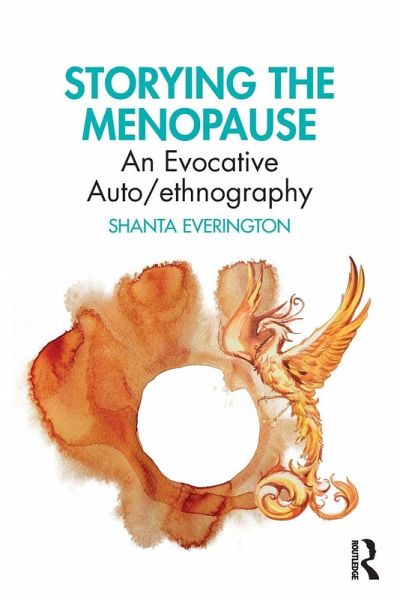
Storying the Menopause presents a kaleidoscope of multi-faceted lived experience, offering a diverse and illuminating range of stories, foregrounding often hidden voices, which expand our understanding of the menopause in 21st century UK.
Storying the Menopause presents a kaleidoscope of multi-faceted lived experience, offering a diverse and illuminating range of stories, foregrounding often hidden voices, which expand our understanding of the menopause in 21st century UK.
Shanta Everington is Associate Lecturer and Honorary Associate at The Open University, UK, where she gained her PhD in Creative Writing, specialising in life writing. A creative and critical writer working across a range of forms, Shanta specialises in creative practice as socially engaged research. Previous books include the following: Another Mother: Curating and Creating Voices of Adoption, Surrogacy and Egg Donation (2023), XY (2014) and Marilyn and Me (2007). She is a Writing Fellow with the Royal Literary Fund and a member of the National Association of Writers in Education.
Inhaltsangabe
Part I: Introduction 2. Contextualising the menopause 3. How auto/ethnography is used in the book Part II: The interview stories 4. Maria's story: Early menopause 5. Kim's story: HRT as a cancer survivor 6. Yasmin's story: POI and ADHD 7. Tammy's story: Not fitting the dominant narrative 8. Hannah's story: Perimenopause and mental health 9. Josephine's story: Breast cancer after 5 years on HRT 10. Grace's story: Menopause in the workplace 11. Cara's story: Menopause, identity and sexuality 12. Ivy's story: Menopause and disability 13. Jyoti's story: Menopause and cultural taboos 14. Kathleen's story: Hysterectomy and sudden menopause 15. Ajay's story: Menopause and non-binary gender identity 16. Shanta's story part 2: What happened next and how the other stories speak to mine Representation and Resonance 17. Contributing to new understandings of menopause through an evocative auto/ethnographical approach to the co-creation of stories
Part I: Introduction 2. Contextualising the menopause 3. How auto/ethnography is used in the book Part II: The interview stories 4. Maria's story: Early menopause 5. Kim's story: HRT as a cancer survivor 6. Yasmin's story: POI and ADHD 7. Tammy's story: Not fitting the dominant narrative 8. Hannah's story: Perimenopause and mental health 9. Josephine's story: Breast cancer after 5 years on HRT 10. Grace's story: Menopause in the workplace 11. Cara's story: Menopause, identity and sexuality 12. Ivy's story: Menopause and disability 13. Jyoti's story: Menopause and cultural taboos 14. Kathleen's story: Hysterectomy and sudden menopause 15. Ajay's story: Menopause and non-binary gender identity 16. Shanta's story part 2: What happened next and how the other stories speak to mine Representation and Resonance 17. Contributing to new understandings of menopause through an evocative auto/ethnographical approach to the co-creation of stories
Es gelten unsere Allgemeinen Geschäftsbedingungen: www.buecher.de/agb
Impressum
www.buecher.de ist ein Internetauftritt der buecher.de internetstores GmbH
Geschäftsführung: Monica Sawhney | Roland Kölbl | Günter Hilger
Sitz der Gesellschaft: Batheyer Straße 115 - 117, 58099 Hagen
Postanschrift: Bürgermeister-Wegele-Str. 12, 86167 Augsburg
Amtsgericht Hagen HRB 13257
Steuernummer: 321/5800/1497
USt-IdNr: DE450055826