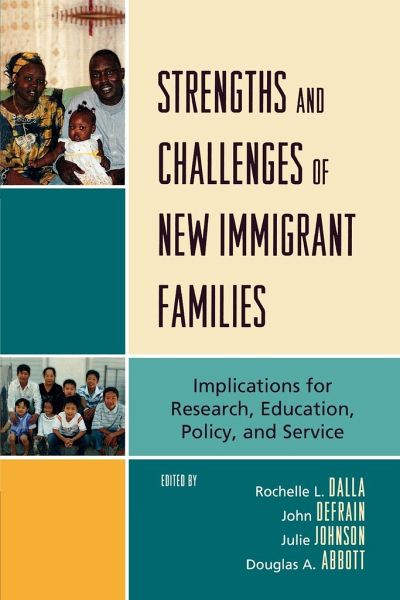
This book is comprised of nineteen chapters written by scholars with expertise on immigrant families representing every corner of the globe_from Africa and India to Europe and Central America. It provides a springboard from which to answer the application and 'what now' questions for those who work with immigrant families in a variety of capacities_from academicians and researchers to educators and human-service providers.
This book is comprised of nineteen chapters written by scholars with expertise on immigrant families representing every corner of the globe_from Africa and India to Europe and Central America. It provides a springboard from which to answer the application and 'what now' questions for those who work with immigrant families in a variety of capacities_from academicians and researchers to educators and human-service providers.
Rochelle L. Dalla is an associate professor; John DeFrain is an extension professor; Julie M. Johnson is chair and professor; Douglas A. Abbott is a professor, all in the Department of Child, Youth, and Family Studies at the University of Nebraska at Lincoln.
Inhaltsangabe
Part 1 Introduction Part 2 I. How Immigration Changes Immigrants and How Immigrants Change America Chapter 3 Chapter 1. An Evaluation of the Psychological Research on Acculturation and Enculturation Processes among Recently Immigrating Populations Chapter 4 Chapter 2. A Sociological Analysis of the Psychosocial Adaptation of Khmer Refugees in Massachusetts Chapter 5 Chapter 3. Understanding the Immigration Experience through a Lifecourse Lens: Four Personal Stories Chapter 6 Chapter 4. Transnational Families and the Social Construction of Identity: Whiteness Matters Part 7 II. Marriages and Families Chapter 8 Chapter 5. Influence of American Culture of East Indian Immigrants' Perception of Marriage and Family Life Chapter 9 Chapter 6. Strong Marriages in Latino Culture Chapter 10 Chapter 7. Family Strengths of Hmong and Somalil Refugees in the United States Chapter 11 Chapter 8. Migrating Latinas and the Grief Process Chapter 12 Chapter 9. Career and Employment Concerns of Immigrant Women Part 13 III. Parents and Children Chapter 14 Chapter 10. Childcare Challenges of African Immigrant Families: An Inductive Thematic Analysis Chapter 15 Chapter 11. Decisions about Child Rearing Practices in First Generation Asian Indian Immigrants Chapter 16 Chapter 12. Intergenerational Differences in Acculturation and Family Conflict among Korean Immigrant Families Chapter 17 Chapter 13. Lost Boys Finding Their Way: Challenges, Changes, and Small Victories of Young Sudanese Refugees in the United States Chapter 18 Chapter 14. Distant Relations between Migrant Adult Children and Their Older Parents Chapter 19 Chapter 15. Co-Residence in Chinese Immigrant Families Part 20 IV. Community and Programmatic Issues Chapter 21 Chapter 16. Stress, Status, and Sociability: Exploring Residential Satisfaction in the Rural Midwest Following Rapid Immigration Chapter 22 Chapter 17. Rural Latino Immigrant Families: Hunger, Housing, and Social Support Chapter 23 Chapter 18. Parental Stress Among U.S. Mexican Heritage Parents: Implications for Culturally Relevant Family Life Education Chapter 24 Chapter 19. The Impact of Latino Immigrants and Bicultural Program Coordinators on Organizational Philosophy and Values: A Case Study of Organizational Responsiveness Part 25 Epilogue
Part 1 Introduction Part 2 I. How Immigration Changes Immigrants and How Immigrants Change America Chapter 3 Chapter 1. An Evaluation of the Psychological Research on Acculturation and Enculturation Processes among Recently Immigrating Populations Chapter 4 Chapter 2. A Sociological Analysis of the Psychosocial Adaptation of Khmer Refugees in Massachusetts Chapter 5 Chapter 3. Understanding the Immigration Experience through a Lifecourse Lens: Four Personal Stories Chapter 6 Chapter 4. Transnational Families and the Social Construction of Identity: Whiteness Matters Part 7 II. Marriages and Families Chapter 8 Chapter 5. Influence of American Culture of East Indian Immigrants' Perception of Marriage and Family Life Chapter 9 Chapter 6. Strong Marriages in Latino Culture Chapter 10 Chapter 7. Family Strengths of Hmong and Somalil Refugees in the United States Chapter 11 Chapter 8. Migrating Latinas and the Grief Process Chapter 12 Chapter 9. Career and Employment Concerns of Immigrant Women Part 13 III. Parents and Children Chapter 14 Chapter 10. Childcare Challenges of African Immigrant Families: An Inductive Thematic Analysis Chapter 15 Chapter 11. Decisions about Child Rearing Practices in First Generation Asian Indian Immigrants Chapter 16 Chapter 12. Intergenerational Differences in Acculturation and Family Conflict among Korean Immigrant Families Chapter 17 Chapter 13. Lost Boys Finding Their Way: Challenges, Changes, and Small Victories of Young Sudanese Refugees in the United States Chapter 18 Chapter 14. Distant Relations between Migrant Adult Children and Their Older Parents Chapter 19 Chapter 15. Co-Residence in Chinese Immigrant Families Part 20 IV. Community and Programmatic Issues Chapter 21 Chapter 16. Stress, Status, and Sociability: Exploring Residential Satisfaction in the Rural Midwest Following Rapid Immigration Chapter 22 Chapter 17. Rural Latino Immigrant Families: Hunger, Housing, and Social Support Chapter 23 Chapter 18. Parental Stress Among U.S. Mexican Heritage Parents: Implications for Culturally Relevant Family Life Education Chapter 24 Chapter 19. The Impact of Latino Immigrants and Bicultural Program Coordinators on Organizational Philosophy and Values: A Case Study of Organizational Responsiveness Part 25 Epilogue
Es gelten unsere Allgemeinen Geschäftsbedingungen: www.buecher.de/agb
Impressum
www.buecher.de ist ein Internetauftritt der buecher.de internetstores GmbH
Geschäftsführung: Monica Sawhney | Roland Kölbl | Günter Hilger
Sitz der Gesellschaft: Batheyer Straße 115 - 117, 58099 Hagen
Postanschrift: Bürgermeister-Wegele-Str. 12, 86167 Augsburg
Amtsgericht Hagen HRB 13257
Steuernummer: 321/5800/1497
USt-IdNr: DE450055826