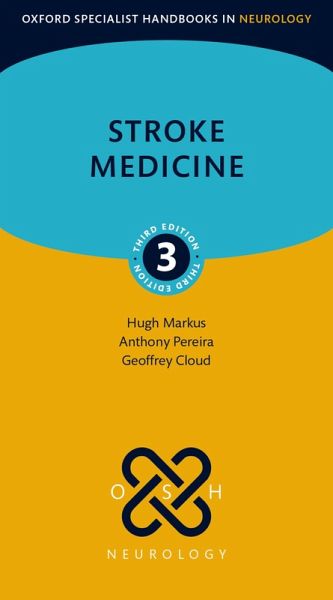
Stroke Medicine 3e provides an up-to-date and easily accessible source of information on all aspects of stroke care, from acute care through to rehabilitation and secondary prevention. It incorporates considerable advances in the treatment of stroke that have occurred since the second edition published.
Stroke Medicine 3e provides an up-to-date and easily accessible source of information on all aspects of stroke care, from acute care through to rehabilitation and secondary prevention. It incorporates considerable advances in the treatment of stroke that have occurred since the second edition published.
Hugh Markus is Professor of Stroke Medicine at the University of Cambridge and a consultant neurologist and stroke physician at Addenbrooke's Hospital, Cambridge. He was previously Professor of Neurology at St. George's Hospital, London. He divides his time between working in a busy comprehensive stroke service, and research. His main research interests are in cerebral small vessel disease and vascular cognitive impairment, and stroke genetics. Dr Anthony Pereira trained in medicine at the University of Cambridge and in neurology in London. He is a consultant neurologist and stroke physician at St. George's Hospital, London. He chairs the UK neurology and stroke Specialty Advisory Committees on training matters and helps run a large neurology and stroke training programme at St. George's. Geoffrey Cloud is Professor of Stroke Medicine in the School of Translational Medicine, Monash University and Director of Stroke Services at Alfred Health in Melbourne, Australia. He was previously a consultant stroke physician at St. George's Hospital, London. Outside of stroke service quality improvement, his published research interests include large clinical stroke trials of acute stroke care, novel interventions to improve recovery after stroke and understanding the needs of stroke carers.
Inhaltsangabe
1: Epidemiology and stroke risk factors 2: Neuroanatomy 3: Vascular anatomy and stroke syndromes 4: History-taking in the stroke patient 5: Examination of the stroke patient 6: Investigation of the stroke patient 7: Imaging in stroke 8: Ischaemic stroke: common causes 9: Acute stroke treatment 10: Secondary prevention of stroke 11: Unusual causes of stroke and their treatment 12: Cerebral venous thrombosis 13: Cerebral haemorrhage 14: Recovery and rehabilitation 15: Vascular cognitive impairment (VCI) 16: Organization of stroke services 17: Ethical issues in stroke care Appendix 1: Glossary Appendix 2: Useful stroke scales Appendix 3: Useful websites