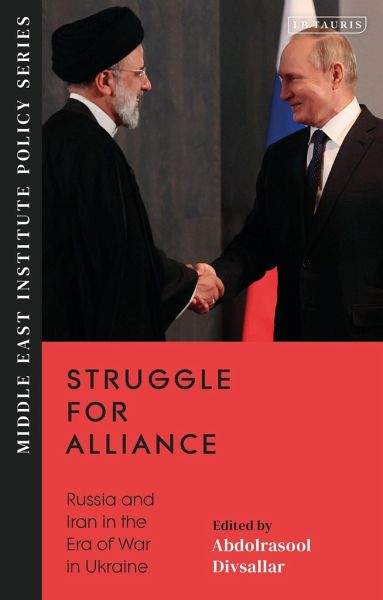
"This book analyzes Russo-Iranian relations from the perspective of the emerging literature on authoritarian regionalism, exploring the role domestic politics and common threat perceptions play in these states' decisions to adjust to the systemic changes caused by the war in Ukraine. Chapters address how changes in the strategic environment are affecting Moscow and Tehran's perception of each other, what factors contribute the most to both states' decision to pursue greater cooperation and how they manage the new conflicts of interest raised by the war"--
"This book analyzes Russo-Iranian relations from the perspective of the emerging literature on authoritarian regionalism, exploring the role domestic politics and common threat perceptions play in these states' decisions to adjust to the systemic changes caused by the war in Ukraine. Chapters address how changes in the strategic environment are affecting Moscow and Tehran's perception of each other, what factors contribute the most to both states' decision to pursue greater cooperation and how they manage the new conflicts of interest raised by the war"--
Abdolrasool Divsallar is a Visiting Professor at the Universita' Cattolica del Sacro Cuore in Milan, Italy, and a senior researcher at the UN Institute for Disarmament Research (UNIDIR). He is also a Non-Resident Scholar at the Middle East Institute in Washington D.C, USA. He co-founded and led the Regional Security Initiative at the European University Institute from 2020-22. Dr. Divsallar's focus and interests include Russia-Iran relations, military strategies in the Persian Gulf, Iran's military and foreign affairs, regional security reform, non-proliferation issues, and security assistance. He has written and edited eight books, including Stepping Away From the Abyss: A Gradual Approach Towards a New Security System in the Persian Gulf (2021), and has published numerous peer review journal articles.
Inhaltsangabe
Introduction: What Makes a New Study Needed? Abdolrasool Divsallar Part 1 - Domestic Debates: Between State enthusiasm and public uncertainty Chapter 1. Iran's Ascent in Russian Foreign Policy Thinking: The Emergence of a New Paradigm Nicole Grajewski, Postdoctoral Fellow with the Belfer Center at Harvard's Kennedy School Chapter 2. The Ukraine War and Internal Debates in Iran Mahmood Shoori, Deputy Director of the Institute for Iran & Eurasia Studies Chapter 3. Identity, Statehood, and Strategic Sympathy Dianna Galeeva, Visiting Fellow at Oxford Centre for Islamic Studies Part 2 - Systemic Constraints Chapter 4. Russian Policy in the MENA and Mediterranean Regions: Implications for Iran Mark N. Katz, Professor of Government and Politics at the George Mason University Schar School of Policy and Government Chapter 5. The Principle of Strategic Stability: Russia's Nuclear Policy Towards Iran Anastasia Malygina, Associate Professor at the School of International Relations at St. Petersburg State University Part 3 - A Hybrid Status: Competition amid Cooperation Chapter 6. Anti-Americanism and a Dream of Non-Western Order Jeffrey Mankoff, Distinguished Research Fellow at the U.S. National Defense University's Institute for National Strategic Studies Mahsa Rouhi, Research Fellow at the U.S. National Defense University's Institute for National Strategic Studies Chapter 7. Countering Sanctions: New Economic and Trade Prospects Esfandyar Batmanghelidj, Founder and CEO, the Bourse & Bazaar Foundation Chapter 8. Why Russian Energy Interests Cannot Match Iranian Ones Jakub M. Godzimirski, Research Professor at the Norwegian Institute of International Affairs Chapter 9. How the War in Ukraine Changes Russia and Iran's Posture in Syria and the Eastern Mediterranean Hamidreza Azizi, Visiting Fellow at the German Institute for International and Security Affairs (SWP) Part 4 - The Future of relations Chapter 10. Is An Authoritarian Alliance Emerging? Abdolrasool Divsallar Conclusion Abdolrasool Divsallar
Introduction: What Makes a New Study Needed? Abdolrasool Divsallar Part 1 - Domestic Debates: Between State enthusiasm and public uncertainty Chapter 1. Iran's Ascent in Russian Foreign Policy Thinking: The Emergence of a New Paradigm Nicole Grajewski, Postdoctoral Fellow with the Belfer Center at Harvard's Kennedy School Chapter 2. The Ukraine War and Internal Debates in Iran Mahmood Shoori, Deputy Director of the Institute for Iran & Eurasia Studies Chapter 3. Identity, Statehood, and Strategic Sympathy Dianna Galeeva, Visiting Fellow at Oxford Centre for Islamic Studies Part 2 - Systemic Constraints Chapter 4. Russian Policy in the MENA and Mediterranean Regions: Implications for Iran Mark N. Katz, Professor of Government and Politics at the George Mason University Schar School of Policy and Government Chapter 5. The Principle of Strategic Stability: Russia's Nuclear Policy Towards Iran Anastasia Malygina, Associate Professor at the School of International Relations at St. Petersburg State University Part 3 - A Hybrid Status: Competition amid Cooperation Chapter 6. Anti-Americanism and a Dream of Non-Western Order Jeffrey Mankoff, Distinguished Research Fellow at the U.S. National Defense University's Institute for National Strategic Studies Mahsa Rouhi, Research Fellow at the U.S. National Defense University's Institute for National Strategic Studies Chapter 7. Countering Sanctions: New Economic and Trade Prospects Esfandyar Batmanghelidj, Founder and CEO, the Bourse & Bazaar Foundation Chapter 8. Why Russian Energy Interests Cannot Match Iranian Ones Jakub M. Godzimirski, Research Professor at the Norwegian Institute of International Affairs Chapter 9. How the War in Ukraine Changes Russia and Iran's Posture in Syria and the Eastern Mediterranean Hamidreza Azizi, Visiting Fellow at the German Institute for International and Security Affairs (SWP) Part 4 - The Future of relations Chapter 10. Is An Authoritarian Alliance Emerging? Abdolrasool Divsallar Conclusion Abdolrasool Divsallar
Es gelten unsere Allgemeinen Geschäftsbedingungen: www.buecher.de/agb
Impressum
www.buecher.de ist ein Internetauftritt der buecher.de internetstores GmbH
Geschäftsführung: Monica Sawhney | Roland Kölbl | Günter Hilger
Sitz der Gesellschaft: Batheyer Straße 115 - 117, 58099 Hagen
Postanschrift: Bürgermeister-Wegele-Str. 12, 86167 Augsburg
Amtsgericht Hagen HRB 13257
Steuernummer: 321/5800/1497
USt-IdNr: DE450055826