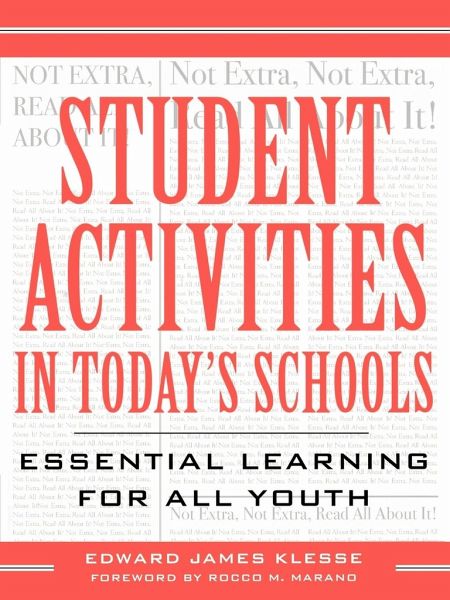
Klesse has reviewed relevant educational research to provide an overview of the essential learning for all youth that is available from participation. The skills learned through student activities provide the foundation for adult participation as citizens of our democracy. So, how do we best prepare our young people for the future? Read this book to find out.
Klesse has reviewed relevant educational research to provide an overview of the essential learning for all youth that is available from participation. The skills learned through student activities provide the foundation for adult participation as citizens of our democracy. So, how do we best prepare our young people for the future? Read this book to find out.
Edward James Klesse has worked as a junior high school guidance counselor, college career counselor, director of pupil personnel services/high school counselor, and assistant superintendent of schools. Most of his professional career has been spent working in the Windsor Central School District, Windsor, New York. In addition, Klesse has been an adjunct lecturer at the State University of New York at Oneonta, teaching graduate courses in the Department of Educational Psychology and Counseling. For 13 years he was the administrative co-director of the Maine National Leadership Camp, an intensive five day summer leadership training program for high school student, sponsored by the National Association of Secondary School Principals (NASSP). Klesse has also served on numerous scholarship and award committees for NASSP and he has regularly been a staff member for the National Association of Student Council's annual conference.
Inhaltsangabe
Chapter 1 List of Tables Chapter 2 Foreword Chapter 3 Acknowledgments Chapter 4 Introduction Chapter 5 1. What Are Student Activities? Chapter 6 2. Why Do Schools Have School Activity Programs? Chapter 7 3. What Are the Short-Term and Long Term Benefits of School Activities for Schools? Chapter 8 4. What Are the Short-Term and Long Term Benefits of Student Activities for Schools? Chapter 9 5. What Are the Short-Term and Long Term Benefits of Student Activities for Communities? Chapter 10 6. What Is the Difference between Extracurricular and Cocurricular Activities? Chapter 11 7. How Can Student Activities Fulfill Today's Standards for Learning? Chapter 12 8. How Do Sports and Athletics Fit? Chapter 13 9. How Are Student Activities Evaluated? Chapter 14 10. How Are Students Involved, Especially Those Who Are Not Motivated? Chapter 15 11. How does the School Finance a Student Activity Program Fairly and Equitably? Chapter 16 12. What Would a School Without Student Activities Be Like? Chapter 17 13. How Should Student Activities Be Organized for Maximum Benefit to Students and School? Chapter 18 14. What is the Ideal versus the Typical Profile of the Teacher-Advisor to Student Activities? Chapter 19 15. What Will Student Activity Programs Look Like in Five, Ten, or Fifteen Years? Chapter 20 16. Legal issues and Considerations for Cocurricular Activities Chapter 21 Appendix A: Evaluation Procedures for Student Activities Chapter 22 Appendix B: Rules Governing Participation in Cocurricular Activities for Students-Windsor Central School District (New York) Chapter 23 Appendix C: Athletic and Competitive Activity Policies and Procedures for District 211 (Illinois) Chapter 24 Appendix D: Extracurricular and Cocurricular Activities-Centerburg School (Illinois) Chapter 25 References Chapter 26 Index Chapter 27 About the Author
Chapter 1 List of Tables Chapter 2 Foreword Chapter 3 Acknowledgments Chapter 4 Introduction Chapter 5 1. What Are Student Activities? Chapter 6 2. Why Do Schools Have School Activity Programs? Chapter 7 3. What Are the Short-Term and Long Term Benefits of School Activities for Schools? Chapter 8 4. What Are the Short-Term and Long Term Benefits of Student Activities for Schools? Chapter 9 5. What Are the Short-Term and Long Term Benefits of Student Activities for Communities? Chapter 10 6. What Is the Difference between Extracurricular and Cocurricular Activities? Chapter 11 7. How Can Student Activities Fulfill Today's Standards for Learning? Chapter 12 8. How Do Sports and Athletics Fit? Chapter 13 9. How Are Student Activities Evaluated? Chapter 14 10. How Are Students Involved, Especially Those Who Are Not Motivated? Chapter 15 11. How does the School Finance a Student Activity Program Fairly and Equitably? Chapter 16 12. What Would a School Without Student Activities Be Like? Chapter 17 13. How Should Student Activities Be Organized for Maximum Benefit to Students and School? Chapter 18 14. What is the Ideal versus the Typical Profile of the Teacher-Advisor to Student Activities? Chapter 19 15. What Will Student Activity Programs Look Like in Five, Ten, or Fifteen Years? Chapter 20 16. Legal issues and Considerations for Cocurricular Activities Chapter 21 Appendix A: Evaluation Procedures for Student Activities Chapter 22 Appendix B: Rules Governing Participation in Cocurricular Activities for Students-Windsor Central School District (New York) Chapter 23 Appendix C: Athletic and Competitive Activity Policies and Procedures for District 211 (Illinois) Chapter 24 Appendix D: Extracurricular and Cocurricular Activities-Centerburg School (Illinois) Chapter 25 References Chapter 26 Index Chapter 27 About the Author
Es gelten unsere Allgemeinen Geschäftsbedingungen: www.buecher.de/agb
Impressum
www.buecher.de ist ein Internetauftritt der buecher.de internetstores GmbH
Geschäftsführung: Monica Sawhney | Roland Kölbl | Günter Hilger
Sitz der Gesellschaft: Batheyer Straße 115 - 117, 58099 Hagen
Postanschrift: Bürgermeister-Wegele-Str. 12, 86167 Augsburg
Amtsgericht Hagen HRB 13257
Steuernummer: 321/5800/1497
USt-IdNr: DE450055826