
Andere Kunden interessierten sich auch für
 Étude des modes de transport de passagers à Ilha Solteira - SP23,99 €
 Estudo dos Modos de Transporte de Passageiro em Ilha Solteira - SP23,99 €
 Studie über die Verkehrsmittel des Personenverkehrs auf der Ilha Solteira - SP35,90 €
 Studio delle modalità di trasporto passeggeri a Ilha Solteira - SP23,99 €
 Estudio de los modos de transporte de pasajeros en Ilha Solteira - SP24,99 €
 The historical importance of PED-PUC-SP is undeniable24,99 €
 Study of Transport Properties of Bismuth Thin Films19,99 €
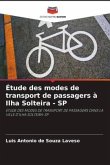

The purpose of this study is to verify the impacts produced by vehicle traffic in the tourist resort of Ilha Solteira-SP, using information on users of the main modes of urban transport. The city has an estimated population of 26443 inhabitants, with a fleet of 16,000 motorised vehicles and approximately 28,000 bicycles (IBGE, 2016). The method consists of collecting data on a representative sample of the city's population that has been divided into 12 circulation zones, whose simplified representation of the information, produced with the aid of graphs and origin-destination matrices, is determined according to the movement present in each of these zones.Thus, in order for user comfort to be guaranteed and impacts (both environmental and social) to be reduced, the study of the current transport network is necessary as much as the application of compensatory measures to encourage the most suitable mode of transport for the needs of the municipality's residents. Keywords: Modes oftransport. Urban mobility. Origin-destination matrix.