
Andere Kunden interessierten sich auch für
 Estudo da flora polinífera39,99 €
 Studio della flora pollinica39,99 €
 Étude de la flore pollinifère39,99 €
 Untersuchung der Pollenflora60,90 €
 Badanie flory py¿kowej39,99 €
 Environmental Impact Assessment of the Parawi Bauxite Plateau27,99 €
 Characteristic study of an HDPE-based composite material29,99 €


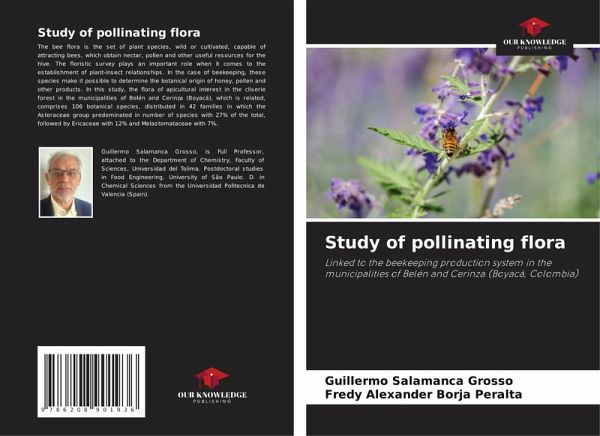
The bee flora is the set of plant species, wild or cultivated, capable of attracting bees, which obtain nectar, pollen and other useful resources for the hive. The floristic survey plays an important role when it comes to the establishment of plant-insect relationships. In the case of beekeeping, these species make it possible to determine the botanical origin of honey, pollen and other products. In this study, the flora of apicultural interest in the cliserie forest in the municipalities of Belén and Cerinza (Boyacá), which is related, comprises 106 botanical species, distributed in 42 families in which the Asteraceae group predominated in number of species with 27% of the total, followed by Ericaceae with 12% and Melastomataceae with 7%.