
Andere Kunden interessierten sich auch für
 The Nursing Professional's Approach to Bioethical Dilemmas to Bioethical Dilemmas29,99 €
 An Introduction to the Study of Experimental Medicine / Translated by H.C. Greene22,99 €
 The Mental Traits of Sex: An Experimental Investigation of the Normal Mind in Men and Women18,99 €
 The Scoop on Poop!35,99 €
 Practical Solutions for the New Physical Therapist81,99 €
![Collected Papers From the H.K. Cushing Laboratory of Experimental Medicine [electronic Resource]; 2]( "Collected Papers From the H.K. Cushing Laboratory of Experimental Medicine [electronic Resource]; 2") Collected Papers From the H.K. Cushing Laboratory of Experimental Medicine [electronic Resource]; 225,99 €
Collected Papers From the H.K. Cushing Laboratory of Experimental Medicine [electronic Resource]; 225,99 € EVALUATION OF THE INFORMAL CAREGIVER BURDEN29,99 €


![Collected Papers From the H.K. Cushing Laboratory of Experimental Medicine [electronic Resource]; 2](https://bilder.buecher.de/produkte/66/66193/66193014m.jpg "Collected Papers From the H.K. Cushing Laboratory of Experimental Medicine [electronic Resource]; 2")
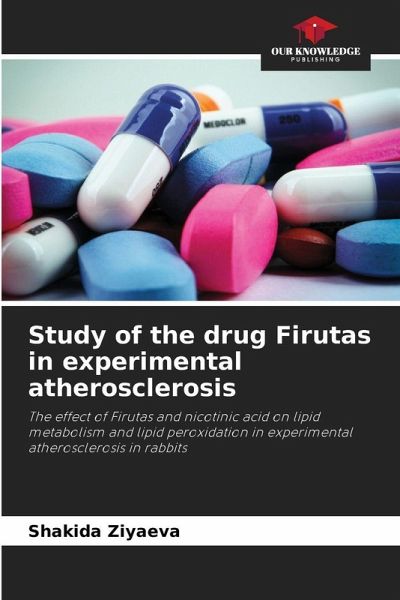
Currently, drugs that vary in structure and mechanism of action are used to treat atherosclerosis. However, most of these drugs do not always produce the desired effect, and long-term use is associated with the development of side effects and complications. In this regard, the search for and study of new anti-atherosclerotic drugs is of great interest and is an important issue in the pharmacotherapy of atherosclerosis. One such drug is Firutas, which contains phytin, rutin, and ascorbic acid. The aim of the study was to investigate the effect of Firutas in comparison with nicotinic acid on lipid metabolism and LPO in experimental atherosclerosis. Studies have shown that Firutas surpasses nicotinic acid in terms of its lipotropic and antiatherogenic effects, which is explained by the presence of rutin and ascorbic acid in the drug's composition. These bioligands have antioxidant effects and stimulate the conversion of cholesterol into bile acids, increasing lipase production and destroying excess TG. Firutas surpasses the well-known hypolipidemic drug nicotinic acid.