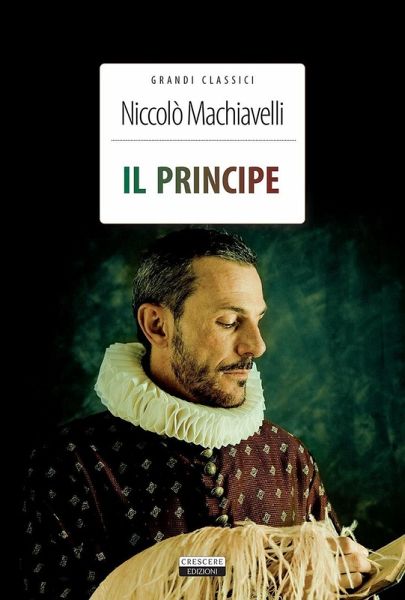
Scritta da Niccolò Machiavelli quasi di getto nel 1513, l'opera Il Principe (titolo originale "De principatibus") è dedicata a Lorenzo de' Medici, nipote del Magnifico e duca di Urbino. Questo giovane principe, esuberante e ambizioso, era sorretto dall'autorità di Leone X, eletto al soglio pontificio proprio nel 1513, così Firenze e Roma, da secoli nemiche, vennero a trovarsi unite, creando i presupposti per una nuova Italia. Il Principe è un trattato in ventisei capitoli e il suo contenuto può essere diviso in quattro parti. Nella prima l'autore analizza il modo in cui si possono governare e…mehr
Scritta da Niccolò Machiavelli quasi di getto nel 1513, l'opera Il Principe (titolo originale "De principatibus") è dedicata a Lorenzo de' Medici, nipote del Magnifico e duca di Urbino. Questo giovane principe, esuberante e ambizioso, era sorretto dall'autorità di Leone X, eletto al soglio pontificio proprio nel 1513, così Firenze e Roma, da secoli nemiche, vennero a trovarsi unite, creando i presupposti per una nuova Italia. Il Principe è un trattato in ventisei capitoli e il suo contenuto può essere diviso in quattro parti. Nella prima l'autore analizza il modo in cui si possono governare e mantenere repubbliche e principati. Nella seconda sostiene la necessità che le milizie siano cittadine e non mercenarie. Nella terza parte, che è la più interessante e la più discussa, vengono prese in considerazione le qualità negative e le virtù di un principe, tra cui liberalità e parsimonia, crudeltà e pietà, lealtà e tradimento, astuzia e violenza. La quarta parte è poi importantissima: viene trattato il tema della fortuna e l'ultimo capitolo è una vera e propria esortazione a Lorenzo de' Medici, affinché liberi l'Italia dai barbari per darle unità e libertà. Das Urheberrecht an bibliographischen und produktbeschreibenden Daten und an den bereitgestellten Bildern liegt bei Informazioni Editoriali, I.E. S.r.l., oder beim Herausgeber oder demjenigen, der die Genehmigung erteilt hat. Alle Rechte vorbehalten.
Of all Machiavelli's works, The Prince is undoubtedly the greatest; and a new English edition of it is likely to be welcome to all those who have not the advantage of reading it in the classical Italian original. For a true appreciation of Machiavelli, impossible in a brief Preface, I must refer the English reader to Macaulay's Essay on the Italian historian and statesman. In it he will see how our Author's ideas and work were wrongfully and willfully misinterpreted by the very men who, while profiting by his wisdom, have with great ingratitude criticized the statesman and defamed his name, as that of the inventor of the worst political system ever imagined. Yet, as his whole life was an indefatigable and unremitting endeavor to secure for his native Florence a good and popular government, and as he lost his great office of Secretary to the Florentine Republic on account of his avowed liberal opinions, it is not only unjust but ridiculous to accuse him of helping tyrants to enslave the people. What he did was to show in the most deliberate and in the plainest way the arts by which free peoples were made slaves; and, had his words of advice been always heeded, no tyrant in Italy or elsewhere could have been successful in his policy. That he was not listened to, and his advice scorned and spurned, was not Machiavelli's fault. --Luigi Ricci
Es gelten unsere Allgemeinen Geschäftsbedingungen: www.buecher.de/agb
Impressum
www.buecher.de ist ein Internetauftritt der buecher.de internetstores GmbH
Geschäftsführung: Monica Sawhney | Roland Kölbl | Günter Hilger
Sitz der Gesellschaft: Batheyer Straße 115 - 117, 58099 Hagen
Postanschrift: Bürgermeister-Wegele-Str. 12, 86167 Augsburg
Amtsgericht Hagen HRB 13257
Steuernummer: 321/5800/1497
USt-IdNr: DE450055826