Versandkostenfrei innerhalb Deutschlands
25,99 €
inkl. MwSt.
Versandkostenfrei*
Erscheint vorauss. 3. März 2026
Melden Sie sich
hier
hier
für den Produktalarm an, um über die Verfügbarkeit des Produkts informiert zu werden.
oder sofort lesen als eBook
13 °P sammeln
- Gebundenes Buch
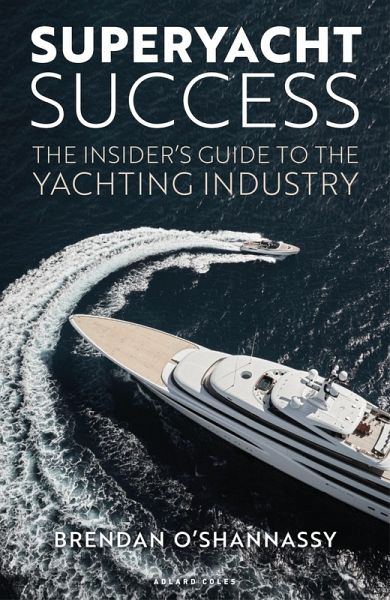
An insiderâ s guide to the superyacht industry, detailing how to get in, progress through the ranks and thrive on the journey.
Andere Kunden interessierten sich auch für
Brendan Oâ ShannassySuperyacht Captain19,99 €
James ClarkeReeds Superyacht Manual62,99 €
Frank BethwaiteHigh Performance Sailing78,99 €
Frank SingletonReeds Weather Handbook 2nd Edition12,99 €
Jane RussellThe Atlantic Crossing Guide 7th Edition75,99 €
Martin ThomasHeavy Weather Sailing 8th Edition62,99 €
Simon JollandsReeds Lights, Shapes and Buoyage Handbook12,99 €-
-
-
An insiderâ s guide to the superyacht industry, detailing how to get in, progress through the ranks and thrive on the journey.
Produktdetails
- Produktdetails
- Verlag: Bloomsbury Publishing PLC
- Seitenzahl: 256
- Erscheinungstermin: 3. März 2026
- Englisch
- Abmessung: 234mm x 153mm x 25mm
- Gewicht: 458g
- ISBN-13: 9781399426497
- ISBN-10: 1399426494
- Artikelnr.: 73579160
- Herstellerkennzeichnung
- Libri GmbH
- Europaallee 1
- 36244 Bad Hersfeld
- gpsr@libri.de
- Verlag: Bloomsbury Publishing PLC
- Seitenzahl: 256
- Erscheinungstermin: 3. März 2026
- Englisch
- Abmessung: 234mm x 153mm x 25mm
- Gewicht: 458g
- ISBN-13: 9781399426497
- ISBN-10: 1399426494
- Artikelnr.: 73579160
- Herstellerkennzeichnung
- Libri GmbH
- Europaallee 1
- 36244 Bad Hersfeld
- gpsr@libri.de
Brendan O'Shannassy grew up in Fremantle, Australia, and gained his undergraduate degree and officer education with the Royal Australian Navy. After a period in commercial maritime he joined his first superyacht as a deck hand in 2001, and his first captaincy was in 2006. His yacht racing career has also seen him participate in multiple Sydney Hobarts, the Fastnet Race, and many more. Brendan continues to study and is currently beginning a PhD in marine data collection. He is also the author of Superyacht Captain, published by Adlard Coles in 2022.
Section 1: The Industry
- we meet the yachting community, learn some of the history and the web
that is the superyacht diaspora.
Section 2: The Humans
- Yachts are platforms to carry humans. This section looks at how this
plays out in a superyacht.
- Getting hired: qualifications, crew agencies, interviews,
- Green is good: learn to embrace being new, communal living, taking
direction
- Career progression: typical pathways
- The advice is brought to life with stories of Brendan's own progression
through the ranks (he acknowledges that even as a successful captain the
human side of the industry (rather than the professional skills side) is
where he has most to learn.
Section 3: The Job
- Being more than 'crew': the sea/shore roster
- Establishing long-term security
- Strength in diversity and differing outlooks
- Creating a culture of openness and trust
- Work/life balance and setting boundaries
- Perfection: the hardest taskmaster
Section 4: Life as a Superyacht Captain
- Look after yourself first: maintaining the SHED (Sleep, Hydration,
Exercise and Diet)
- Communication Up: Saying no is not a failure
- Communication Side and Down: clarity and motivation
- Communication outside: importance of non-industry family and friends
- A superyacht life well lived
Section 5: The Toolbox
Onboard communications
- Situation/Mission/Execution/Administration/Command and comms
- Public speaking
- The written word
- Listening effectively
- Anatomy of a communications failure
- 'Sell the job'
Leading teams
- Recruitment (inc interview questions)
- Crew Lifetime Value: professional skills, crew culture, guest experience
- Feedback: giving and receiving
- Psychological safety and creating an environment of optimal performance
- Core values
- Loose guidelines/tight objectives
Boat handling
- 1% of the job, but the 1% that has to be right
- Berth to berth planning: resourcing and communication
- Bridge briefing step by step
- Setting multiple anchors
Dos and Don'ts:
- Stewardess perspective
- Chief Officer perspective
- Others to come
Further reading
- we meet the yachting community, learn some of the history and the web
that is the superyacht diaspora.
Section 2: The Humans
- Yachts are platforms to carry humans. This section looks at how this
plays out in a superyacht.
- Getting hired: qualifications, crew agencies, interviews,
- Green is good: learn to embrace being new, communal living, taking
direction
- Career progression: typical pathways
- The advice is brought to life with stories of Brendan's own progression
through the ranks (he acknowledges that even as a successful captain the
human side of the industry (rather than the professional skills side) is
where he has most to learn.
Section 3: The Job
- Being more than 'crew': the sea/shore roster
- Establishing long-term security
- Strength in diversity and differing outlooks
- Creating a culture of openness and trust
- Work/life balance and setting boundaries
- Perfection: the hardest taskmaster
Section 4: Life as a Superyacht Captain
- Look after yourself first: maintaining the SHED (Sleep, Hydration,
Exercise and Diet)
- Communication Up: Saying no is not a failure
- Communication Side and Down: clarity and motivation
- Communication outside: importance of non-industry family and friends
- A superyacht life well lived
Section 5: The Toolbox
Onboard communications
- Situation/Mission/Execution/Administration/Command and comms
- Public speaking
- The written word
- Listening effectively
- Anatomy of a communications failure
- 'Sell the job'
Leading teams
- Recruitment (inc interview questions)
- Crew Lifetime Value: professional skills, crew culture, guest experience
- Feedback: giving and receiving
- Psychological safety and creating an environment of optimal performance
- Core values
- Loose guidelines/tight objectives
Boat handling
- 1% of the job, but the 1% that has to be right
- Berth to berth planning: resourcing and communication
- Bridge briefing step by step
- Setting multiple anchors
Dos and Don'ts:
- Stewardess perspective
- Chief Officer perspective
- Others to come
Further reading
Section 1: The Industry
- we meet the yachting community, learn some of the history and the web
that is the superyacht diaspora.
Section 2: The Humans
- Yachts are platforms to carry humans. This section looks at how this
plays out in a superyacht.
- Getting hired: qualifications, crew agencies, interviews,
- Green is good: learn to embrace being new, communal living, taking
direction
- Career progression: typical pathways
- The advice is brought to life with stories of Brendan's own progression
through the ranks (he acknowledges that even as a successful captain the
human side of the industry (rather than the professional skills side) is
where he has most to learn.
Section 3: The Job
- Being more than 'crew': the sea/shore roster
- Establishing long-term security
- Strength in diversity and differing outlooks
- Creating a culture of openness and trust
- Work/life balance and setting boundaries
- Perfection: the hardest taskmaster
Section 4: Life as a Superyacht Captain
- Look after yourself first: maintaining the SHED (Sleep, Hydration,
Exercise and Diet)
- Communication Up: Saying no is not a failure
- Communication Side and Down: clarity and motivation
- Communication outside: importance of non-industry family and friends
- A superyacht life well lived
Section 5: The Toolbox
Onboard communications
- Situation/Mission/Execution/Administration/Command and comms
- Public speaking
- The written word
- Listening effectively
- Anatomy of a communications failure
- 'Sell the job'
Leading teams
- Recruitment (inc interview questions)
- Crew Lifetime Value: professional skills, crew culture, guest experience
- Feedback: giving and receiving
- Psychological safety and creating an environment of optimal performance
- Core values
- Loose guidelines/tight objectives
Boat handling
- 1% of the job, but the 1% that has to be right
- Berth to berth planning: resourcing and communication
- Bridge briefing step by step
- Setting multiple anchors
Dos and Don'ts:
- Stewardess perspective
- Chief Officer perspective
- Others to come
Further reading
- we meet the yachting community, learn some of the history and the web
that is the superyacht diaspora.
Section 2: The Humans
- Yachts are platforms to carry humans. This section looks at how this
plays out in a superyacht.
- Getting hired: qualifications, crew agencies, interviews,
- Green is good: learn to embrace being new, communal living, taking
direction
- Career progression: typical pathways
- The advice is brought to life with stories of Brendan's own progression
through the ranks (he acknowledges that even as a successful captain the
human side of the industry (rather than the professional skills side) is
where he has most to learn.
Section 3: The Job
- Being more than 'crew': the sea/shore roster
- Establishing long-term security
- Strength in diversity and differing outlooks
- Creating a culture of openness and trust
- Work/life balance and setting boundaries
- Perfection: the hardest taskmaster
Section 4: Life as a Superyacht Captain
- Look after yourself first: maintaining the SHED (Sleep, Hydration,
Exercise and Diet)
- Communication Up: Saying no is not a failure
- Communication Side and Down: clarity and motivation
- Communication outside: importance of non-industry family and friends
- A superyacht life well lived
Section 5: The Toolbox
Onboard communications
- Situation/Mission/Execution/Administration/Command and comms
- Public speaking
- The written word
- Listening effectively
- Anatomy of a communications failure
- 'Sell the job'
Leading teams
- Recruitment (inc interview questions)
- Crew Lifetime Value: professional skills, crew culture, guest experience
- Feedback: giving and receiving
- Psychological safety and creating an environment of optimal performance
- Core values
- Loose guidelines/tight objectives
Boat handling
- 1% of the job, but the 1% that has to be right
- Berth to berth planning: resourcing and communication
- Bridge briefing step by step
- Setting multiple anchors
Dos and Don'ts:
- Stewardess perspective
- Chief Officer perspective
- Others to come
Further reading