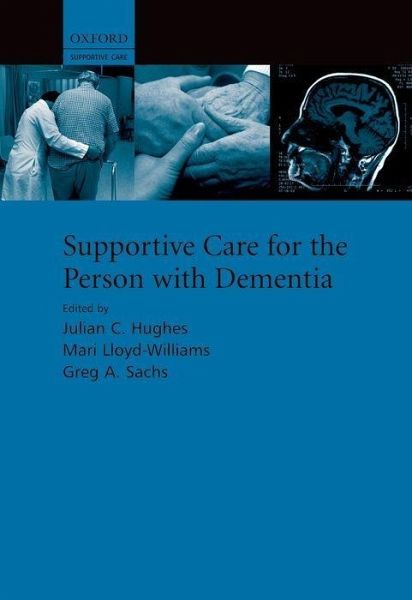
Sportive care can be thought of as an extension of palliative care so that the person with dementia receives good quality, holistic care that makes no distinctions between the dichotomies of care and cure from the time of diagnosis until, and beyond, death. It recognizes the need for an inter-disciplinary approach for continuity of care. Supportive care in dementia must, therefore, be broad in its scope and application. Supportive Care of the Person with Dementia provides just such a broad and full perspective, drawing upon the experience and expertise of a wide range of internationally-based…mehr
Sportive care can be thought of as an extension of palliative care so that the person with dementia receives good quality, holistic care that makes no distinctions between the dichotomies of care and cure from the time of diagnosis until, and beyond, death. It recognizes the need for an inter-disciplinary approach for continuity of care. Supportive care in dementia must, therefore, be broad in its scope and application. Supportive Care of the Person with Dementia provides just such a broad and full perspective, drawing upon the experience and expertise of a wide range of internationally-based professionals to outline a model of supportive care that will provide good quality and holistic care for people with dementia. Making use of real-life reports from both patients and carers to help readers fully understand the reality of dementia, the book examines the key principles that guide the practice of supportive care. It looks at how supportive care can be used, and specific benefits a care model of this type can bring to the complex problems that are frequently encountered when treating this condition. It is an ideal resource for all clinicians who are part of an interdisciplinary team caring for sufferers with this debilitating illness.
Dr Julian C Hughes read Philosophy, Politics and Economics at Oxford prior to studying medicine in Bristol. He then served in the Royal Air Force, but completed his higher training in psychiatry in Oxford and, at the same time, undertook a PhD in Philosophy at Warwick. Since taking up consultant posts, first in Newcastle, and subsequently in North Tyneside, he has pursued his academic interest in ethics and philosophy in connection with ageing and dementia. This has led to a particular interest in palliative care in dementia. He was an advisor on ethics and palliative care to the NICE-SCIE Guideline on Dementia, which reported in 2006, and a member of the Dementia Working Party of the Nuffield Council on Bioethics, which reported in 2009. Professor Mari Lloyd-Williams qualified from Leicester University medical school and following posts in oncology, general medicine, psychiatry and primary care completed her higher training in palliative medicine at University of Leicester Hospitals and LOROS Hospice and was appointed Consultant and Honorary Senior Lecturer to the University of Leicester Hospitals Trust and LOROS Hospice in 2000. In 2002 she was appointed as Senior Lecturer at the University of Liverpool and in 2003 was promoted to a personal chair within the School of Population, Community and Behaviour in recognition of her research experience and portfolio. She has published over 100 papers and the acclaimed book " Psychosocial Issues in Palliative Care " has recently appeared in a second edition and she lectures both nationally and internationally. Dr. Sachs received his B.A. from the University of Chicago in 1981 and his MD from Yale University in 1985. He trained in internal medicine at the University of Chicago, staying on to complete a combined three-year geriatrics and clinical ethics fellowship under the mentorship of Dr. Christine Cassel. Dr. Sachs joined the University of Chicago faculty in 1990 and became the founding Chief of the new Section of Geriatrics there in 2000, serving in that role until his move to IU in the summer of 2007.
Inhaltsangabe
* 1: Julian C. Hughes, Mari Lloyd-Williams, and Greg A. Sachs: Characterizing care * 2: David Jolley: An introduction to the dementias: a clinical view * 3: Daphne Wallace: The view of the person with dementia * 4: Barbara Pointon: The view of the family carer * 5: Joseph W. Shega and Greg A. Sachs: Offering supportive care in dementia: reflections on the PEACE programme * 6: Bob Barber and Helen Cooper: Services for younger adults with dementia * 7: Belinda Bilney and Meg E. Morris: Huntington's disease and dementia * 8: Mary Ann Cohen and Charles E. Schwartz: Patients with HIV-associated dementia * 9: Heather Wilkinson and Karen Watchman: Down's syndrome and dementia: a framework for practice to support people with Down's syndrome and dementia living in generic care homes * 10: Sivaraman Shaji: Dementia care in developing countries * 11: Julian C. Hughes, Mari Lloyd-Williams, and Greg A. Sachs: Ingredients and issues in supportive care for people with dementia: summarizing from models of care * 12: Clive Ballard and Dag Aarsland: Pharmacological management of neuropsychiatric symptoms in people with dementia * 13: Elizabeth L. Sampson: Hospital admissions in dementia * 14: Alice Jordan and Mari Lloyd-Williams: Distress and pain in dementia * 15: Gillie E. Evans and Louise Robinson: The role of the family doctor in supportive care for people with dementia * 16: John Keady and Philip Hardman: Community mental health nursing and supportive care * 17: Graham Stokes: From psychological interventions to a psychology of dementia * 18: Jill Manthorpe: Supportive care: social care and social work approaches * 19: Katherine Froggatt and Deborah Parker: Care homes and long-term care for people with dementia * 20: Philip D. Sloane and Sheryl Zimmerman: Assisted living programmes providing supportive care for dementia * 21: Stephen Sapp: Spiritual care of people with dementia and their carers * 22: Jacquelyn Frank: Anticipatory and disenfranchised grief among dementia family caregivers: helping spouse and adult/child caregivers to cope * 23: Kate Allan and John Killick: Communicating with people with dementia * 24: Steven R. Sabat: Maintaining the self in dementia * 25: Murna Downs: Person-centred care as supportive care * 26: Clive Baldwin: Narrative, supportive care, and dementia: a preliminary exploration * 27: Wim Dekkers: Persons with severe dementia and the notion of bodily autonomy * 28: Muriel R. Gillick: Advance care planning: an American view * 29: Cees Hertogh: Advance care planning and palliative care in dementia: a view from the Netherlands * 30: Adrian Treloar and Monica Crugel: Living and dying at home with dementia * 31: Joyce Simard and Ladislav Volicer: Namaste care and dying in institutional settings * 32: Julian C. Hughes, Mari Lloyd-Williams, and Greg A. Sachs: The principles and practice of supportive care in dementia
* 1: Julian C. Hughes, Mari Lloyd-Williams, and Greg A. Sachs: Characterizing care * 2: David Jolley: An introduction to the dementias: a clinical view * 3: Daphne Wallace: The view of the person with dementia * 4: Barbara Pointon: The view of the family carer * 5: Joseph W. Shega and Greg A. Sachs: Offering supportive care in dementia: reflections on the PEACE programme * 6: Bob Barber and Helen Cooper: Services for younger adults with dementia * 7: Belinda Bilney and Meg E. Morris: Huntington's disease and dementia * 8: Mary Ann Cohen and Charles E. Schwartz: Patients with HIV-associated dementia * 9: Heather Wilkinson and Karen Watchman: Down's syndrome and dementia: a framework for practice to support people with Down's syndrome and dementia living in generic care homes * 10: Sivaraman Shaji: Dementia care in developing countries * 11: Julian C. Hughes, Mari Lloyd-Williams, and Greg A. Sachs: Ingredients and issues in supportive care for people with dementia: summarizing from models of care * 12: Clive Ballard and Dag Aarsland: Pharmacological management of neuropsychiatric symptoms in people with dementia * 13: Elizabeth L. Sampson: Hospital admissions in dementia * 14: Alice Jordan and Mari Lloyd-Williams: Distress and pain in dementia * 15: Gillie E. Evans and Louise Robinson: The role of the family doctor in supportive care for people with dementia * 16: John Keady and Philip Hardman: Community mental health nursing and supportive care * 17: Graham Stokes: From psychological interventions to a psychology of dementia * 18: Jill Manthorpe: Supportive care: social care and social work approaches * 19: Katherine Froggatt and Deborah Parker: Care homes and long-term care for people with dementia * 20: Philip D. Sloane and Sheryl Zimmerman: Assisted living programmes providing supportive care for dementia * 21: Stephen Sapp: Spiritual care of people with dementia and their carers * 22: Jacquelyn Frank: Anticipatory and disenfranchised grief among dementia family caregivers: helping spouse and adult/child caregivers to cope * 23: Kate Allan and John Killick: Communicating with people with dementia * 24: Steven R. Sabat: Maintaining the self in dementia * 25: Murna Downs: Person-centred care as supportive care * 26: Clive Baldwin: Narrative, supportive care, and dementia: a preliminary exploration * 27: Wim Dekkers: Persons with severe dementia and the notion of bodily autonomy * 28: Muriel R. Gillick: Advance care planning: an American view * 29: Cees Hertogh: Advance care planning and palliative care in dementia: a view from the Netherlands * 30: Adrian Treloar and Monica Crugel: Living and dying at home with dementia * 31: Joyce Simard and Ladislav Volicer: Namaste care and dying in institutional settings * 32: Julian C. Hughes, Mari Lloyd-Williams, and Greg A. Sachs: The principles and practice of supportive care in dementia
Es gelten unsere Allgemeinen Geschäftsbedingungen: www.buecher.de/agb
Impressum
www.buecher.de ist ein Internetauftritt der buecher.de internetstores GmbH
Geschäftsführung: Monica Sawhney | Roland Kölbl | Günter Hilger
Sitz der Gesellschaft: Batheyer Straße 115 - 117, 58099 Hagen
Postanschrift: Bürgermeister-Wegele-Str. 12, 86167 Augsburg
Amtsgericht Hagen HRB 13257
Steuernummer: 321/5800/1497
USt-IdNr: DE450055826