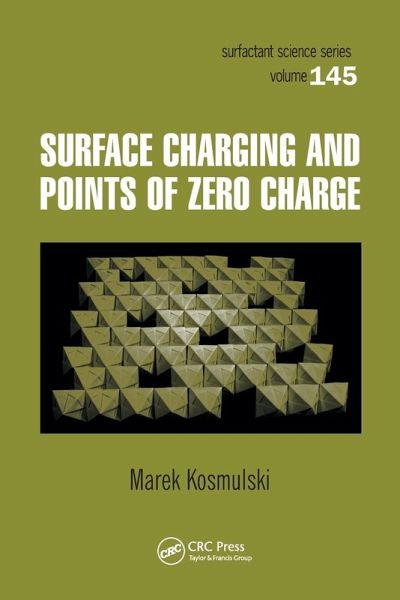
Marek Kosmulski, a leading authority in the field of surface chemistry, takes a new approach to provide chemists with the most detailed and specific resource on the points of zero charge of oxides available to date. This groundbreaking work presents PZC data on well-defined specimens of materials sorted by trademark, manufacturer (commercial mat
Marek Kosmulski, a leading authority in the field of surface chemistry, takes a new approach to provide chemists with the most detailed and specific resource on the points of zero charge of oxides available to date. This groundbreaking work presents PZC data on well-defined specimens of materials sorted by trademark, manufacturer (commercial mat
Introduction.Nomenclature. The scope. Inert electrolytes. The significance of Parks' review. Structure of the adsorbents. Solubility. Solid phase transformation at room temperature in contact with solution. Solid phase transformation on heating. Kinetics. Solution chemistry - pH scale. Very dilute solutions. Speciation in solution. Methods. Experimental setup in electrokinetic measurements. Experimental conditions in electrokinetic measurements. CO2 and silica problem. Experimental results - Electrokinetic potential. Experimental conditions - titration. Results - titration. Interrelation of results obtained by means of different methods. Other methods. Adsorption models. Compilation of PZC/IEP. Simple oxides. Aluminosilicates, phyllosilicates, clays and clay minerals. Mixed oxides. Salts. Glasses. Carbon and carbon-rich materials. Other inorganic materials. Coatings. Well-defined low-molecular organic compounds. Polymers (macroscopic specimens). Latexes. Natural high-molecular organic substances. Microorganisms. Metals. Literature intentionally ignored. Temperature effect. Pressure effect. Compilations of PZC of various materials. Correlations. Mixed water-organic solvents. Nonaqueous solvents. Conclusion. Ion specificity. Affinity series. Uptake of 1-1 electrolyte ions at or near PZC. High ionic strength. Appendix. Literature.
Introduction.Nomenclature. The scope. Inert electrolytes. The significance of Parks' review. Structure of the adsorbents. Solubility. Solid phase transformation at room temperature in contact with solution. Solid phase transformation on heating. Kinetics. Solution chemistry - pH scale. Very dilute solutions. Speciation in solution. Methods. Experimental setup in electrokinetic measurements. Experimental conditions in electrokinetic measurements. CO2 and silica problem. Experimental results - Electrokinetic potential. Experimental conditions - titration. Results - titration. Interrelation of results obtained by means of different methods. Other methods. Adsorption models. Compilation of PZC/IEP. Simple oxides. Aluminosilicates, phyllosilicates, clays and clay minerals. Mixed oxides. Salts. Glasses. Carbon and carbon-rich materials. Other inorganic materials. Coatings. Well-defined low-molecular organic compounds. Polymers (macroscopic specimens). Latexes. Natural high-molecular organic substances. Microorganisms. Metals. Literature intentionally ignored. Temperature effect. Pressure effect. Compilations of PZC of various materials. Correlations. Mixed water-organic solvents. Nonaqueous solvents. Conclusion. Ion specificity. Affinity series. Uptake of 1-1 electrolyte ions at or near PZC. High ionic strength. Appendix. Literature.
Es gelten unsere Allgemeinen Geschäftsbedingungen: www.buecher.de/agb
Impressum
www.buecher.de ist ein Internetauftritt der buecher.de internetstores GmbH
Geschäftsführung: Monica Sawhney | Roland Kölbl | Günter Hilger
Sitz der Gesellschaft: Batheyer Straße 115 - 117, 58099 Hagen
Postanschrift: Bürgermeister-Wegele-Str. 12, 86167 Augsburg
Amtsgericht Hagen HRB 13257
Steuernummer: 321/5800/1497
USt-IdNr: DE450055826