
Andere Kunden interessierten sich auch für
 Sustainability in Business Management, Volume 1106,99 €
 New Approaches to CSR, Sustainability and Accountability, Volume II121,99 €
 New Approaches to CSR, Sustainability and Accountability, Volume III121,99 €
 New Approaches to CSR, Sustainability and Accountability, Volume IV121,99 €
 New Approaches to CSR, Sustainability and Accountability, Volume II121,99 €
 New Approaches to CSR, Sustainability and Accountability, Volume III121,99 €
 New Approaches to CSR, Sustainability and Accountability, Volume IV121,99 €

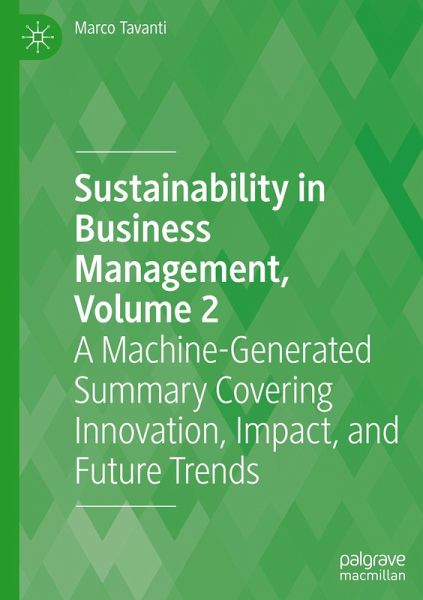
Building on the strategic foundations established in Volume 1, this volume moves into applied sustainability practices and innovations across business functions, including Human Resources, Marketing, Finance, and Technology. It examines key developments such as AI-driven sustainability solutions, blockchain for ethical supply chains, green finance mechanisms, and impact investing. Additionally, the book highlights emerging business models that prioritize sustainability, such as eco-entrepreneurship, smart urban solutions, and digital transformation for sustainability.
Structured into three key sections-Sustainability in Business Functions, Innovative and Specialized Practices, and Addressing Challenges and Future Trends-this volume explores how businesses can harness sustainability as a driver of economic opportunity and competitive advantage. Topics such as climate risk management, corporate accountability, resilient supply chains, and sustainability-linked financial instruments are analyzed through AI-synthesized research and expert insights.
Combining both theoretical underpinnings and practical applications, this work generated with the help of AI will serve as a primer to understanding sustainability's role in shaping global business strategies.
Structured into three key sections-Sustainability in Business Functions, Innovative and Specialized Practices, and Addressing Challenges and Future Trends-this volume explores how businesses can harness sustainability as a driver of economic opportunity and competitive advantage. Topics such as climate risk management, corporate accountability, resilient supply chains, and sustainability-linked financial instruments are analyzed through AI-synthesized research and expert insights.
Combining both theoretical underpinnings and practical applications, this work generated with the help of AI will serve as a primer to understanding sustainability's role in shaping global business strategies.