
Andere Kunden interessierten sich auch für
 Sustainable Construction Materials180,99 €
 Sustainable Construction Materials158,99 €
 The Structural Integrity of Recycled Aggregate Concrete Produced With Fillers and Pozzolans257,99 €
 Handbook of Sustainable Concrete and Industrial Waste Management203,99 €
 Sustainability of Construction Materials194,99 €
 Nonconventional and Vernacular Construction Materials164,99 €
 Recycled Aggregate Concrete169,99 €
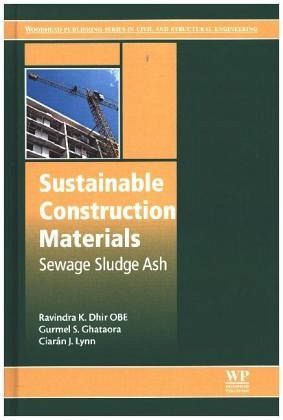
Sustainable Construction Materials: Sewage Sludge Ash, part of a series of five, aims to promote the use of sustainable construction materials. It is different from the norm, with its uniqueness lying in the development of a data matrix sourced from over 600 publications and contributed by 1107 authors from 442 institutions in 48 countries from 1970 to 2016, all focusing on the subject of sewage sludge ash as a construction material, and systematically analyzing, evaluating, and modeling the information for use in cement, concrete, ceramics, geotechnics, and road pavement applications.
Related environmental issues, case studies, and standards are also discussed. The book helps users avoid repetitive research and save valuable resources, giving them more latitude to explore new research to progress the use of sustainable construction materials. It is structured in an incisive and easy to digest manner.
As an excellent reference source, the book is particularly suited for researchers, academics, design engineers, specifiers, contractors, developers, and certifying and regulatory authorities who seek to promote sustainability within the construction sector.
Related environmental issues, case studies, and standards are also discussed. The book helps users avoid repetitive research and save valuable resources, giving them more latitude to explore new research to progress the use of sustainable construction materials. It is structured in an incisive and easy to digest manner.
As an excellent reference source, the book is particularly suited for researchers, academics, design engineers, specifiers, contractors, developers, and certifying and regulatory authorities who seek to promote sustainability within the construction sector.