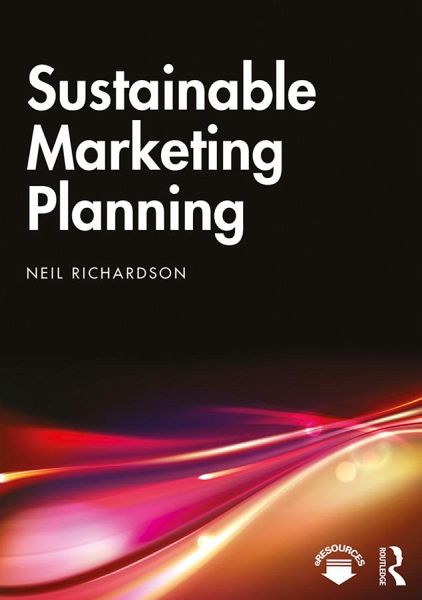
There are two major parallel challenges facing managers and leaders: first, how to adapt to global changes in markets, competition and supply, and second, how to grow a business while observing recognisably sustainable practices.
There are two major parallel challenges facing managers and leaders: first, how to adapt to global changes in markets, competition and supply, and second, how to grow a business while observing recognisably sustainable practices.
Neil Richardson is the course director for postgraduate marketing programmes for Leeds Business School, UK. He has extensive experience as an academic and practitioner, including working with world-class companies in sales, marketing and customer services. He has published several books and academic articles on sustainable marketing.
Inhaltsangabe
Chapter 1: Why Sustainable Marketing? 1.1 Sustainable Marketing and its influences 1.2 Sustainability... the new organisational orientation 1.3 Critical Marketing 1.4 Corporate versus customer-centric values 1.5 The Sustainable Consumer and Buyer Behaviour 1.6 Sustainable Marketing Research 1.7 Systems and Customer-Centricity Chapter 2: The Marketing Mix 2.1 Communications (aka marcomms) 2.2 Convenience (aka Place) 2.3 Customer benefits (aka Product) 2.4 Cost to customers (aka Price) 2.5 The Sustainable Services Mix (featuring People, Process and Presence) Chapter 3: Sustainable Marketing Planning 3.1 Planning Frameworks 3.2 Situation Review 3.3 External Environmental Frameworks and Analysis 3.4 Generating Useful SM Objectives 3.5 Strategic SM Choices - Sustainable Segmentation, Targeting and Positioning 3.6 Strategic SM Choices - Choosing a Strategy to Achieve SM Objectives 3.7 Issues of Control and Measuring Value 3.8 Barriers to Adopting Sustainable Marketing Planning Chapter 4: Themes Today and Tomorrow 4.1 Relationship Marketing 4.2 Internal Marketing 4.3 Sustainable Entrepreneurship 4.4 Sustainable Branding 4.5 Global Sustainable Marketing 4.6 Digital Marketing in the Sustainable Age 4.7 SMEs and Micro-Enterprises 4.8 Charities, Not-for-profit Marketing and Third Sector Organisations
Chapter 1: Why Sustainable Marketing? 1.1 Sustainable Marketing and its influences 1.2 Sustainability... the new organisational orientation 1.3 Critical Marketing 1.4 Corporate versus customer-centric values 1.5 The Sustainable Consumer and Buyer Behaviour 1.6 Sustainable Marketing Research 1.7 Systems and Customer-Centricity Chapter 2: The Marketing Mix 2.1 Communications (aka marcomms) 2.2 Convenience (aka Place) 2.3 Customer benefits (aka Product) 2.4 Cost to customers (aka Price) 2.5 The Sustainable Services Mix (featuring People, Process and Presence) Chapter 3: Sustainable Marketing Planning 3.1 Planning Frameworks 3.2 Situation Review 3.3 External Environmental Frameworks and Analysis 3.4 Generating Useful SM Objectives 3.5 Strategic SM Choices - Sustainable Segmentation, Targeting and Positioning 3.6 Strategic SM Choices - Choosing a Strategy to Achieve SM Objectives 3.7 Issues of Control and Measuring Value 3.8 Barriers to Adopting Sustainable Marketing Planning Chapter 4: Themes Today and Tomorrow 4.1 Relationship Marketing 4.2 Internal Marketing 4.3 Sustainable Entrepreneurship 4.4 Sustainable Branding 4.5 Global Sustainable Marketing 4.6 Digital Marketing in the Sustainable Age 4.7 SMEs and Micro-Enterprises 4.8 Charities, Not-for-profit Marketing and Third Sector Organisations
Es gelten unsere Allgemeinen Geschäftsbedingungen: www.buecher.de/agb
Impressum
www.buecher.de ist ein Internetauftritt der buecher.de internetstores GmbH
Geschäftsführung: Monica Sawhney | Roland Kölbl | Günter Hilger
Sitz der Gesellschaft: Batheyer Straße 115 - 117, 58099 Hagen
Postanschrift: Bürgermeister-Wegele-Str. 12, 86167 Augsburg
Amtsgericht Hagen HRB 13257
Steuernummer: 321/5800/1497
USt-IdNr: DE450055826