
Andere Kunden interessierten sich auch für
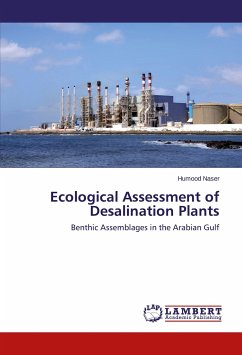
 Ecological Assessment of Desalination Plants27,99 €
 Terrestrial Environment and Ecosystems of Kuwait121,99 €
 Terrestrial Environment and Ecosystems of Kuwait121,99 €
 Sustainable Development Indicators20,99 €
 The problems of management of water-land resources in Aral Sea Basin16,99 €
 Nachhaltige Wasserwirtschaft und Biodiversität in Kuwait68,90 €
 Gestione sostenibile dell'acqua e biodiversità in Kuwait44,99 €

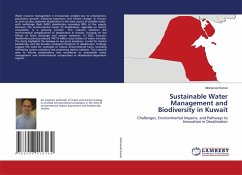
Water resource management is increasingly complex due to urbanization, population growth, industrial expansion, and climate change. In Kuwait, an arid country, seawater desalination is the main source of potable water, with multistage flash (MSF) desalination providing 90% of the supply. However, the environmental impact of desalination, especially on marine ecosystems, is a growing concern. This research examines the environmental consequences of desalination in Kuwait, focusing on the effects of brine discharge and carbon emissions. In 2022, Kuwait's desalination plants produced 740.10 million cubic meters of water annually. The study highlights the damage to sea grass meadows, crucial for marine biodiversity, and the broader ecological footprint of desalination. Findings suggest the need for strategies to reduce environmental harm, including minimizing carbon emissions and protecting marine habitats. This research aims to inform policymakers and contribute to sustainable watermanagement and environmental conservation in desalination-dependent regions.