
Andere Kunden interessierten sich auch für
 World-English: The Universal Language25,99 €
 Etymologicon Universale: Or, Universal Etymological Dictionary. On A New Plan. In Which It Is Shewn, That Consonants Are Alone To Be Regarded I41,99 €
 Etymologicon Universale, Or Universal Etymological Dictionary On A New Plan, Volume 1, Issue 140,99 €
 Vocabulaire Symbolique Anglo-francais ... = A Symbolic French and English Vocabulary29,99 €
 English Dialect Words of the Eighteenth Century As Shown in the "Universal Etymological Dictionary" of Nathaniel Bailey30,99 €
 Manual for Teaching and Learning Chinese as a Foreign Language167,99 €
 Etymologicon Universale; Or, Universal Etymological Dictionary: On a New Plan42,99 €


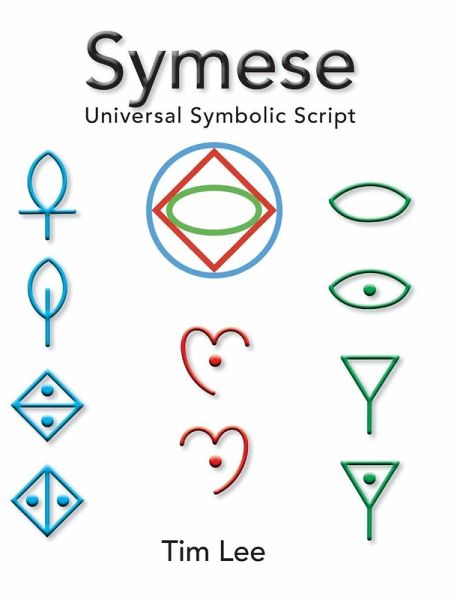
Is it possible to express ourselves with symbols independent of their sounds in spoken language? To denote basic concepts using a reasonably small set of symbols, with a pictographic link to what each represents, that can be augmented or compounded to represent more complex concepts? To capture the poetry of words in the sound of silence? Yes, it is! This book presents an outline blueprint for Symese, a universal symbolic script that is simple but not simplistic, with an elegance and coherence lacking in modern pictographic-rooted scripts. Symese is a writing system whose semiotics turns traditional alphabet-based linguistics on its head. My quest has been inspired by how the Chinese script bridges many spoken dialects and appear even in other languages like Korean and Japanese. Notwithstanding syntactical and semantic differences in the use of Chinese characters across dialects and languages, can we achieve today on a global scale what ancient civilisations did at a local level? Yes, we can!