
Andere Kunden interessierten sich auch für
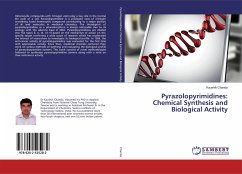
 Pyrazolopyrimidines: Chemical Synthesis and Biological Activity41,99 €
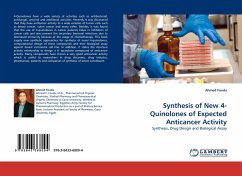
 Synthesis of New 4-Quinolones of Expected Anticancer Activity32,99 €
 RECENT ADVANCEMENTS IN ANTICANCER ACTIVITY OF FLAVONOID DERIVATIVES29,99 €
 Anticancer Activity of Some Five-Membered Heterocyclic Scaffolds29,99 €
 - PYRENOPHOROL, ANTICANCER EVALUATION OF HETEROCYCLES") SYNTHESIS OF (-) - PYRENOPHOROL, ANTICANCER EVALUATION OF HETEROCYCLES45,99 €
SYNTHESIS OF (-) - PYRENOPHOROL, ANTICANCER EVALUATION OF HETEROCYCLES45,99 € Synthesis of Some Novel Bioactive Indoles as Anticancer Agents36,99 €
 Anticancer activity of Ficus elastica aerial roots24,99 €

Antibiotics are one of our most important weapons to cover bacterial infections and improve human life . Infectious diseases are the leaders among the challenging drug targets because of the multi-drug resist antimicrobial pathogens and continuous rise in the emerging infections from known and unknown sources. Tyrosine kinases are orally active, small molecules that have a favorable safety profile and can be easily combined with other forms of chemotherapy or radiation therapy. The combination of two pharmacophores into a single molecule is an effective and commonly used direction in modern medicinal chemistry for the exploration of novel and highly active compounds. A variety of safe and effective antiinflammatory agents are available, including aspirin and other nonsteroidal anti-inflammatories, with many more drugs under development. The pharmacophoric structural features of the selective COX-2 inhibitors possess a central heterocyclic five member ring system bearing two vicinal aryl moieties, such as pyrazole (celecoxib), 2(5H) furanone (rofecoxib), and isoxazole (valdecoxib).