
Andere Kunden interessierten sich auch für
 Introduction to Human Factors141,99 €
 Introduction to Human Factors57,99 €
 The Low Cost Carrier Worldwide53,99 €
 Commercial Aircraft Projects33,99 €
 The Automotive Body68,99 €
 Aircraft Digital Electronic and Computer Systems47,99 €
 Safety Leadership56,99 €


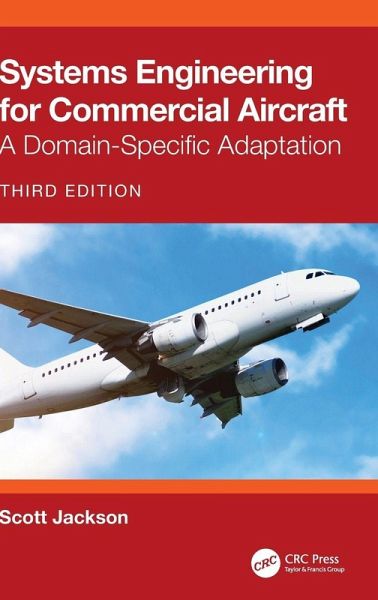
Systems-engineered aircraft are designed to transport passengers safely, ensuring all components work together seamlessly. This book explores the concept of aircraft as a complex system, including humans, with safety as a crucial aspect. By prioritizing safety and quality, fewer fatalities can be achieved, leading to efficient, reliable, and safe aircraft for passengers and crew.
Systems Engineering for Commercial Aircraft: A Domain-Specific Adaptation, Third Edition focuses on Deming's definition of quality, its methods, and the benefits it brings, which were not covered in the previous edition. The Risk chapter will also be expanded to include discussions on Risk Denial, its consequences, and strategies to avoid it. A detailed examination of resilience will be provided, highlighting how it enables an aircraft to prevent, endure, and recover from disruptions such as bird strikes. The book will explore the proactive and reactive aspects of resilience, how a system, like an aircraft, can be defined by its functions, and how an aircraft's design should prioritize the needs of various stakeholders, including passengers, regulatory agencies, and other relevant parties.
The primary audience for this book consists of major aircraft companies engaged in advanced design, aeronautical engineers, and systems engineers.
Systems Engineering for Commercial Aircraft: A Domain-Specific Adaptation, Third Edition focuses on Deming's definition of quality, its methods, and the benefits it brings, which were not covered in the previous edition. The Risk chapter will also be expanded to include discussions on Risk Denial, its consequences, and strategies to avoid it. A detailed examination of resilience will be provided, highlighting how it enables an aircraft to prevent, endure, and recover from disruptions such as bird strikes. The book will explore the proactive and reactive aspects of resilience, how a system, like an aircraft, can be defined by its functions, and how an aircraft's design should prioritize the needs of various stakeholders, including passengers, regulatory agencies, and other relevant parties.
The primary audience for this book consists of major aircraft companies engaged in advanced design, aeronautical engineers, and systems engineers.
'In this update Scott Jackson emphasizes and amplifies why systems engineering is critical for engineers and project managers, and how to apply it to developing modern commercial aircraft. His additional emphasis on organizational effects bridges the traditional gaps between engineering and project management and manifests the power of systems engineering to integrate across boundaries among products, services, people, and organizations.' Ronald S. Carson, Missouri University of Science & Technology, USA and The Boeing Company (retired) 'This book addresses the subject respecting the characteristics of each organization, always showing the advantages of implementing the SE focused on the results. Scott Jackson efficiently and objectively presents how to address the life cycle of the aircraft in a functional vision. He concentrates on the application of the vision of the development of the whole as distinct from the parts and furnishes an objective way to facilitate the understanding of the roles and responsibilities within the organization when using Systems Engineering.' Wellington M. Oliveira, Systems Engineering - EMBRAER S.A.