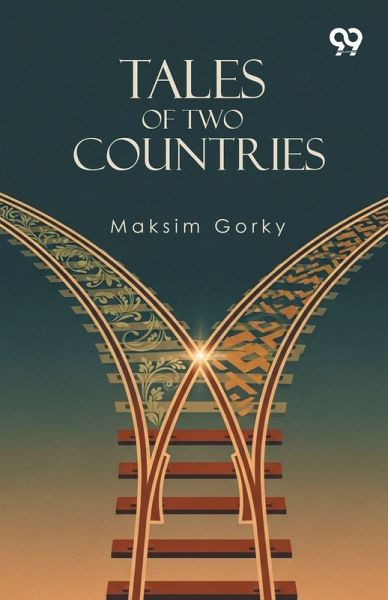
Tales of two countries presents a deeply human portrayal of endurance, loss, and resilience across contrasting social landscapes. With stories grounded in everyday experience, the collection examines how individuals navigate labor, beauty, and personal connection under the weight of social pressure and emotional burden. Each narrative becomes a quiet act of resistance or survival, reflecting inner lives shaped by inequality and the need for meaning. The text does not rely on grand transformations, but instead captures the significance of ordinary gestures how dignity is preserved in the face…mehr
Tales of two countries presents a deeply human portrayal of endurance, loss, and resilience across contrasting social landscapes. With stories grounded in everyday experience, the collection examines how individuals navigate labor, beauty, and personal connection under the weight of social pressure and emotional burden. Each narrative becomes a quiet act of resistance or survival, reflecting inner lives shaped by inequality and the need for meaning. The text does not rely on grand transformations, but instead captures the significance of ordinary gestures how dignity is preserved in the face of exploitation, or how fleeting beauty becomes refuge amid despair. The characters speak not only to their own situations but to shared conditions of work, longing, and emotional vulnerability. With a keen eye for detail and a tone of quiet urgency, the stories ask how humanity persists in harsh conditions and where hope resides in fractured systems. The writing invites reflection on empathy, justice, and the emotional complexity of human labor.
Alexei Maximovich Peshkov, better known as Maksim Gorky, was a renowned Russian and Soviet writer and a strong advocate for socialism. Born on March 28, 1868, in Nizhny Novgorod, Russia, he became one of the most prominent figures in Russian literature during the late 19th and early 20th centuries. Gorky's works often reflected his deep concern for the oppressed and his belief in social justice, which made him a leading figure in the socialist movement. His literary contributions include novels, plays, and short stories that critiqued social inequality and the human condition. Gorky was nominated five times for the Nobel Prize in Literature, a testament to his influence and the impact of his writing. His personal life included a marriage to Yekaterina Peshkova, from 1896 to 1903, though he later separated from her. Maxim Gorky spent his later years in Gorki-10, Russia, where he died on June 18, 1936, at the age of 68. His legacy as a writer and a proponent of socialist ideals continues to be a significant part of Russian literary history.
Es gelten unsere Allgemeinen Geschäftsbedingungen: www.buecher.de/agb
Impressum
www.buecher.de ist ein Internetauftritt der buecher.de internetstores GmbH
Geschäftsführung: Monica Sawhney | Roland Kölbl | Günter Hilger
Sitz der Gesellschaft: Batheyer Straße 115 - 117, 58099 Hagen
Postanschrift: Bürgermeister-Wegele-Str. 12, 86167 Augsburg
Amtsgericht Hagen HRB 13257
Steuernummer: 321/5800/1497
USt-IdNr: DE450055826