
Andere Kunden interessierten sich auch für
") Panicum (Poaceae)113,99 €
Panicum (Poaceae)113,99 € Plant Ecological Anatomy82,99 €
") Panicum (Poaceae)113,99 €
Panicum (Poaceae)113,99 € Atlas of Wood, Bark and Pith Anatomy of Eastern Mediterranean Trees and Shrubs160,99 €
 Root Hairs77,99 €
 Ginkgo Biloba A Global Treasure115,99 €
 Root Hairs76,99 €
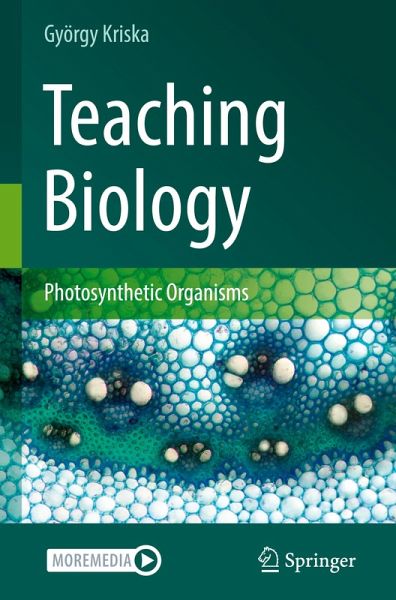
The primary aim of the book entitled "Teaching biology - Photosynthetic Organisms" is to support practice-oriented teaching of biology, therefore it includes detailed descriptions of illustrated investigations and experiments alongside basic theoretical knowledge. In line with contemporary requirements, these are complemented by digital aids, such as interactive test exercises. This makes the book a useful tool for not only making observations and carrying out experiments, but also for classroom activities and independent learning. The wide range of exercises can provide a good basis for preparing for competitions and for activities that focus on the independent research work of students.
In addition to the simple observations presented in the book, the laboratory exercises are not very time-consuming either and they do not require special materials or equipment. The investigations can be carried out in a school with average equipment.
In addition to the simple observations presented in the book, the laboratory exercises are not very time-consuming either and they do not require special materials or equipment. The investigations can be carried out in a school with average equipment.