
Andere Kunden interessierten sich auch für
 Enseigner explicitement les mathématiques29,99 €
 EXPLIZIT MATHEMATIK UNTERRICHTEN43,90 €
 INSEGNARE LA MATEMATICA IN MODO ESPLICITO29,99 €
 ENSINAR MATEMÁTICA DE FORMA EXPLÍCITA29,99 €
 L'image fidèle dans les sociétés commerciales de la République Démocratique du Congo :72,99 €
 Teaching Technologies40,99 €
 Games as a Didactic Alternative for Teaching and Learning29,99 €
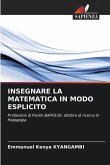
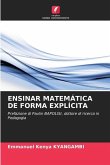
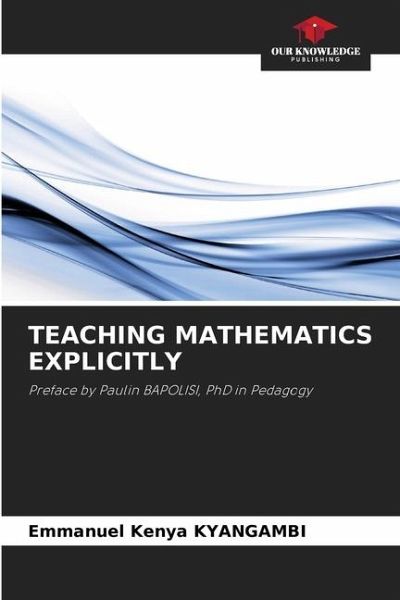
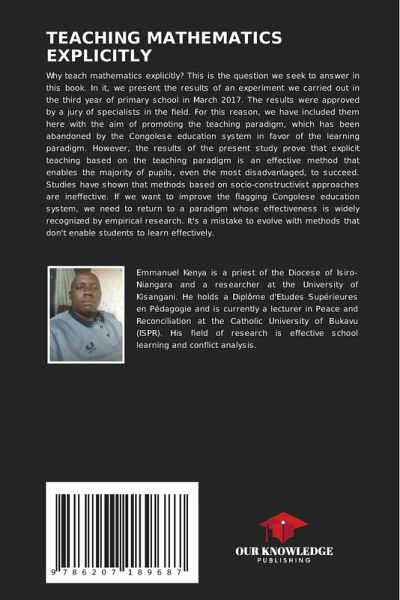
Why teach mathematics explicitly? This is the question we seek to answer in this book. In it, we present the results of an experiment we carried out in the third year of primary school in March 2017. The results were approved by a jury of specialists in the field. For this reason, we have included them here with the aim of promoting the teaching paradigm, which has been abandoned by the Congolese education system in favor of the learning paradigm. However, the results of the present study prove that explicit teaching based on the teaching paradigm is an effective method that enables the majority of pupils, even the most disadvantaged, to succeed. Studies have shown that methods based on socio-constructivist approaches are ineffective. If we want to improve the flagging Congolese education system, we need to return to a paradigm whose effectiveness is widely recognized by empirical research. It's a mistake to evolve with methods that don't enable students to learn effectively.