Teaching Media Ethics gives journalism and mass communication instructors the ideas and tools they need to effectively incorporate media ethics into courses across the curriculum. It covers ethics-intensive courses from the undergraduate to the graduate level, as well as how to incorporate ethics into other classes related to reporting and strategic communication. The volume also includes nine chapters focused on key specializations, such as sports and social media, and critical issues, such as reporting on mental health. It offers thought-provoking chapters on diversifying the ethics…mehr
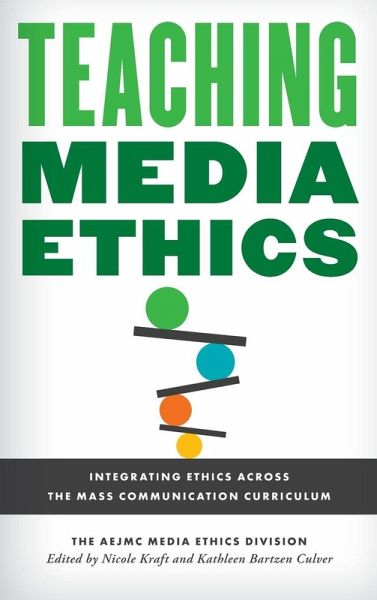
Teaching Media Ethics gives journalism and mass communication instructors the ideas and tools they need to effectively incorporate media ethics into courses across the curriculum. It covers ethics-intensive courses from the undergraduate to the graduate level, as well as how to incorporate ethics into other classes related to reporting and strategic communication. The volume also includes nine chapters focused on key specializations, such as sports and social media, and critical issues, such as reporting on mental health. It offers thought-provoking chapters on diversifying the ethics curriculum, inclusive teaching practices and challenges to traditional notions of media ethics. The only book of its kind in the realm of media ethics, this volume aims not to teach students directly but instead to "teach teachers" how to address ethics in their own classrooms and engage students effectively. It emphasizes practical advice and suggestions for activities and resources. Teaching Media Ethics has something for instructors at all stages of their careers and should be particularly useful to graduate students and faculty who are developing their approaches to journalism and mass communication classes. The authors, leading ethicists and award-winning teachers, approached their chapters with an emphasis on making it as easy as possible to deliver teaching in ethics.
Introduction Chapter 1: Media Ethics Defined Patrick Lee Plaisance Penn State University Part I: Ethics at Every Level Chapter 2: Undergraduate Media Ethics: An Introduction Patrick Lee Plaisance Penn State University Chapter 3: Teaching Advanced Undergraduate Media Ethics Patrick R. Johnson University of Iowa Chapter 4: Graduate Seminars in Media Ethics Ryan J. Thomas Washington State University Chapter 5: Diversifying the Ethics Curriculum Chad Painter University of Dayton Chapter 6: Inclusive Teaching as Ethical Practice Patrick R. Johnson University of Iowa Part II: Ethics in Every Area of Study Chapter 7: Developing a Combined Media Law and Ethics Course Jack Breslin Iona University Chapter 8: Ethics in Introductory Reporting Courses Lee Wilkins University of Missouri and Wayne State University Chapter 9: Ethics in Photography and Visuals Alex Scott University of Iowa Chapter 10: Public Relations Ethics Education in Advanced Courses Katie R. Place Quinnipiac University; and Angela Zhang University of Oklahoma Chapter 11: Ethics in Broadcast News Classes April Newton Loyola University Maryland Chapter 12: Ethics in Student Media Nicole Kraft The Ohio State University Part III: Ethics in Specialized Topics Chapter 13. Covering Law and Justice Kathleen Culver University of Wisconsin-Madison Chapter 14: Data Ethics Jasmine E. McNealy University of Florida Chapter 15: Sports Reporting Nicole Kraft The Ohio State University Chapter 16: Digital Ethics Julianne H. Newton University of Oregon Chapter 17: Relational Journalism Paul S. Voakes Paula Lynn Ellis and Lori Bergen University of Colorado Chapter 18: Covering Mental Health Suicide and Substance Use Kathleen Culver University of Wisconsin-Madison Chapter 19: Social Media Sheila Lalwani University of Texas-Austin Chapter 20: Science Health and Environmental Journalism Rhema Zlaten Colorado Mesa Universitya Chapter 21: Foreign Correspondence Sheila Lalwani University of Texas-Austin Part IV: Ethics Beyond the Classroom Chapter 22: Teaching the Ethics of Civic Journalism Mark Poepsel Southern Illinois University-Edwardsville Chapter 23: Media Ethics is for Everyone Joseph Jones West Virginia University Index About the Contributors
Es gelten unsere Allgemeinen Geschäftsbedingungen: www.buecher.de/agb
Impressum
www.buecher.de ist ein Internetauftritt der buecher.de internetstores GmbH
Geschäftsführung: Monica Sawhney | Roland Kölbl | Günter Hilger
Sitz der Gesellschaft: Batheyer Straße 115 - 117, 58099 Hagen
Postanschrift: Bürgermeister-Wegele-Str. 12, 86167 Augsburg
Amtsgericht Hagen HRB 13257
Steuernummer: 321/5800/1497
USt-IdNr: DE450055826