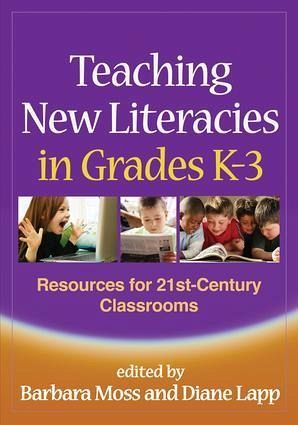
Even the youngest readers and writers in today's classrooms can benefit enormously from engagement with a wide range of traditional and nontraditional texts. This teacher-friendly handbook is packed with creative strategies for introducing K-3 students to fiction, poetry, and plays; informational texts; graphic novels; digital storytelling; Web-based and multimodal texts; hip-hop; advertisements; math problems; and many other types of texts. Prominent authorities explain the research base underlying the book's 23 complete lessons and provide practical activities and assessments for promoting…mehr
Even the youngest readers and writers in today's classrooms can benefit enormously from engagement with a wide range of traditional and nontraditional texts. This teacher-friendly handbook is packed with creative strategies for introducing K-3 students to fiction, poetry, and plays; informational texts; graphic novels; digital storytelling; Web-based and multimodal texts; hip-hop; advertisements; math problems; and many other types of texts. Prominent authorities explain the research base underlying the book's 23 complete lessons and provide practical activities and assessments for promoting decoding, fluency, comprehension, and other key literacy skills. Snapshots of diverse classrooms bring the material to life; helpful reproducibles are included.
Barbara Moss, PhD, is Professor of Literacy Education in the School of Teacher Education at San Diego State University. She has taught English and language arts in elementary, middle, and high school settings and has worked as a reading coach. Dr. Moss's research focuses on the teaching of informational texts at the elementary and secondary levels. She regularly presents at local, state, national, and international conferences and has published numerous journal articles, columns, book chapters, and books. Dr. Moss has served as the Young Adult Literature column editor for Voices in the Middle, a publication of the National Council of Teachers of English. Diane Lapp, EdD, is Distinguished Professor of Education in the Department of Teacher Education at San Diego State University. She has taught elementary, middle, and high school and serves as Director of Learning at Health Sciences High and Middle College. Her research and instruction focus on issues related to struggling readers and writers who live in economically deprived urban settings, and their families and teachers. Widely published, Dr. Lapp has received the Outstanding Teacher Educator of the Year Award from the International Literacy Association, among other honors, and is a member of both the International Reading Hall of Fame and the California Reading Hall of Fame.
Inhaltsangabe
1. Introduction, Barbara Moss and Diane Lapp I. Teaching the Genres: What Students Often Encounter 2. Teaching with Folk Literature in the Primary Grades, Terrell A. Young, Barbara A. Ward, and L. Beth Cameron 3. Every Story Has a Problem: How to Improve Student Narrative Writing in Grades K-3, Sue Dymock and Tom Nicholson 4. Poetry Power: First-Graders Tackle Two-Worders, Claudia Dybdahl and Tammy Black 5. Using Readers' Theater to Engage Young Readers, Regina M. Rees 6. Junior Journalists: Reading and Writing News in the Primary Grades, Nancy Frey and Douglas Fisher 7. Using Procedural Texts and Documents to Develop Functional Literacy in Students: The Key to Their Future in a World of Words, Martha D. Collins and Amy B. Horton 8. Going Beyond Opinion: Teaching Primary Children to Write Persuasively, Dana L. Grisham, Cheryl Wozniak, and Thomas DeVere Wolsey 9. Reading Biography: Evaluating Information across Texts, Barbara Moss and Diane Lapp II. Teaching Other Genres: What Students Could Also Encounter 10. Using Comic Literature with Elementary Students, Chris Wilson 11. Using Primary-Source Documents and Digital Storytelling as a Catalyst for Writing Historical Fiction, Carol J. Fuhler 12. Self-Expressing through Hip-Hop as Culturally Responsive Pedagogy, Nadjwa E. L. Norton Chapter 13. Exploring High-Stakes Tests as a Genre, Charles Fuhrken and Nancy Roser 14. Reading a Science Experiment: Deciphering the Language of Scientists, Maria Grant 15. Reading + Mathematics = SUCCESS: Using Literacy Strategies to Enhance Problem-Solving Skills, Mary Lou DiPillo 16. Promoting Literacy through Visual Aids: Teaching Students to Read Graphs, Maps, Charts, and Tables Paola Pilonieta, Karen Wood, and D. Bruce Taylor 17. Critically Reading Advertisements: Examining Visual Images and Persuasive Language, Lori Czop Assaf and Alina Adonyi 18. Reading Web-Based Electronic Texts: Using Think-Alouds to Help Students Begin to Understand the Process, Christine A. McKeon 19. Comparatively Reading Multiple Sources: Developing Critical Literacy in a Second-Grade Classroom, Jesse Gainer 20. Using Written Response for Reading Comprehension of Literary Text, Ruth Oswald, Evangeline Newton, and Joanna Newton III. Crafting the Genre: Sharing One's Voice through Writing 21. Reading Persuasive Texts, Thomas DeVere Wolsey, Cheryl Pham, and Dana L. Grisham 22. Writing a Biography: Creating Powerful Insights into History and Personal Lives, Dorothy Leal 23. Monumental Ideas for Teaching Report Writing through a Visit to Washington, DC, Susan K. Leone 24. Writing Summaries of Expository Text Using the Magnet Summary Strategy, Laurie Elish-Piper and Susan R. Hinrichs 25. Conclusion: Looking Back, Looking Forward, Diane Lapp and Barbara Moss
1. Introduction, Barbara Moss and Diane Lapp I. Teaching the Genres: What Students Often Encounter 2. Teaching with Folk Literature in the Primary Grades, Terrell A. Young, Barbara A. Ward, and L. Beth Cameron 3. Every Story Has a Problem: How to Improve Student Narrative Writing in Grades K-3, Sue Dymock and Tom Nicholson 4. Poetry Power: First-Graders Tackle Two-Worders, Claudia Dybdahl and Tammy Black 5. Using Readers' Theater to Engage Young Readers, Regina M. Rees 6. Junior Journalists: Reading and Writing News in the Primary Grades, Nancy Frey and Douglas Fisher 7. Using Procedural Texts and Documents to Develop Functional Literacy in Students: The Key to Their Future in a World of Words, Martha D. Collins and Amy B. Horton 8. Going Beyond Opinion: Teaching Primary Children to Write Persuasively, Dana L. Grisham, Cheryl Wozniak, and Thomas DeVere Wolsey 9. Reading Biography: Evaluating Information across Texts, Barbara Moss and Diane Lapp II. Teaching Other Genres: What Students Could Also Encounter 10. Using Comic Literature with Elementary Students, Chris Wilson 11. Using Primary-Source Documents and Digital Storytelling as a Catalyst for Writing Historical Fiction, Carol J. Fuhler 12. Self-Expressing through Hip-Hop as Culturally Responsive Pedagogy, Nadjwa E. L. Norton Chapter 13. Exploring High-Stakes Tests as a Genre, Charles Fuhrken and Nancy Roser 14. Reading a Science Experiment: Deciphering the Language of Scientists, Maria Grant 15. Reading + Mathematics = SUCCESS: Using Literacy Strategies to Enhance Problem-Solving Skills, Mary Lou DiPillo 16. Promoting Literacy through Visual Aids: Teaching Students to Read Graphs, Maps, Charts, and Tables Paola Pilonieta, Karen Wood, and D. Bruce Taylor 17. Critically Reading Advertisements: Examining Visual Images and Persuasive Language, Lori Czop Assaf and Alina Adonyi 18. Reading Web-Based Electronic Texts: Using Think-Alouds to Help Students Begin to Understand the Process, Christine A. McKeon 19. Comparatively Reading Multiple Sources: Developing Critical Literacy in a Second-Grade Classroom, Jesse Gainer 20. Using Written Response for Reading Comprehension of Literary Text, Ruth Oswald, Evangeline Newton, and Joanna Newton III. Crafting the Genre: Sharing One's Voice through Writing 21. Reading Persuasive Texts, Thomas DeVere Wolsey, Cheryl Pham, and Dana L. Grisham 22. Writing a Biography: Creating Powerful Insights into History and Personal Lives, Dorothy Leal 23. Monumental Ideas for Teaching Report Writing through a Visit to Washington, DC, Susan K. Leone 24. Writing Summaries of Expository Text Using the Magnet Summary Strategy, Laurie Elish-Piper and Susan R. Hinrichs 25. Conclusion: Looking Back, Looking Forward, Diane Lapp and Barbara Moss
Es gelten unsere Allgemeinen Geschäftsbedingungen: www.buecher.de/agb
Impressum
www.buecher.de ist ein Internetauftritt der buecher.de internetstores GmbH
Geschäftsführung: Monica Sawhney | Roland Kölbl | Günter Hilger
Sitz der Gesellschaft: Batheyer Straße 115 - 117, 58099 Hagen
Postanschrift: Bürgermeister-Wegele-Str. 12, 86167 Augsburg
Amtsgericht Hagen HRB 13257
Steuernummer: 321/5800/1497
USt-IdNr: DE450055826