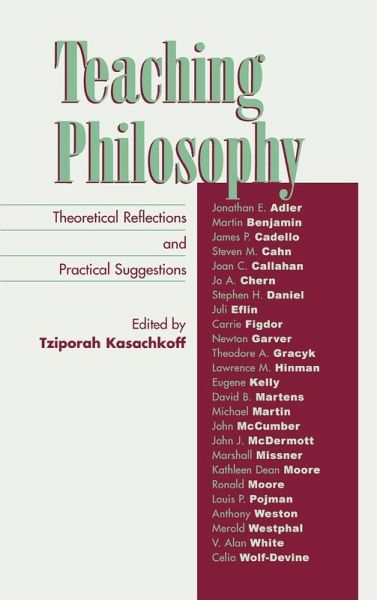
Here, two dozen distinguished philosophers share their insights and practical suggestions on a diverse range of pedagogic issues with essays on how to motivate students, constructing syllabi for particular courses, teaching particularly complex concepts, and constructing creative examinations.
Here, two dozen distinguished philosophers share their insights and practical suggestions on a diverse range of pedagogic issues with essays on how to motivate students, constructing syllabi for particular courses, teaching particularly complex concepts, and constructing creative examinations.
Tziporah Kasachkoff is currently the editor of The American Philosophical Association Newsletter on Teaching Philosophy. She is also professor of philosophy and professor of social science at the City University of New York.
Inhaltsangabe
Part 1 I Introducing Students to Philosophy Chapter 2 Teaching Introductory Philosophy Chapter 3 Introducing Philosophy Chapter 4 Teaching Introductory Philosophy: A Restricted Topical Approach Part 5 II Helping Our Students Improve Chapter 6 How to Improve Your Teaching Chapter 7 Reading and Interpretation: A Heuristic for Improving Students' Comprehension of Philosophy Texts Chapter 8 Improving Student Papers in 'Introduction to Philosophy' Courses Chapter 9 Using Essay Exams to Teach and Not Merely to Assess Part 10 III Teaching Applied Ethics Chapter 11 From the "Applied" to the Practical: Teaching Ethics for Use Chapter 12 A Social Dilemma Game for an Ethics Class Part 13 IV Teaching Philosophy with Computers Chapter 14 Teaching With a Screen Part 15 V Teaching Aesthetics Chapter 16 The Case Method Approach to the Teaching of Aesthetics Part 17 VI Teaching Philosophy of Religion Chapter 18 Teaching Philosophy of Religion (either as a full course or as part of an 'Introduction to Philosophy') Chapter 19 Three Courses in Philosophy of Religion Part 20 VII Teaching Critical Thinking Chapter 21 Using Pseudoscience in a Critical Thinking Class Chapter 22 A Critical Thinking Portfolio Part 23 VIII Teaching Philosophy Through History Chapter 24 The Teaching of Philosophy-Historically Part 25 IX Teaching Kant/Teaching Hegel Chapter 26 A User-Friendly Copernican Revolution Chapter 27 Charting Kant Chapter 28 On Teaching Hegel: Problems and Possibilities Chapter 29 Hegel and Family Values Part 30 X Teaching Existentialism/Teaching Continental Philosophy Chapter 31 Teaching Existentialism Chapter 32 Teaching Recent Continental Philosophy Part 33 XI Teaching Philosophical Explanation Chapter 34 Teaching 'Inference to the Best Philosophical Explanation' Part 35 XII Teaching Philosophy of Gender Chapter 36 Teaching Gender Issues-Philosophically Part 37 XIII Looking at What We Do in the Classroom Chapter 38 Uncovering the "Hidden Curriculum": A Laboratory Course in Philosophy of Education Chapter 39 A Graduate Seminar on Teaching Philosophy Part 40 About the Contributors Part 41 About the Editor
Part 1 I Introducing Students to Philosophy Chapter 2 Teaching Introductory Philosophy Chapter 3 Introducing Philosophy Chapter 4 Teaching Introductory Philosophy: A Restricted Topical Approach Part 5 II Helping Our Students Improve Chapter 6 How to Improve Your Teaching Chapter 7 Reading and Interpretation: A Heuristic for Improving Students' Comprehension of Philosophy Texts Chapter 8 Improving Student Papers in 'Introduction to Philosophy' Courses Chapter 9 Using Essay Exams to Teach and Not Merely to Assess Part 10 III Teaching Applied Ethics Chapter 11 From the "Applied" to the Practical: Teaching Ethics for Use Chapter 12 A Social Dilemma Game for an Ethics Class Part 13 IV Teaching Philosophy with Computers Chapter 14 Teaching With a Screen Part 15 V Teaching Aesthetics Chapter 16 The Case Method Approach to the Teaching of Aesthetics Part 17 VI Teaching Philosophy of Religion Chapter 18 Teaching Philosophy of Religion (either as a full course or as part of an 'Introduction to Philosophy') Chapter 19 Three Courses in Philosophy of Religion Part 20 VII Teaching Critical Thinking Chapter 21 Using Pseudoscience in a Critical Thinking Class Chapter 22 A Critical Thinking Portfolio Part 23 VIII Teaching Philosophy Through History Chapter 24 The Teaching of Philosophy-Historically Part 25 IX Teaching Kant/Teaching Hegel Chapter 26 A User-Friendly Copernican Revolution Chapter 27 Charting Kant Chapter 28 On Teaching Hegel: Problems and Possibilities Chapter 29 Hegel and Family Values Part 30 X Teaching Existentialism/Teaching Continental Philosophy Chapter 31 Teaching Existentialism Chapter 32 Teaching Recent Continental Philosophy Part 33 XI Teaching Philosophical Explanation Chapter 34 Teaching 'Inference to the Best Philosophical Explanation' Part 35 XII Teaching Philosophy of Gender Chapter 36 Teaching Gender Issues-Philosophically Part 37 XIII Looking at What We Do in the Classroom Chapter 38 Uncovering the "Hidden Curriculum": A Laboratory Course in Philosophy of Education Chapter 39 A Graduate Seminar on Teaching Philosophy Part 40 About the Contributors Part 41 About the Editor
Rezensionen
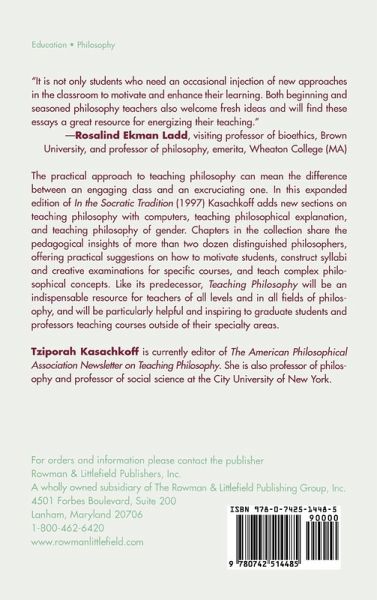
It is not only students who need an occasional injection of new approaches in the classroom to motivate and enhance their learning. Both beginning and seasoned philosophy teachers also welcome fresh ideas and will find these essays a great resource for energizing their teaching. -- Rosalind Ekman Ladd, visiting professor of bioethics, Brown University; professor of philosophy emerita, Wheaton College, Massachusetts
Es gelten unsere Allgemeinen Geschäftsbedingungen: www.buecher.de/agb
Impressum
www.buecher.de ist ein Internetauftritt der buecher.de internetstores GmbH
Geschäftsführung: Monica Sawhney | Roland Kölbl | Günter Hilger
Sitz der Gesellschaft: Batheyer Straße 115 - 117, 58099 Hagen
Postanschrift: Bürgermeister-Wegele-Str. 12, 86167 Augsburg
Amtsgericht Hagen HRB 13257
Steuernummer: 321/5800/1497
USt-IdNr: DE450055826